WALTERS-EG
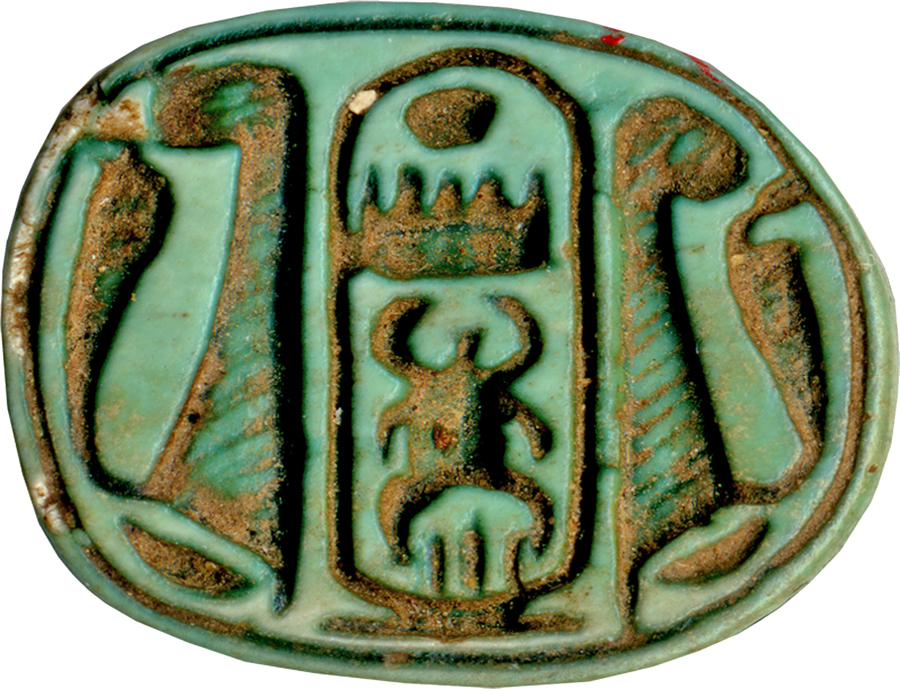
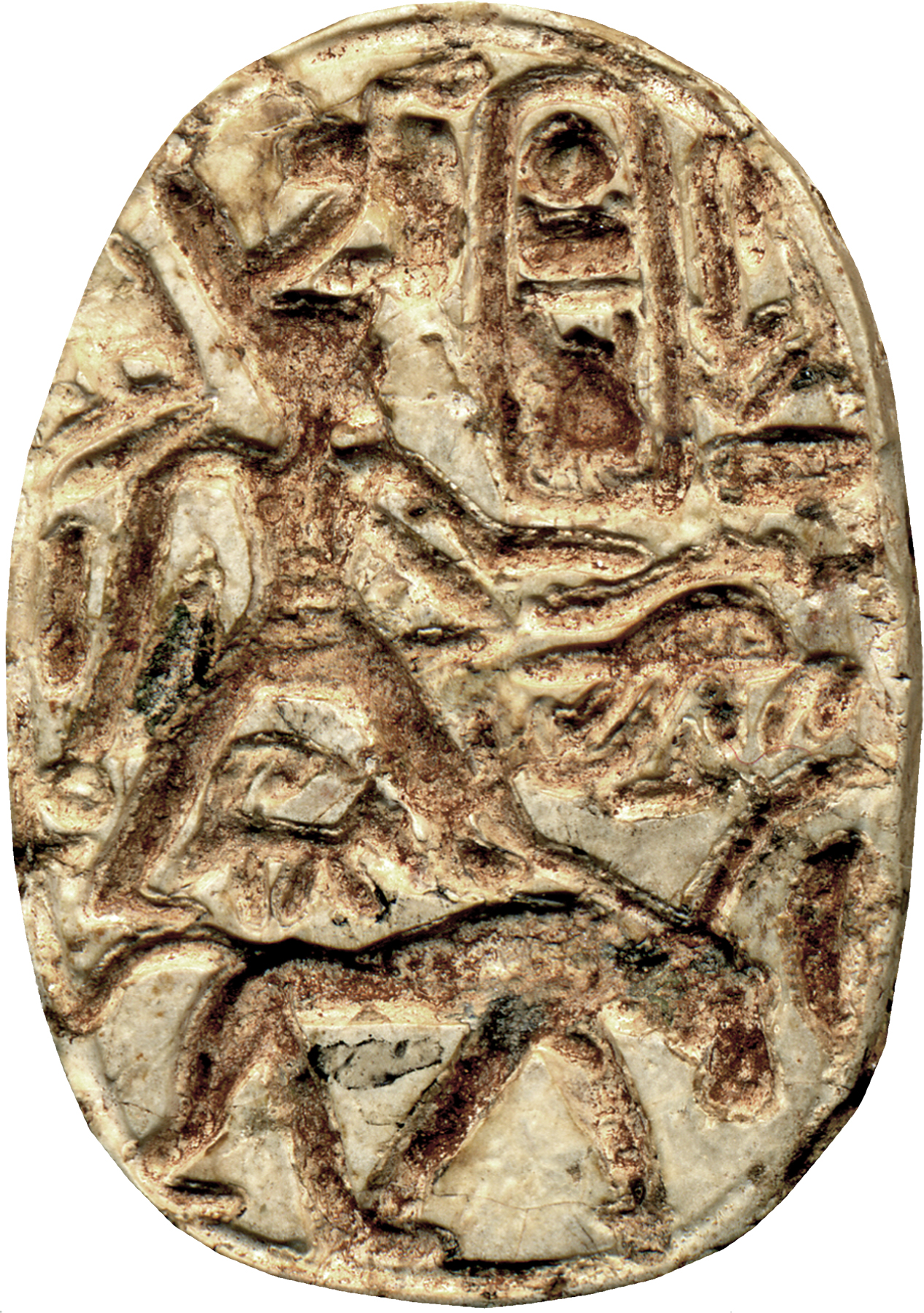
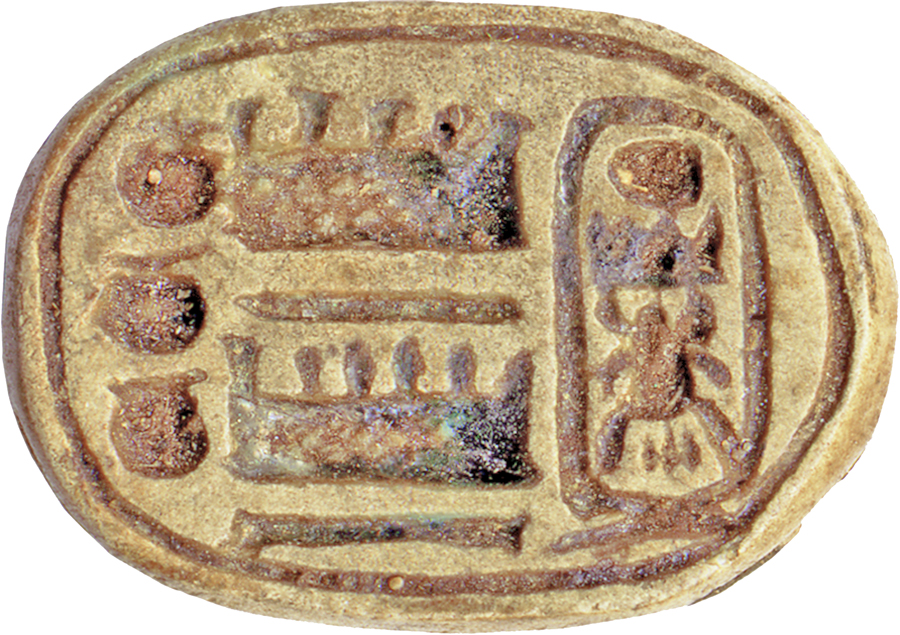
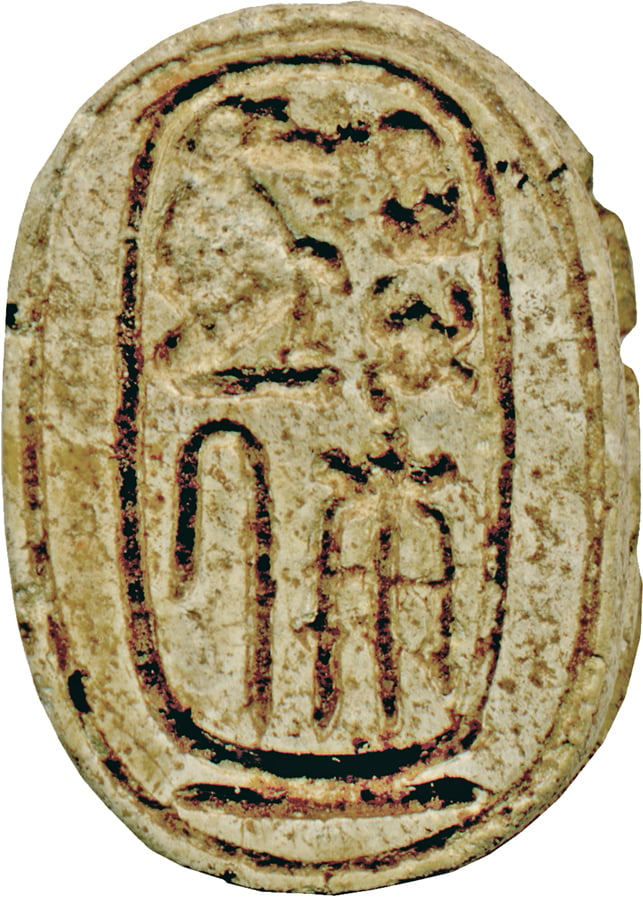
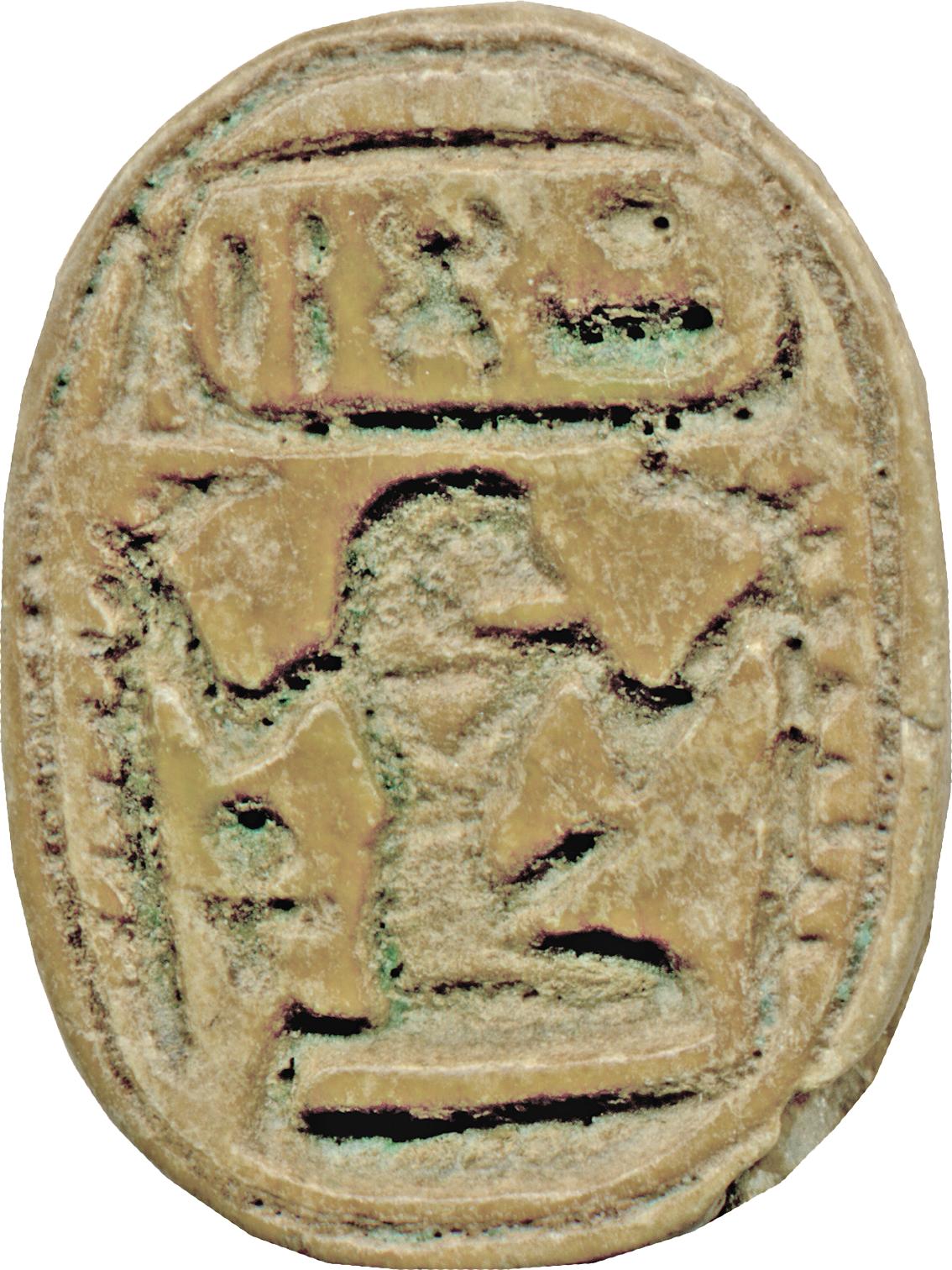
<p>This steatite scarab has a flat underside with an inscription on the bottom carved in sunk relief technique. The piece was originally glazed. The top of the scarab is decorated with deep and thick incised details. The workmanship of this piece is good. This piece originally functioned as an individualized amulet and was once mounted or threaded. The amulet should secure the royal authority for this king, Thutmosis IV (1397-1388 BC), by his close relation to the god Amun; it should provide a private owner with this king's royal patronage. The royal epithet "Image of Amun" is very popular on scarabs of the New Kingdom.</p><p>For the latest information about this object, <cite><a href='https://purl.thewalters.org/art/42.11' rel='external'>Stylized Scarab with Cartouche of Thutmosis IV (1397-1388 BC)</a></cite>, visit the Online Collection of the Walters Art Museum.</p>
Machine-generated from the object's image on Jul 2026. Not curatorial; treat deities, names, and signs below as the model's best reading, not authority.
The image shows a small, worn Egyptian-style scarab amulet with raised detailing and an engraved cartouche-like band on its front.
The artifact is photographed front-on, filling most of the frame. It appears to be a stylized scarab with a thick beaded border along the edge. The top portion contains two large, horizontally oriented eye-like forms separated by a central ridge, with small internal incisions that read as stylized facial/body markings rather than fully legible hieroglyphs. Across the middle/lower portion there is an engraved rectangular band containing multiple short strokes/signs, and beneath it are additional incised lines forming a vertical/diagonal motif consistent with a cartouche panel layout, though the individual signs are not clear enough to transcribe reliably. No Greek, Coptic, or Arabic text is visible. The surface is heavily abraded with darkened recesses in the grooves; small chips and pitting are visible. Based on the catalog entry, the object is light beige-brown steatite, and the image is consistent with that stone color, but material identification cannot be confirmed beyond appearance.
Spotted an error, a mis-mapped findspot, or have a suggestion? We read every note.