WALTERS-EG
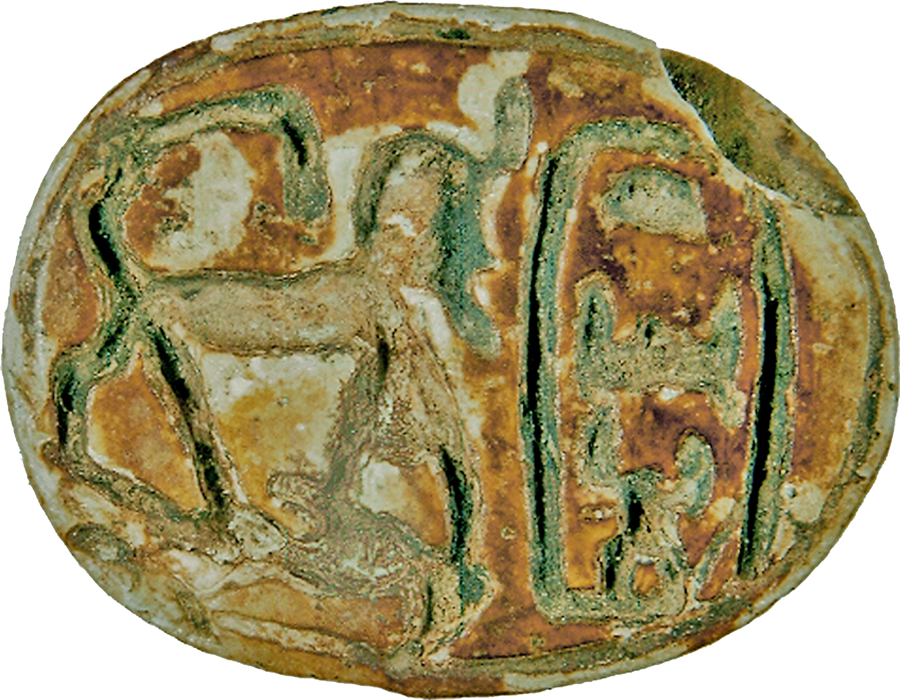
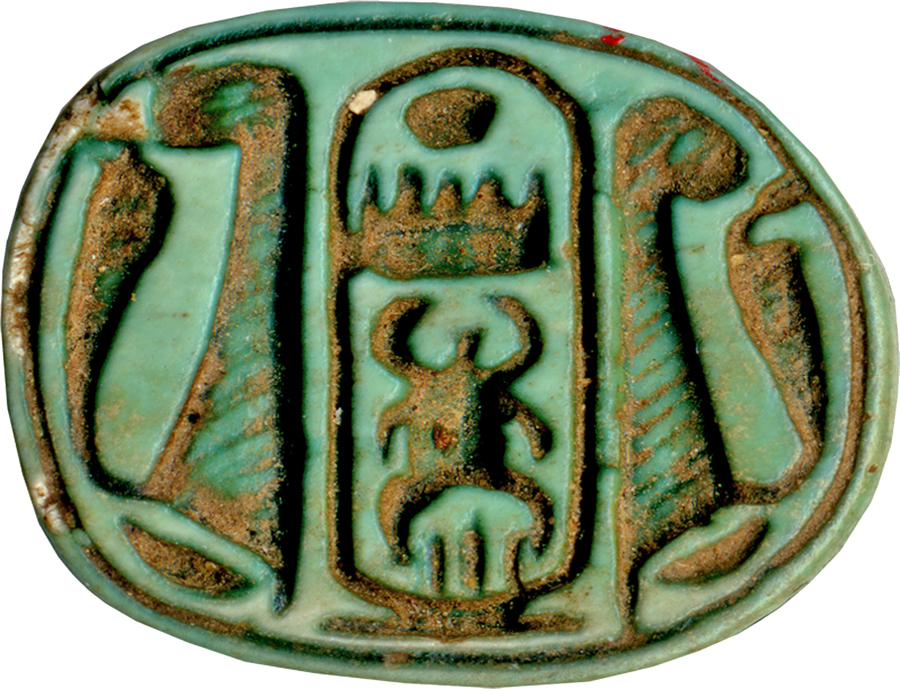
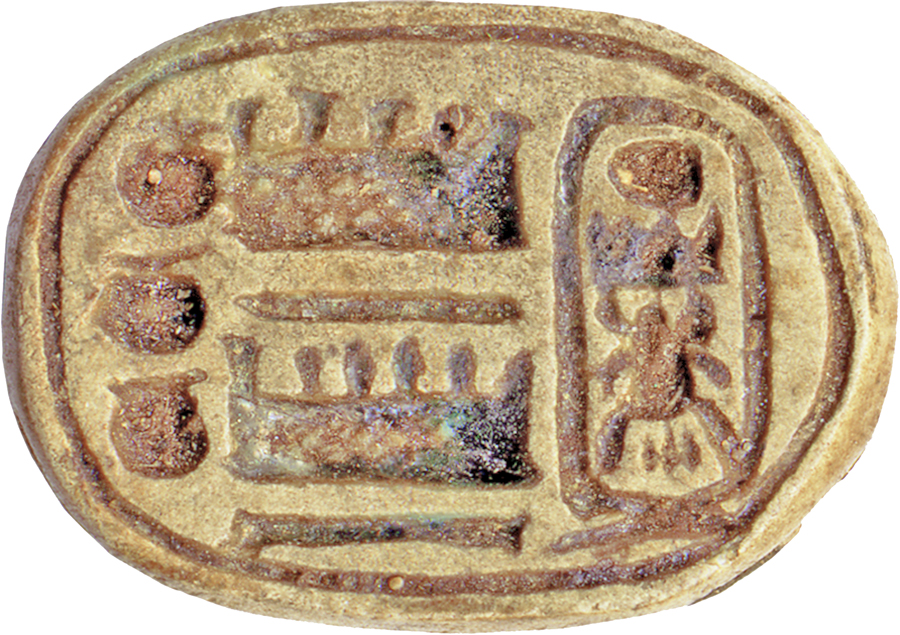
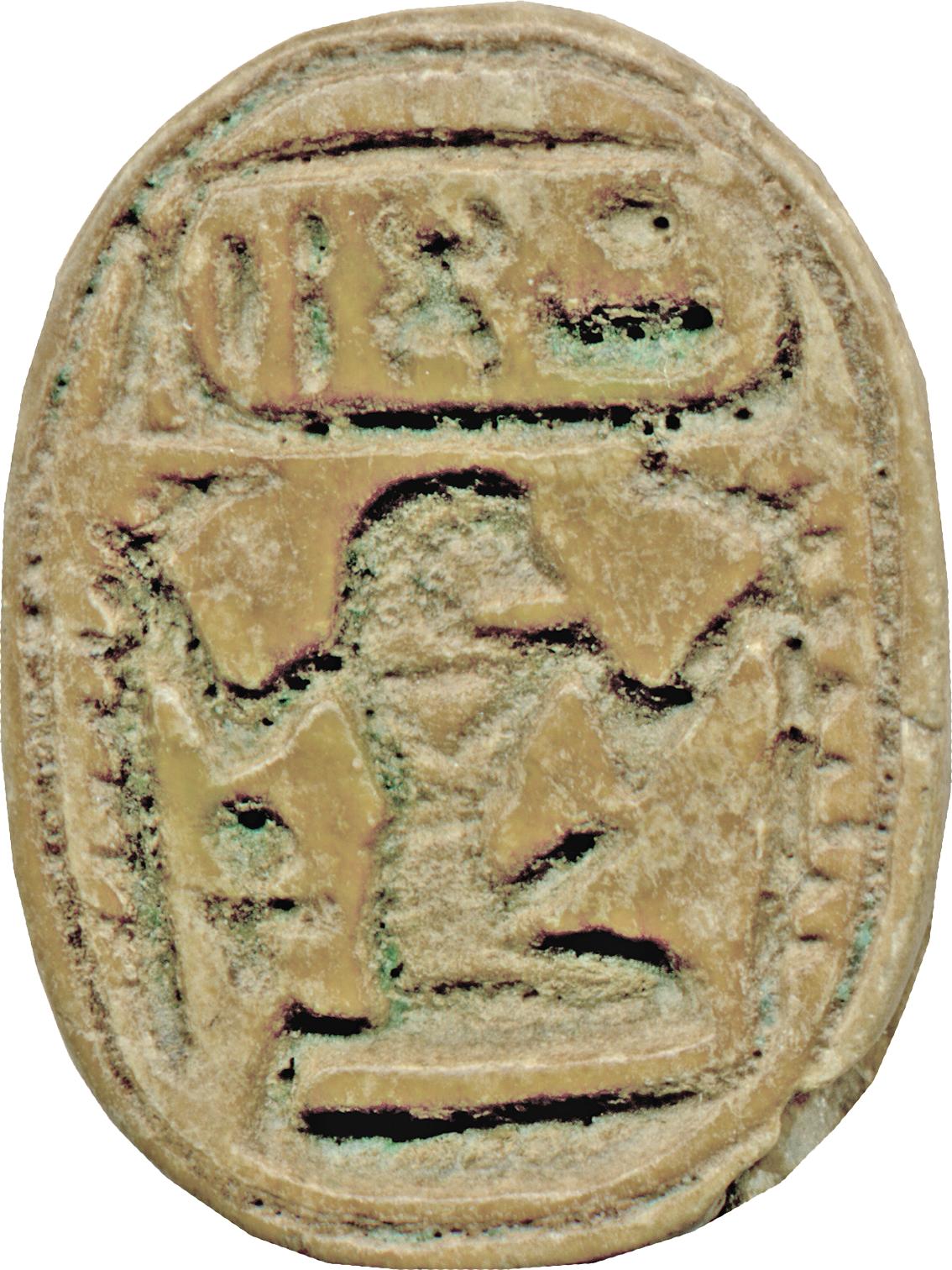
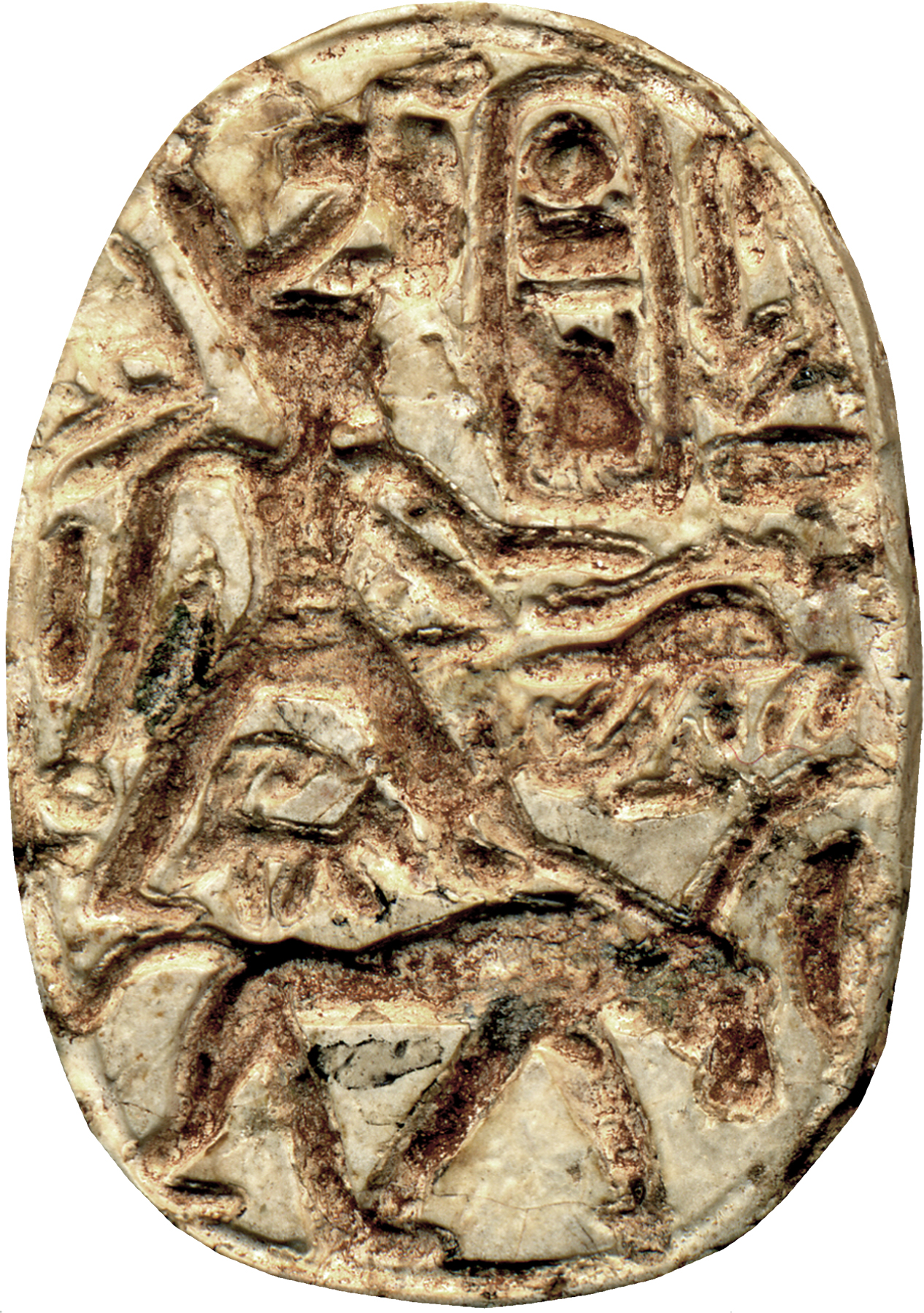
<p>This steatite scarab was originally glazed. It has a flat underside and an inscription on the bottom, a medium high back with thick and regular incised details. The workmanship is good and the piece is carefully made. This piece served as an individualized amulet and was originally mounted or threaded. The amulet should secure royal authority for this king (Thutmosis III), and for a private owner his royal patronage.</p><p>For the latest information about this object, <cite><a href='https://purl.thewalters.org/art/42.45' rel='external'>Scarab with the Cartouche of Thutmose III</a></cite>, visit the Online Collection of the Walters Art Museum.</p>
Machine-generated from the object's image on Jul 2026. Not curatorial; treat deities, names, and signs below as the model's best reading, not authority.
Photograph of a small oval scarab-seal type object with an inscribed cartouche-like field on the front, shown in beige-brown stone.
The image shows a dark-edged oval/rectangular cartouche panel surrounded by a raised border, within which vertical bars and sign shapes are visible but heavily abraded. A curled or U-shaped element appears at the top and thickened dark traces fill the incised areas; the lower portion contains multiple vertical strokes and a curved baseline-like sign. The surrounding perimeter is worn, with pitting and dirt-like accretions in the grooves. No clearly legible complete cartouche text for Thutmose III is visible due to erosion and low clarity; only partial sign forms can be seen. No Greek/Coptic/Arabic text is visible.
Spotted an error, a mis-mapped findspot, or have a suggestion? We read every note.