WALTERS-EG
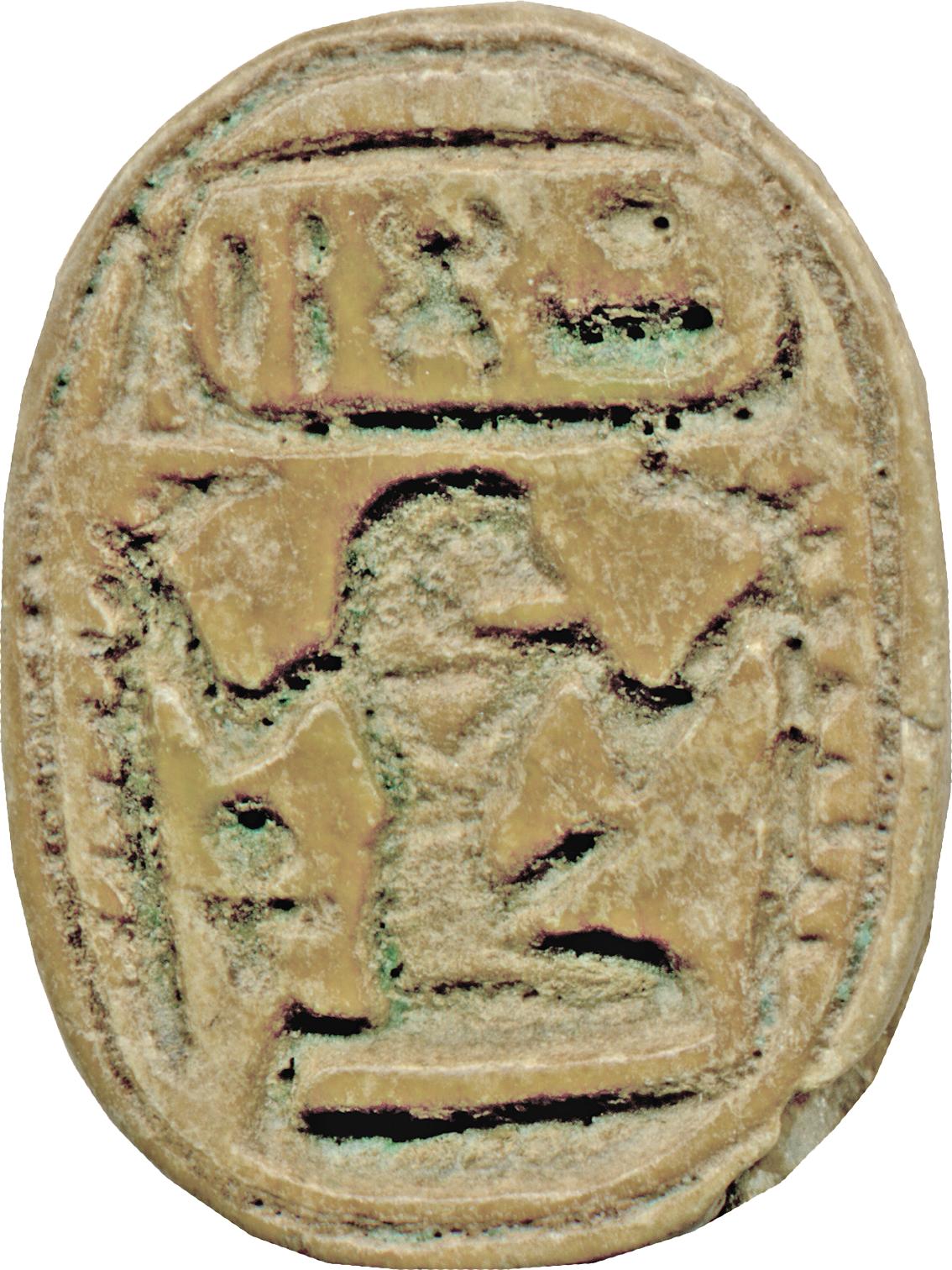
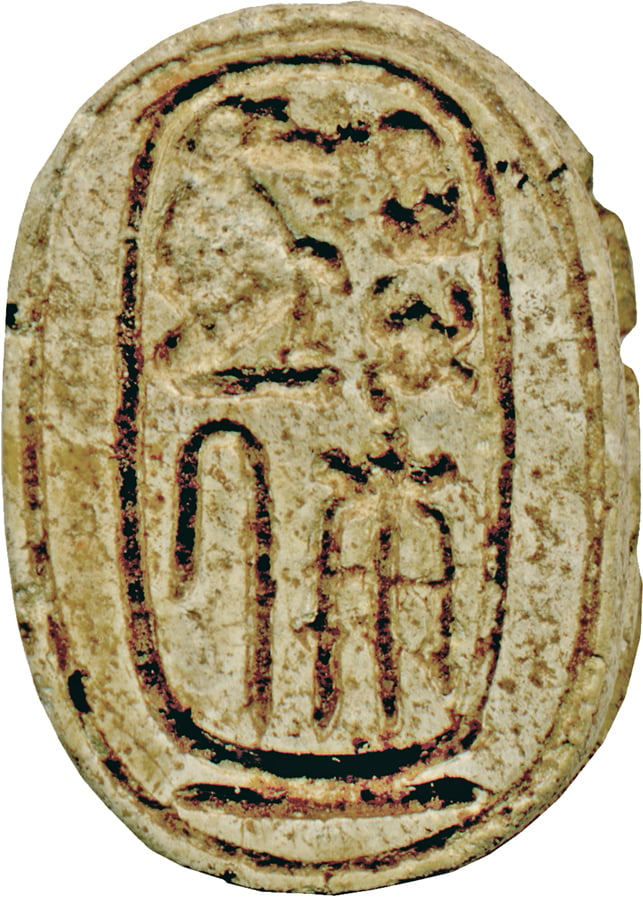
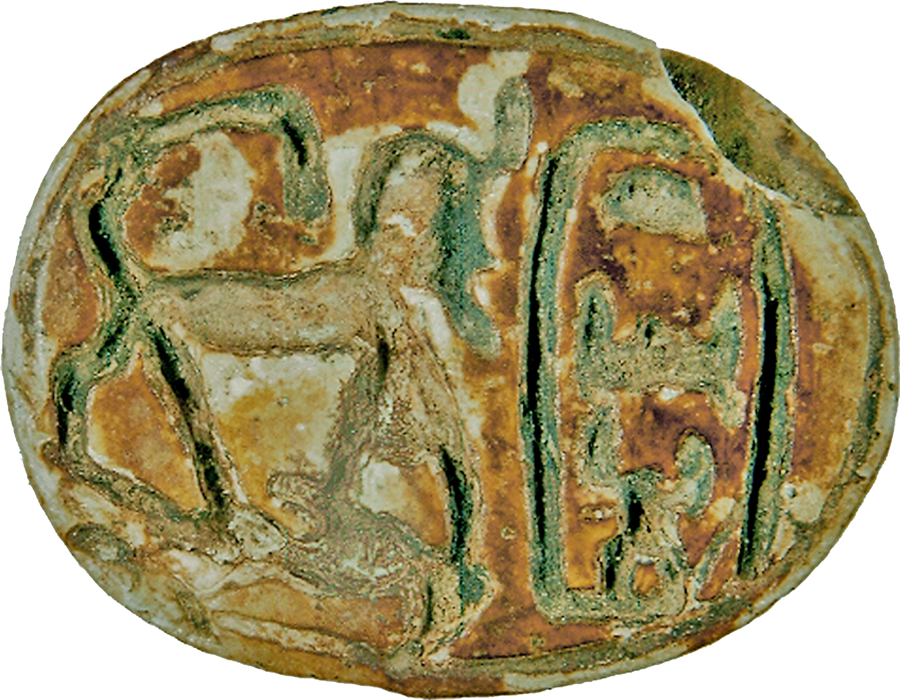
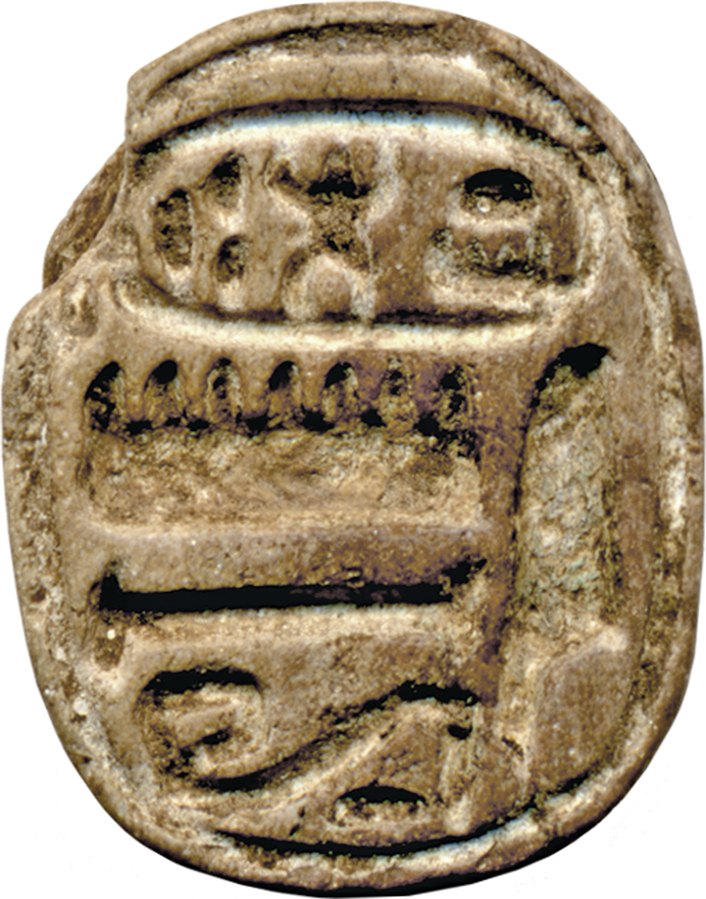
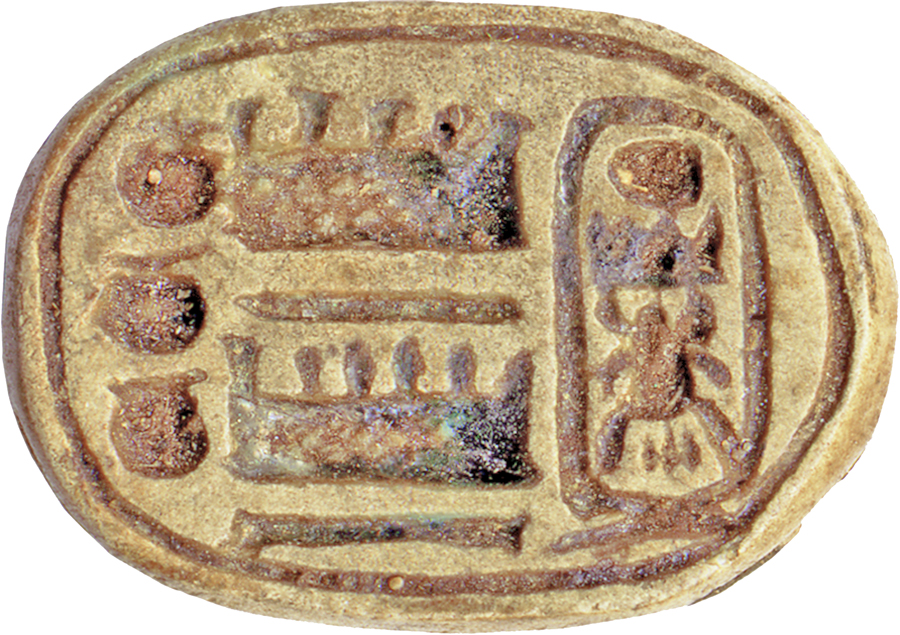
<p>Images of cobras and Maat-feathers surround the throne name of Thutmose IV, securing the royal authority for the king, as well as the support of Amun. It should provide a private owner with this king's royal patronage and divine protection.</p><p>For the latest information about this object, <cite><a href='https://purl.thewalters.org/art/42.73' rel='external'>Scarab of Thutmose IV</a></cite>, visit the Online Collection of the Walters Art Museum.</p>
Machine-generated from the object's image on Jul 2026. Not curatorial; treat deities, names, and signs below as the model's best reading, not authority.
A glazed, oval scarab/seal-shaped Egyptian artifact showing a central vertical hieroglyphic motif with surrounding border elements on a turquoise/green background.
The image shows a close-up of a scarab-like oval amuletic object with an engraved design. The field is turquoise/green with brown/dark incised details. In the center there is a vertical rectangular cartouche-like frame containing stacked or closely grouped motifs, including a crown-like or head/feather-like form above a pair of circular/lotus-like elements and a base figure that resembles a kneeling or standing human/figure. On both sides of the central motif are additional vertical forms resembling stylized standards or hieroglyphic strokes, flanked by small curved elements near the bottom corners. The outer rim has a darker border, and there is wear/oxidation with areas of mottled brown and turquoise glaze loss/spalling. No clearly legible full inscription or royal cartouche text is confidently readable from this image alone.
Spotted an error, a mis-mapped findspot, or have a suggestion? We read every note.