WALTERS-EG
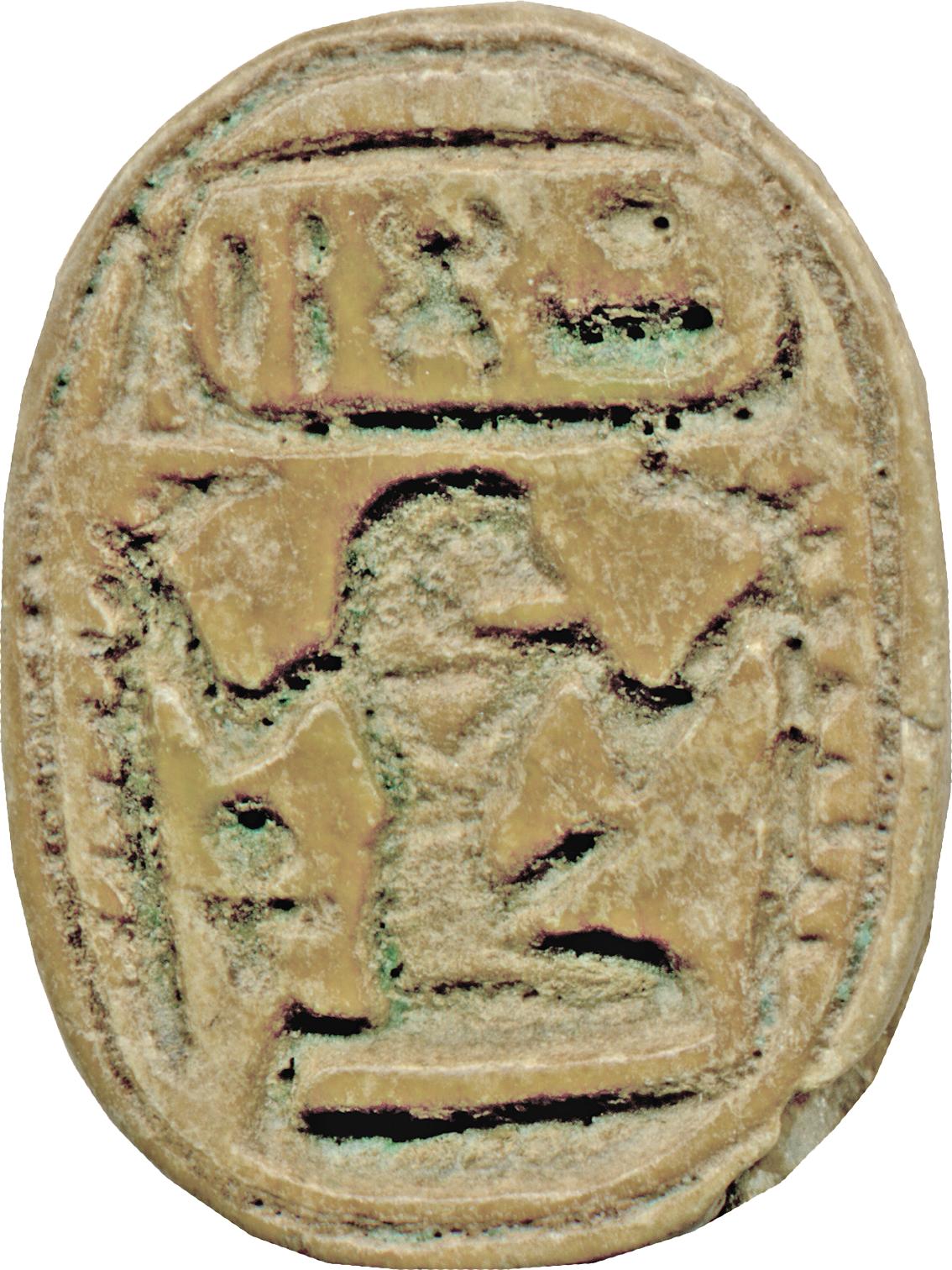
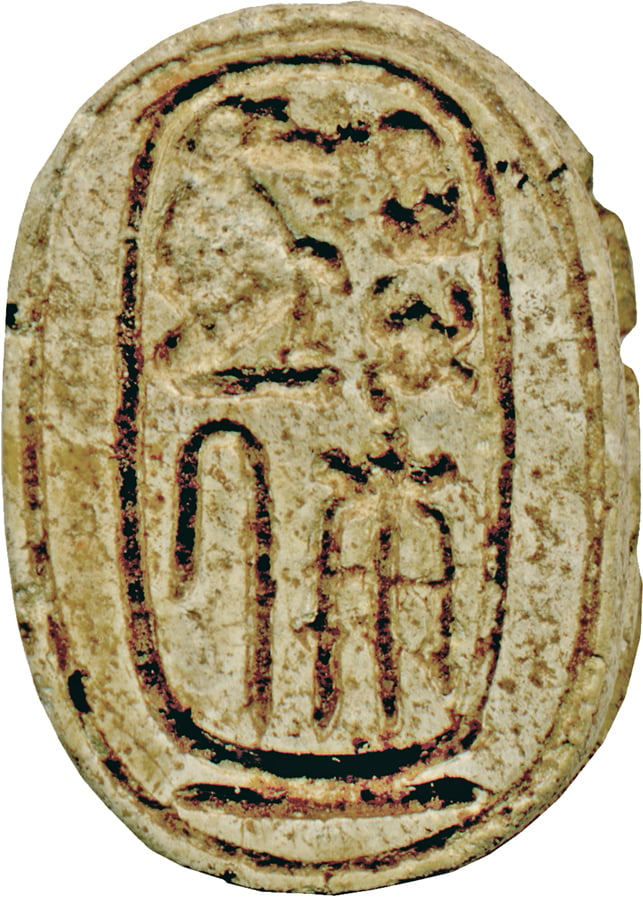
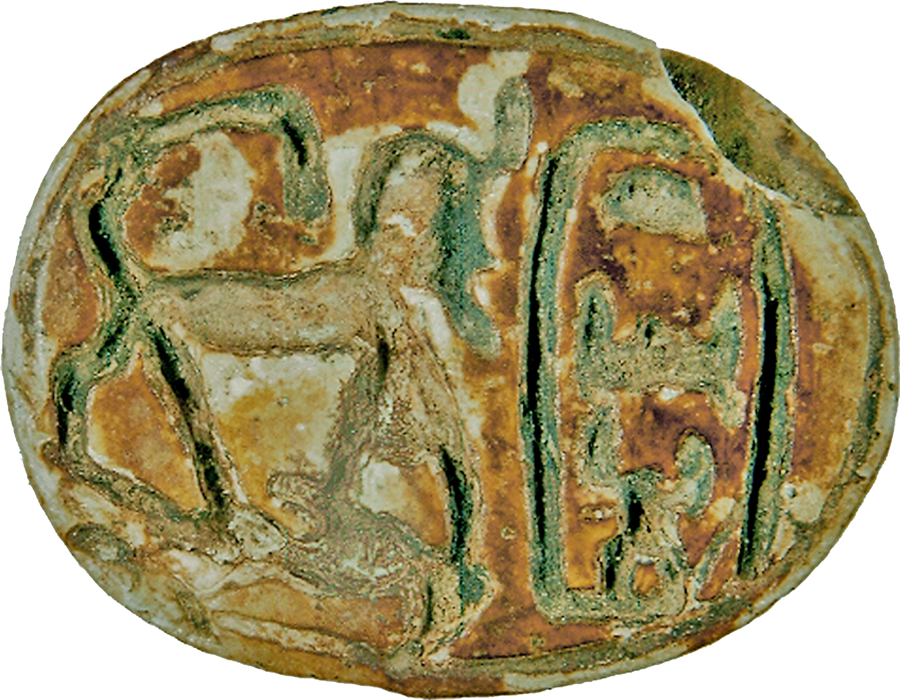
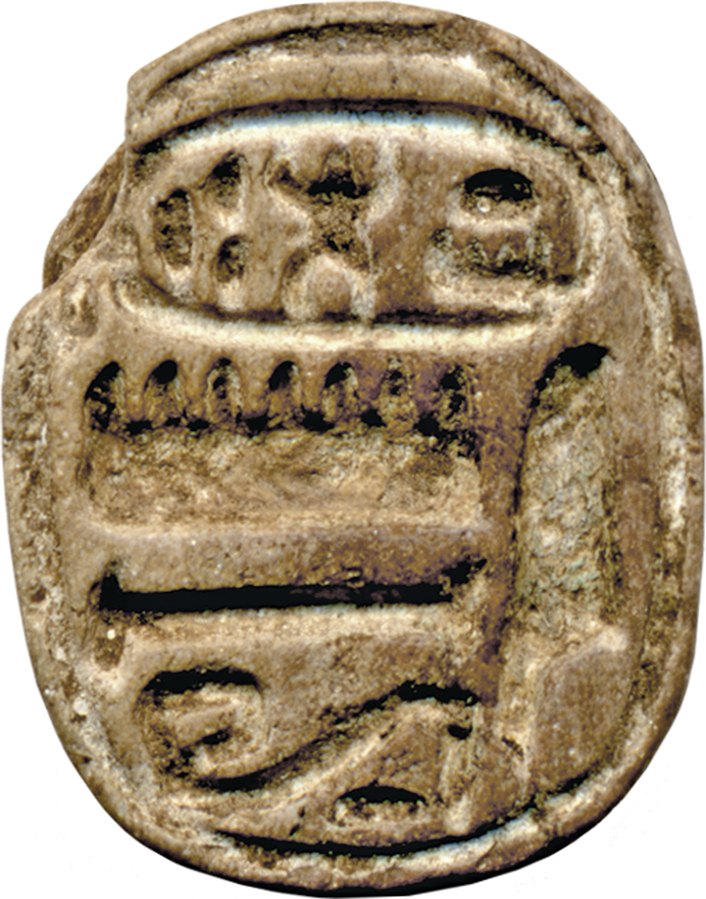
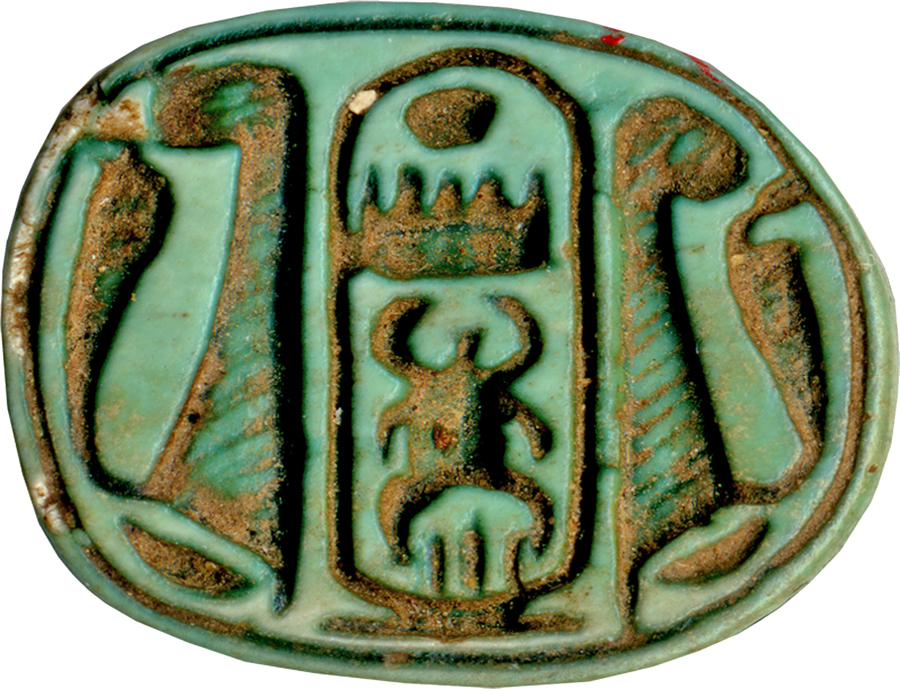
<p>This amulet should secure the everlasting stability and royal authority for Thutmose IV, whose throne name is in the cartouche, and provide a private owner with his royal patronage. One can speculate that scarabs with a royal name and this epithet were distributed during the foundation rituals of temples or monuments.</p><p>For the latest information about this object, <cite><a href='https://purl.thewalters.org/art/42.72' rel='external'>Scarab of Thutmose IV</a></cite>, visit the Online Collection of the Walters Art Museum.</p>
Machine-generated from the object's image on Jul 2026. Not curatorial; treat deities, names, and signs below as the model's best reading, not authority.
An oval scarab amulet with a raised, decorated base and a central cartouche-like field containing an enthroned or standing deity figure and surrounding signs.
The image shows a small, oval scarab/amulet with a thick raised border. On the left, there is a horizontal panel containing several small, rectangular or block-like signs arranged in rows; on the right, a framed vertical oval includes a seated or standing human/figure rendered in outline with a headdress and a patterned garment. The surface is mottled with patches of blue-green and darker staining consistent with ancient glaze traces or mineral discoloration. No clear Greek/Coptic/Arabic text is visible. The inscription/signs are present but are not clear enough to reliably transcribe or identify as a specific royal name beyond the catalogue attribution. The overall style is consistent with scarab iconography, though the exact reading is uncertain from the provided image resolution.
Spotted an error, a mis-mapped findspot, or have a suggestion? We read every note.