WALTERS-EG
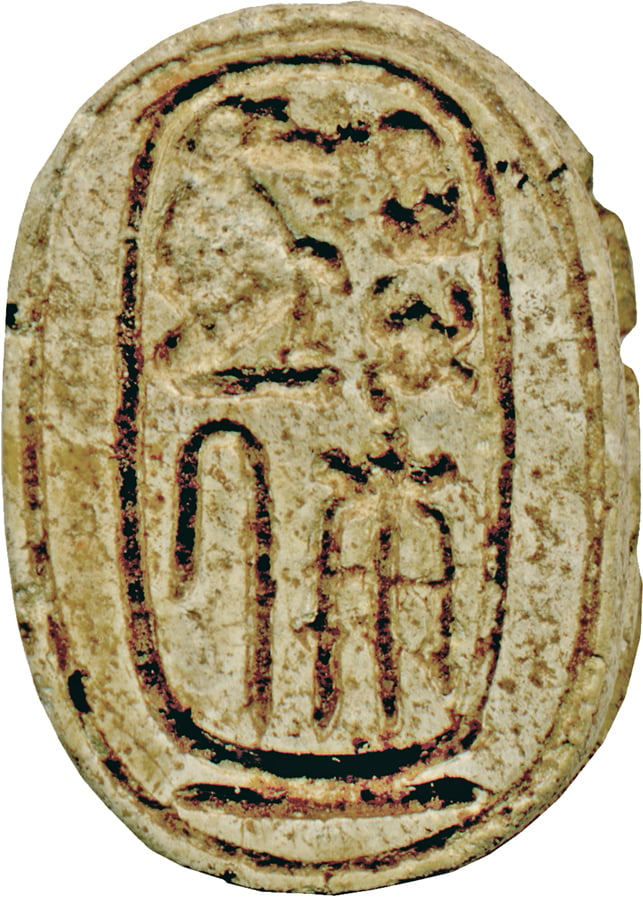
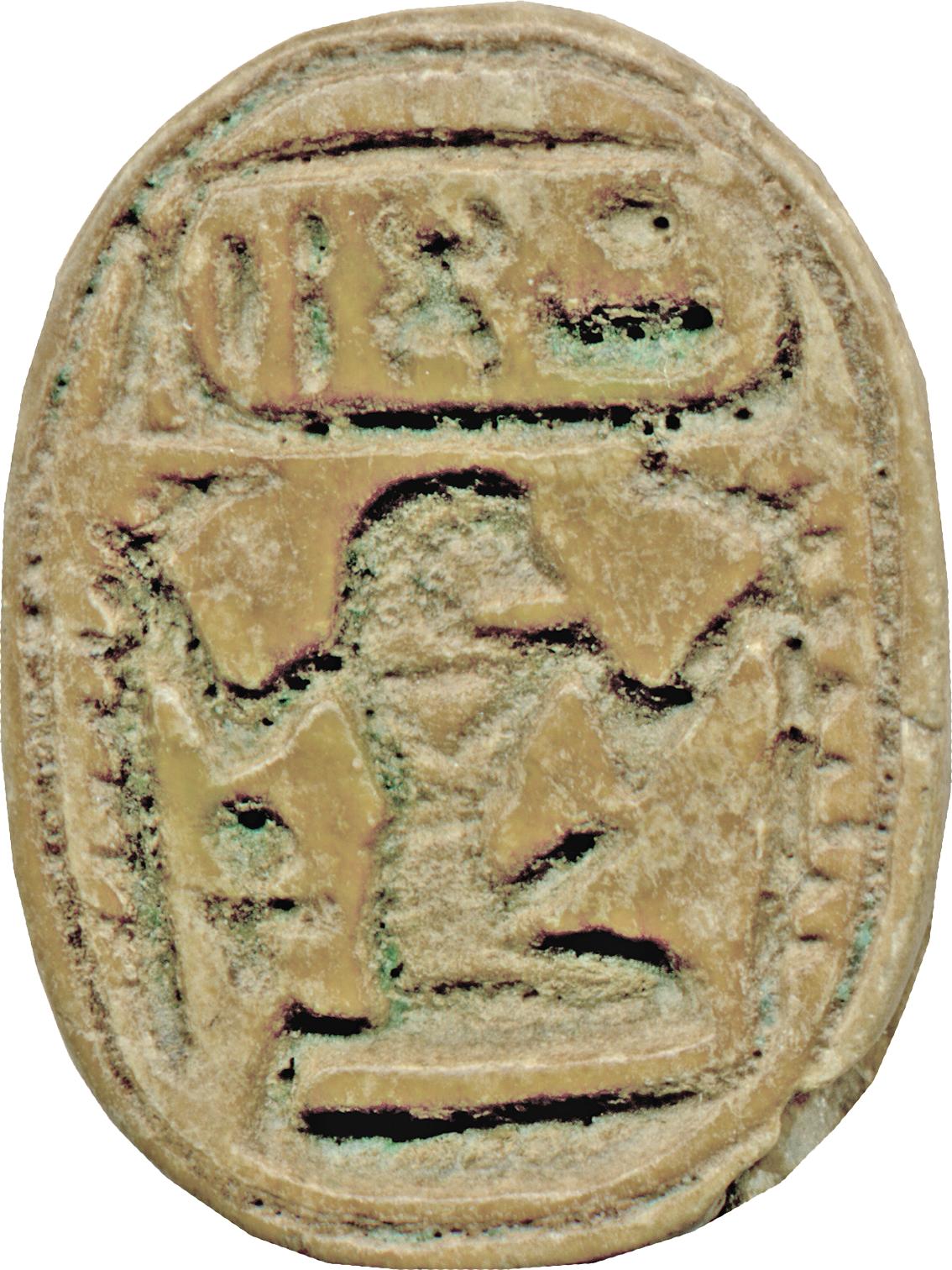
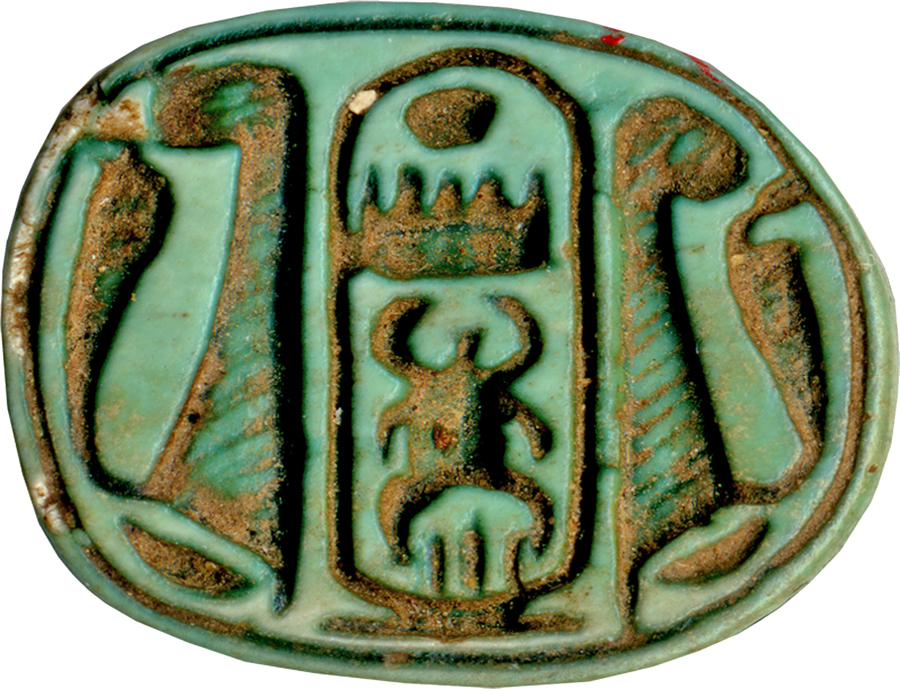
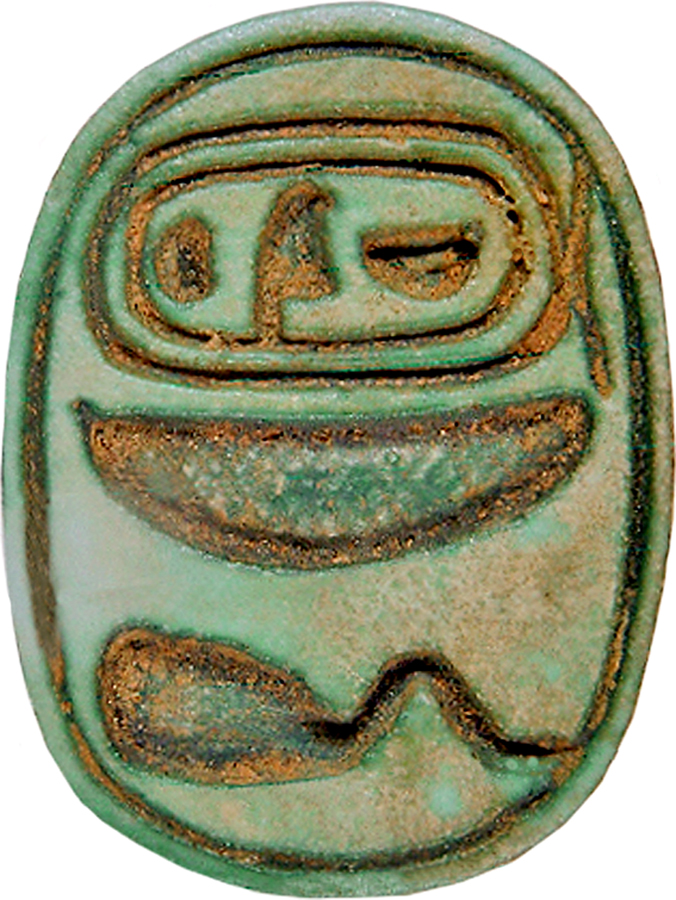
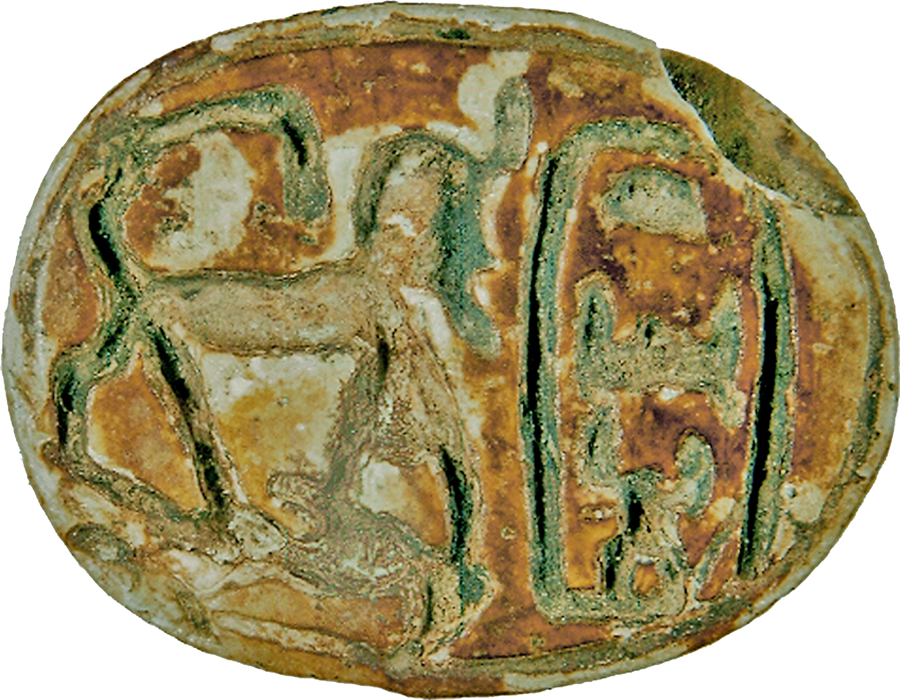
<p>This steatite scarab is inscribed with the throne name of Thutmosis III (1479-1425 BC) in sunk relief technique on the flat underside. The top of the scarab is high and has a simple carved design. The workmanship is slightly rough, and some of the details are out of shape. The piece functioned as an individualized amulet and was originally mounted or threaded. The amulet should ensure royal protection and support its owner, and make him as successful in warding against dangers as the king. The scarab was produced after the death of Thutmosis III, who was most probably understood as a protective god and successful model of divine kingship. The combination of different royal manifestations with protective renewal and good luck elements intends to assure the all-inclusive magic power of the amulet. The body and posture of the animal figure in the lower round of the scarab is similar to a donkey, but the long horns, which are too long to be ears, make it more likely that it represents the royal bull. Images of bulls on scarabs are mostly part of a motif showing the animal trampling on an enemy.</p><p>For the latest information about this object, <cite><a href='https://purl.thewalters.org/art/42.20' rel='external'>Scarab with the Cartouche of Thutmosis III (1479-1425 BC)</a></cite>, visit the Online Collection of the Walters Art Museum.</p>
Machine-generated from the object's image on Jul 2026. Not curatorial; treat deities, names, and signs below as the model's best reading, not authority.
Photograph of an oval Egyptian scarab/seal impression showing a dense field of incised hieroglyphs and a central cartouche-like name surrounded by vertical sign columns.
The image shows a worn, oval scarab-shaped seal with a light beige body. Incised hieroglyphs run across the field in dark brown/black pigment or shadow within the engraving. A prominent central, rectangular cartouche-like frame occupies the middle, flanked by vertical columns of additional signs. Surrounding the cartouche are other hieroglyphic signs arranged in rows and columns; the exact individual sign forms are partly obscured by abrasion, loss of detail, and surface discoloration. No clear Greek, Coptic, or Arabic text is visible. No modern inscriptions are apparent. The object’s surface shows mottled staining and areas of pitting consistent with age; a blue-green glaze is not clearly distinguishable in this image due to overall discoloration, though the light-colored background could be consistent with glazed steatite in some lighting.
Spotted an error, a mis-mapped findspot, or have a suggestion? We read every note.