WALTERS-EG
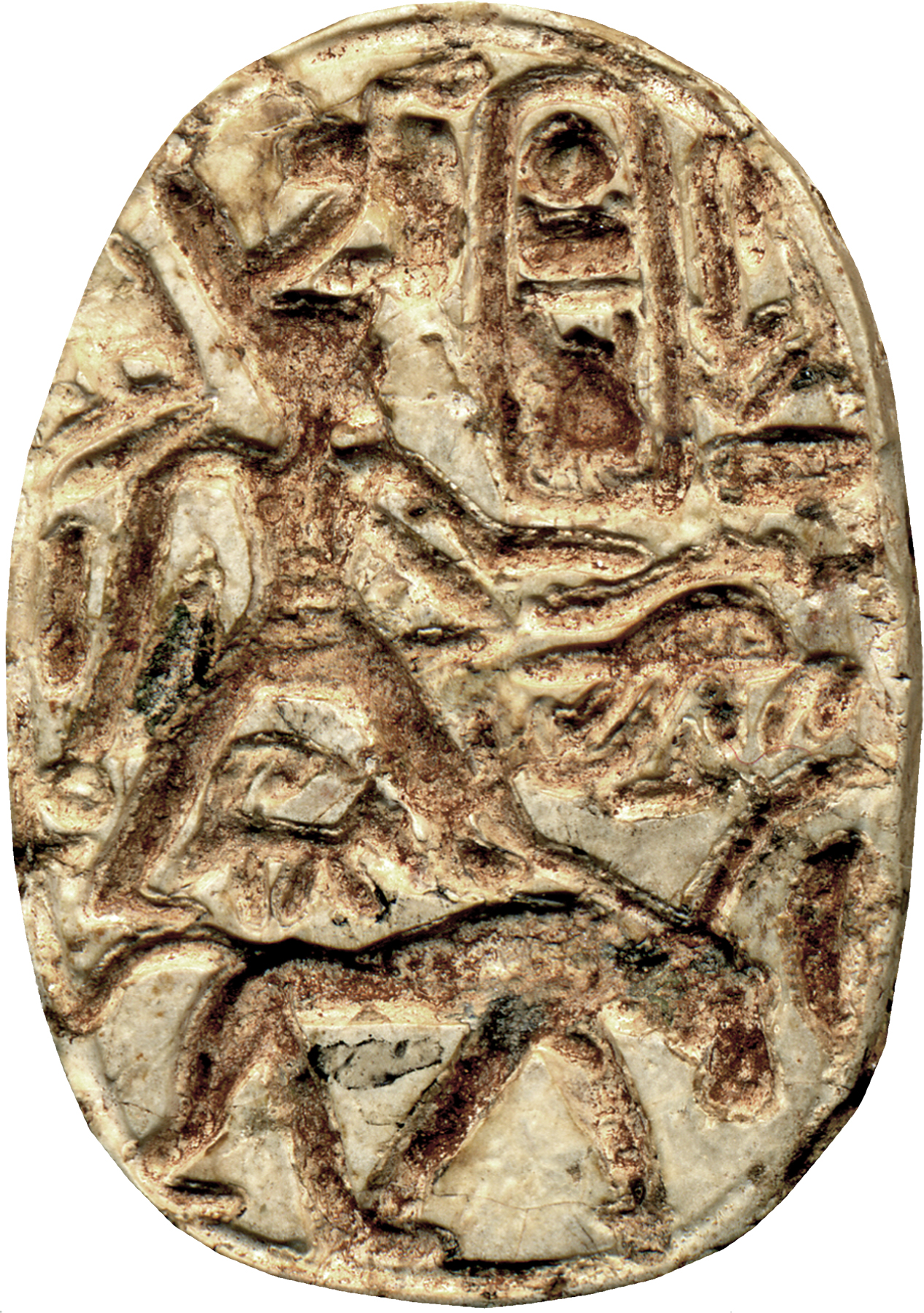
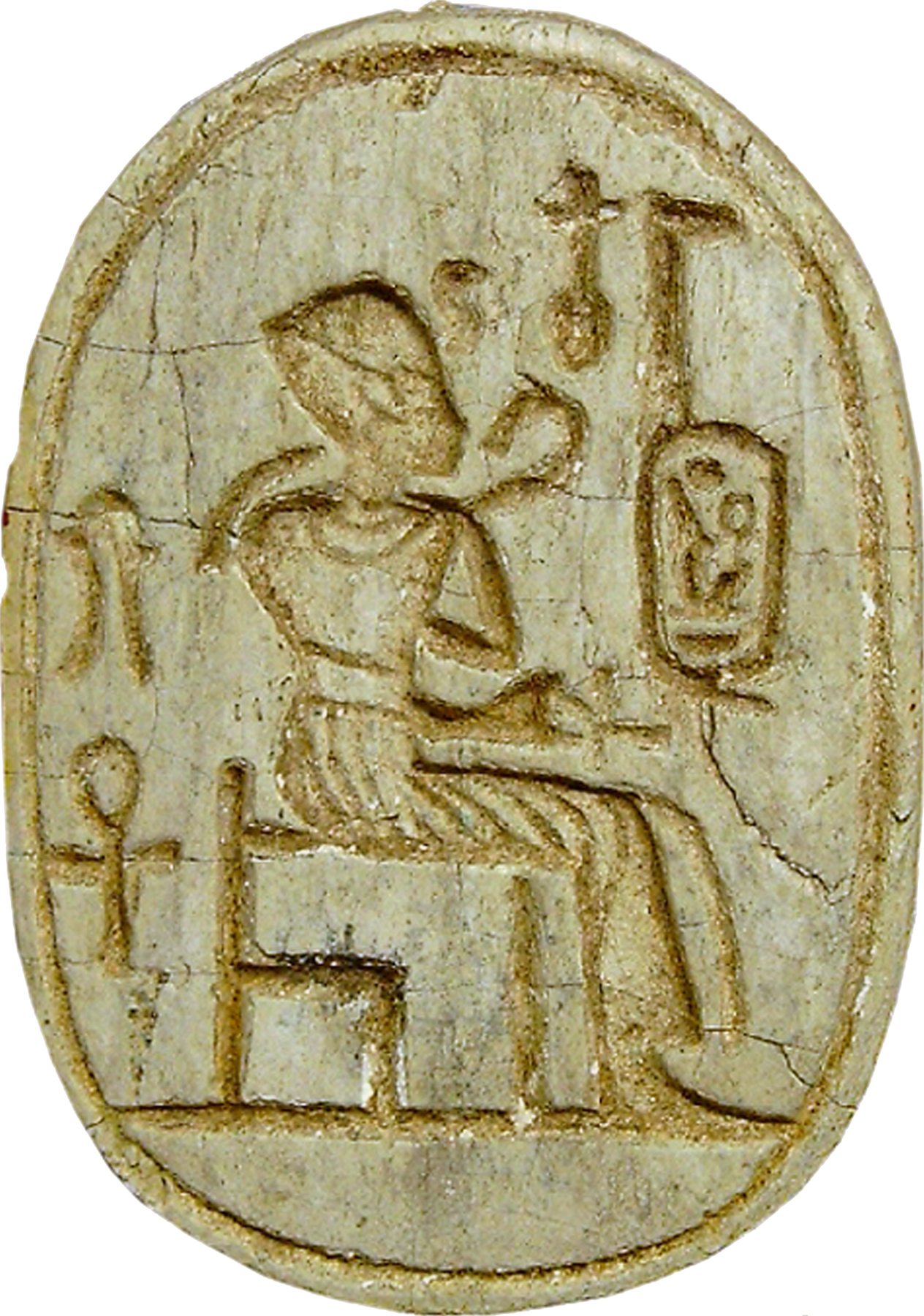
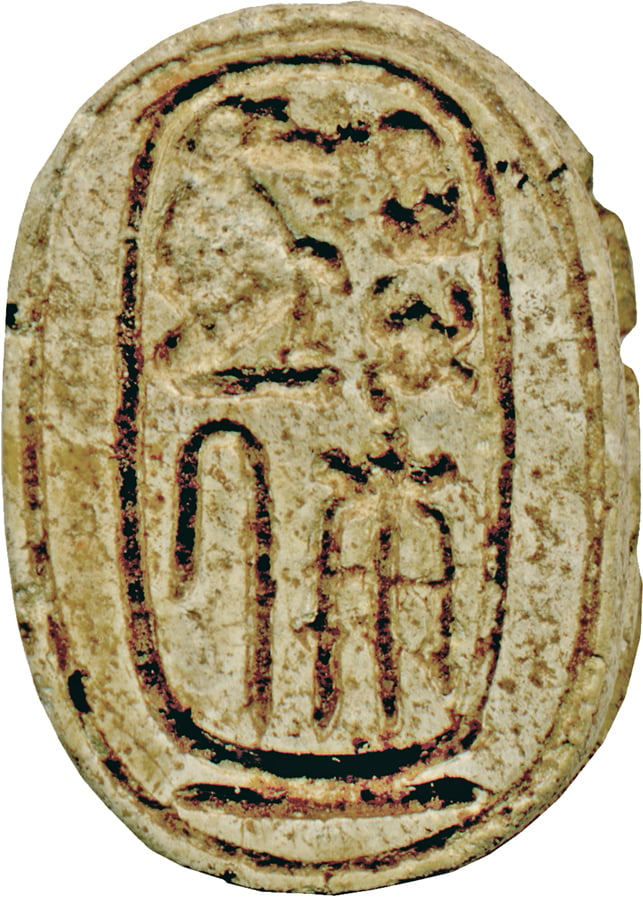
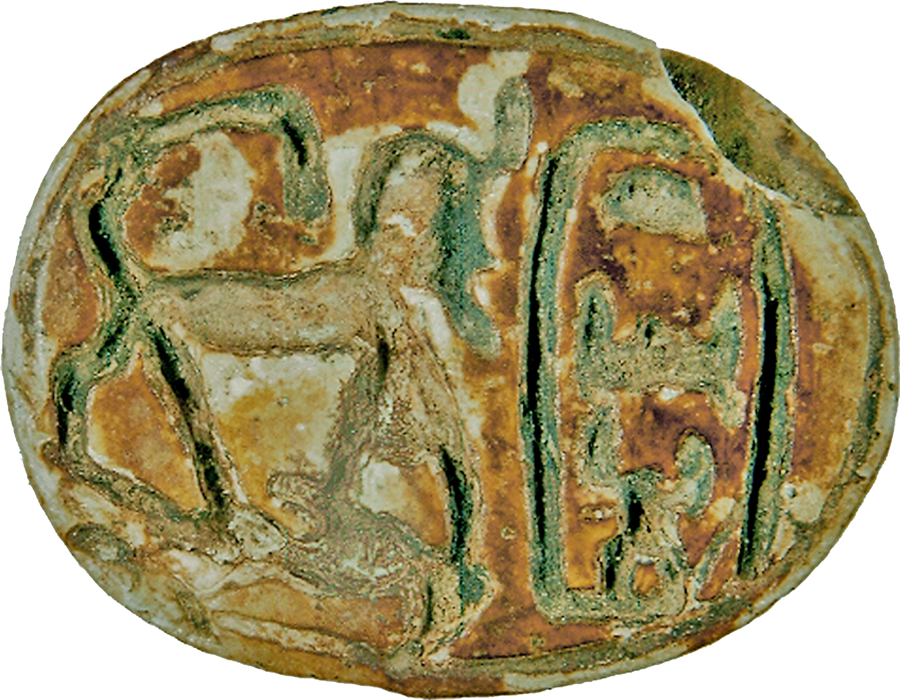
<p>This steatite scarab is glazed and incised. The flat underside contains an inscription with the throne name of Amenophis III (1388-1351/1350 BCE) and a power loaded epithet. The design on the back is very detailed, with deelpy incised lines and regular flow. The piece is carefully made and the workmanship is good. This piece functioned as an individualized protective amulet, and would have originally been mounted or threaded. The amulet should secure royal authority and strength for the king, and guarantee for a private owner his royal patronage and protection. The unusual size of the epithet in comparison to the name of the king underlines the protective function of the scarab. Together with the cryptographic reading of the cartouche as Amun it expresses that the god is the "Lord of strength," that my explain the unusual size of the epithet.</p><p>For the latest information about this object, <cite><a href='https://purl.thewalters.org/art/42.80' rel='external'>Scarab with the Throne Name of Amenophis III (1388-1351/1350 BCE)</a></cite>, visit the Online Collection of the Walters Art Museum.</p>
Machine-generated from the object's image on Jul 2026. Not curatorial; treat deities, names, and signs below as the model's best reading, not authority.
Close-up of a small Egyptian faience scarab seal showing an incised oval cartouche-like field with dark brown/burgundy glaze lines on a green-blue glazed surface.
The object is a circular/oval scarab form with a thick green-blue glazed border. Within the central field, there are incised, dark brown lines forming an elongated oval cartouche-like frame containing two separate grouped signs that resemble vertical/curved strokes (exact reading unclear). Below the central frame, another incised line forms a curved/serpentine shape consistent with lower cartouche components or additional hieroglyphic strokes. The glaze is worn with scattered dark speckling and loss of surface in places, especially around the incised lines, which appear to have filled or oxidized. No readable Greek, Coptic, or Arabic is visible. No clear deity determinatives are distinguishable from this resolution; the main evidence is the presence of an inscribed cartouche-style inscription expected for a royal scarab. The catalogue’s attribution to Amenophis III is plausible given the format but the specific throne name is not legible enough to confirm.
Spotted an error, a mis-mapped findspot, or have a suggestion? We read every note.