WALTERS-EG
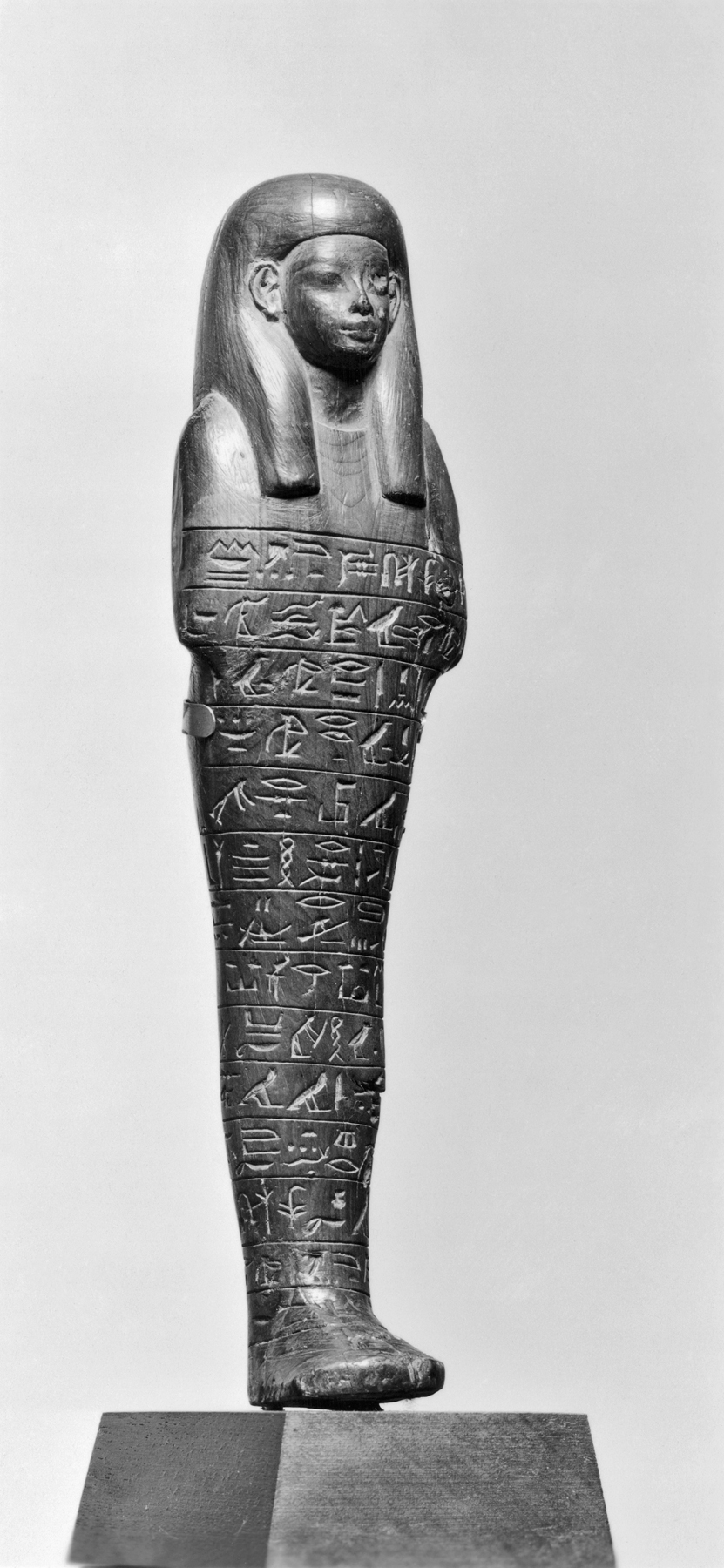
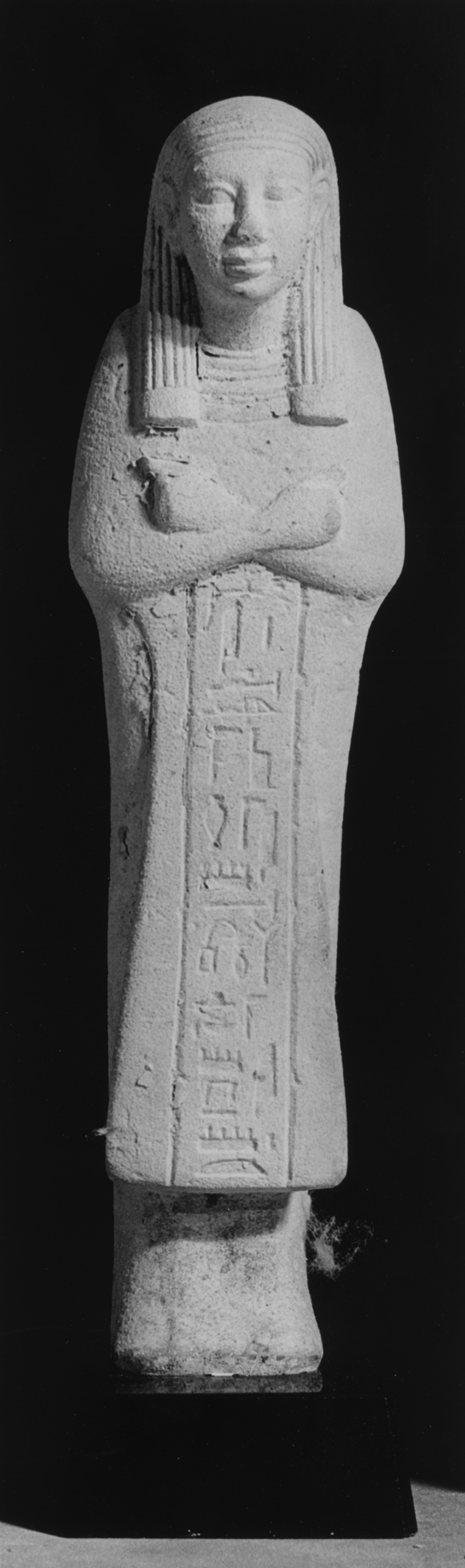
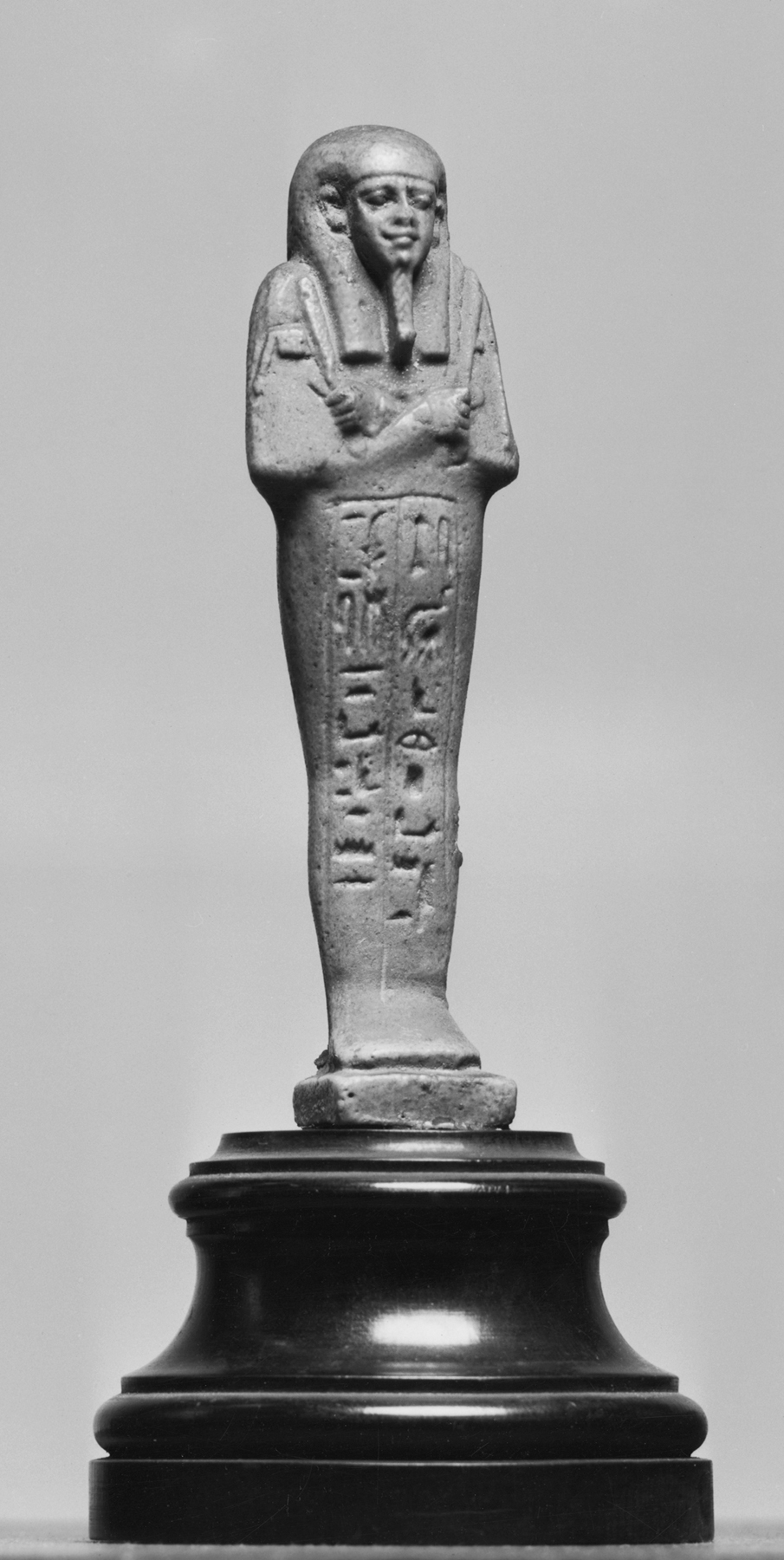
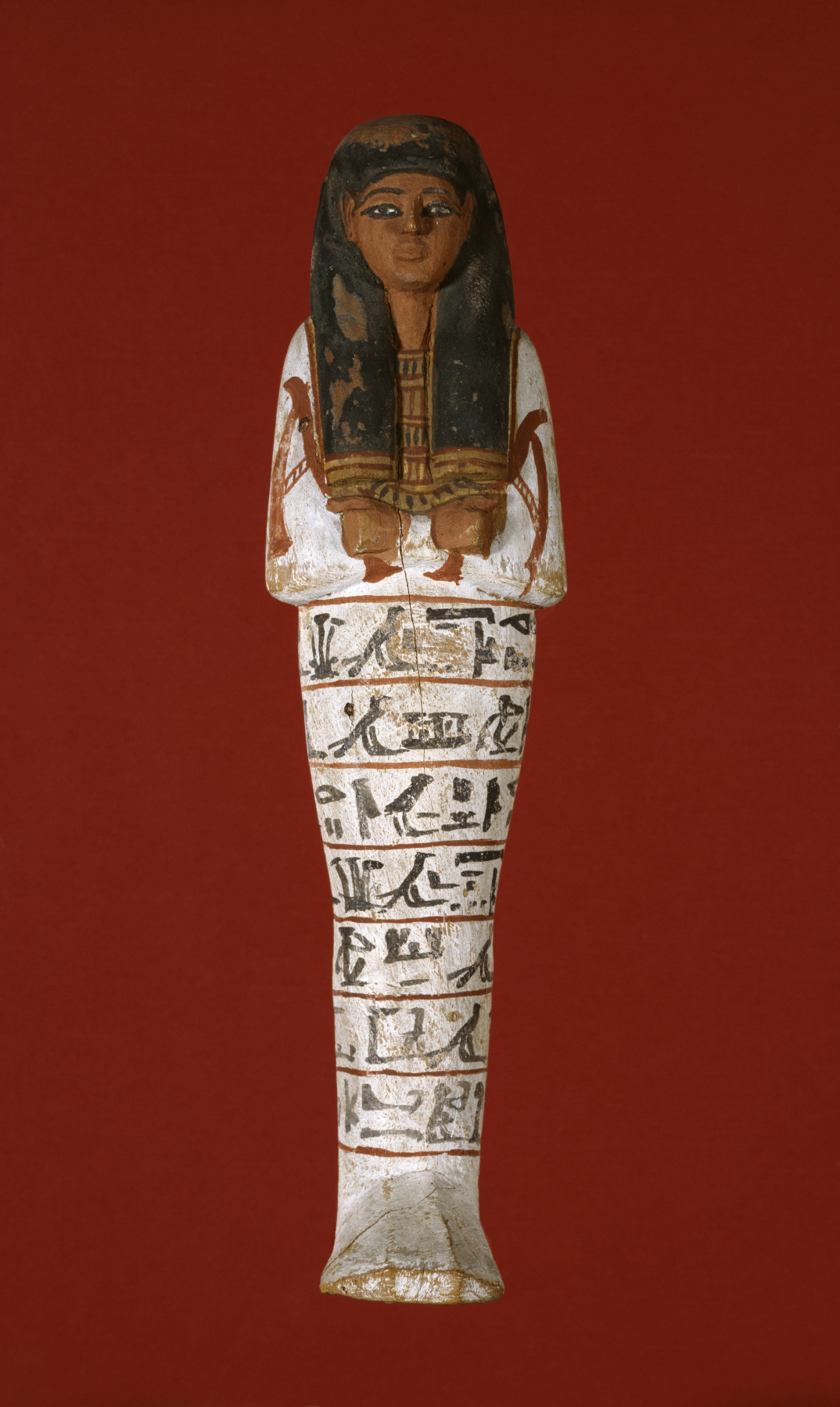
<p>This dark gray stone ushabti, belonged to Amen-em-ipet, the Chief of the Doorkeepers. Typical of ushabtis of the Ramesside Period he does not wear a mummiform garment, but rather a long pleated robe, representative of the clothing of the upper class. On the pleated apron at the front of the robe. The dividing lines between the lines of text have been painted red. The figure stands upon a small rounded base and seems to have a squared pillar between his feet. Also typical of this period he wears a duplex wig with the hair curled into small plaits and a double necklace. His arms are crossed over his chest and he holds a "djed" pillar, the symbol of stability in his right hand, and a "tjet" or knot of Isis in his left hand for protection. His face is broad and reminiscent of a funerary mask, with delicate cosmetic lines. The mouth is well defined and almost smiling and he wears a very short squared beard. There is a modern hole beneath the feet from a previous mounting.</p><p>For the latest information about this object, <cite><a href='https://purl.thewalters.org/art/22.177' rel='external'>Ushabti Figure of Amen-em-ipet</a></cite>, visit the Online Collection of the Walters Art Museum.</p>
Machine-generated from the object's image on Jul 2026. Not curatorial; treat deities, names, and signs below as the model's best reading, not authority.
A standing Egyptian funerary ushabti (shabti) figure holding a writing tablet and bound bundle/tools, with a stylized wig and painted/engraved facial features.
The artifact is shown frontally in a standing, mummiform style. The figure has a broad wig/striped headdress (usekh-style banding visible on the head and down the shoulders), a carved face, and a pleated or striped garment. Both arms are crossed: one forearm holds a rectangular tablet inscribed with vertical lines (text marks are too indistinct to read reliably), while the other hand supports a bundled implement near the torso. The lower body flares into a skirt/pleated kilt with incised paneling, and the feet rest on a small base. No clear cartouche or royal name is legible in the image. The catalogued material is “dark gray serpentine”; the visible surface appears dark gray with a glossy/stone-like finish, which is consistent with a dark mineral material, though the exact identification cannot be confirmed visually. No Greek/Coptic/Arabic text is visible. No clear, readable hieroglyphic excerpt beyond indistinct incised lines on the tablet; therefore inscription content remains unknown.
Spotted an error, a mis-mapped findspot, or have a suggestion? We read every note.