WALTERS-EG
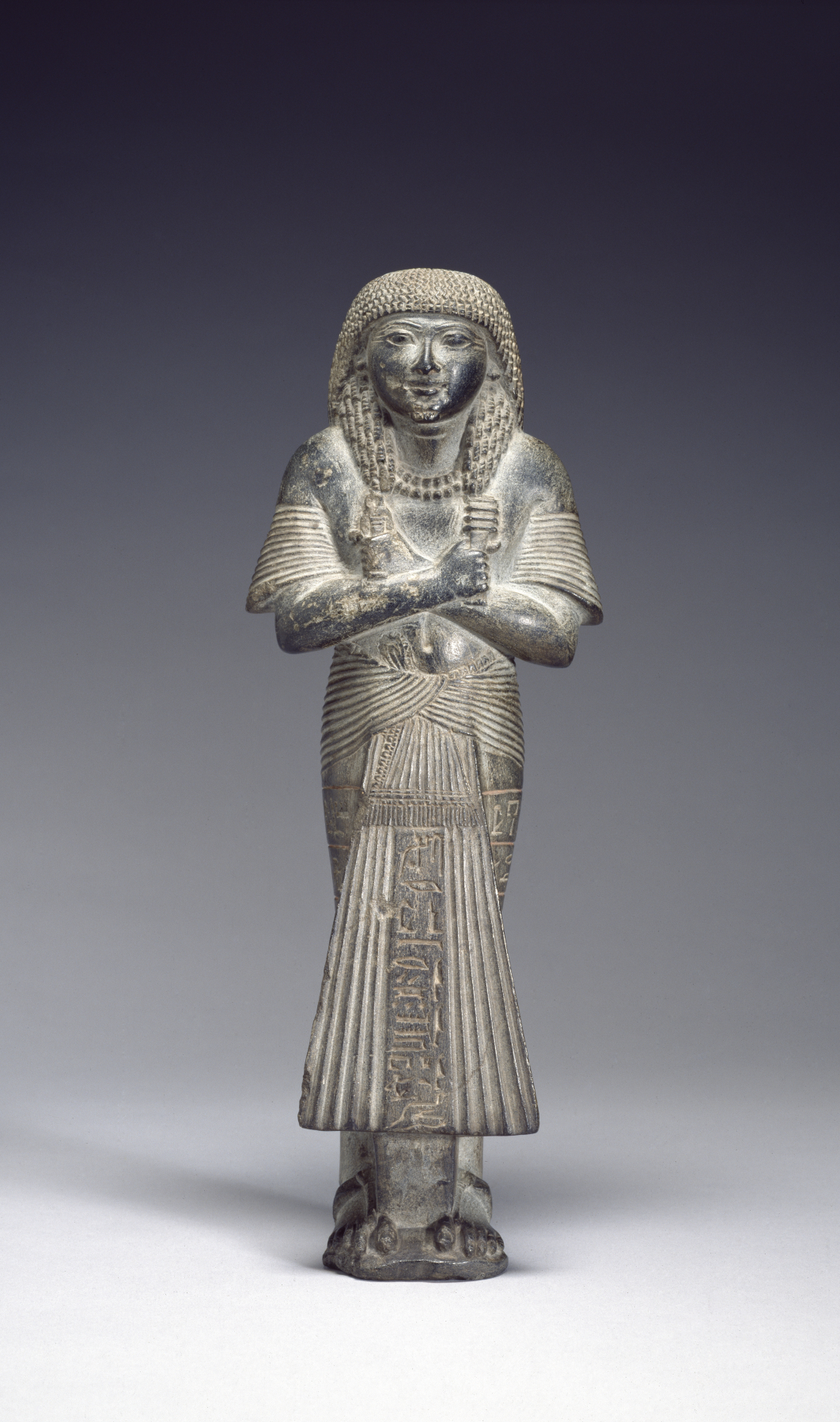
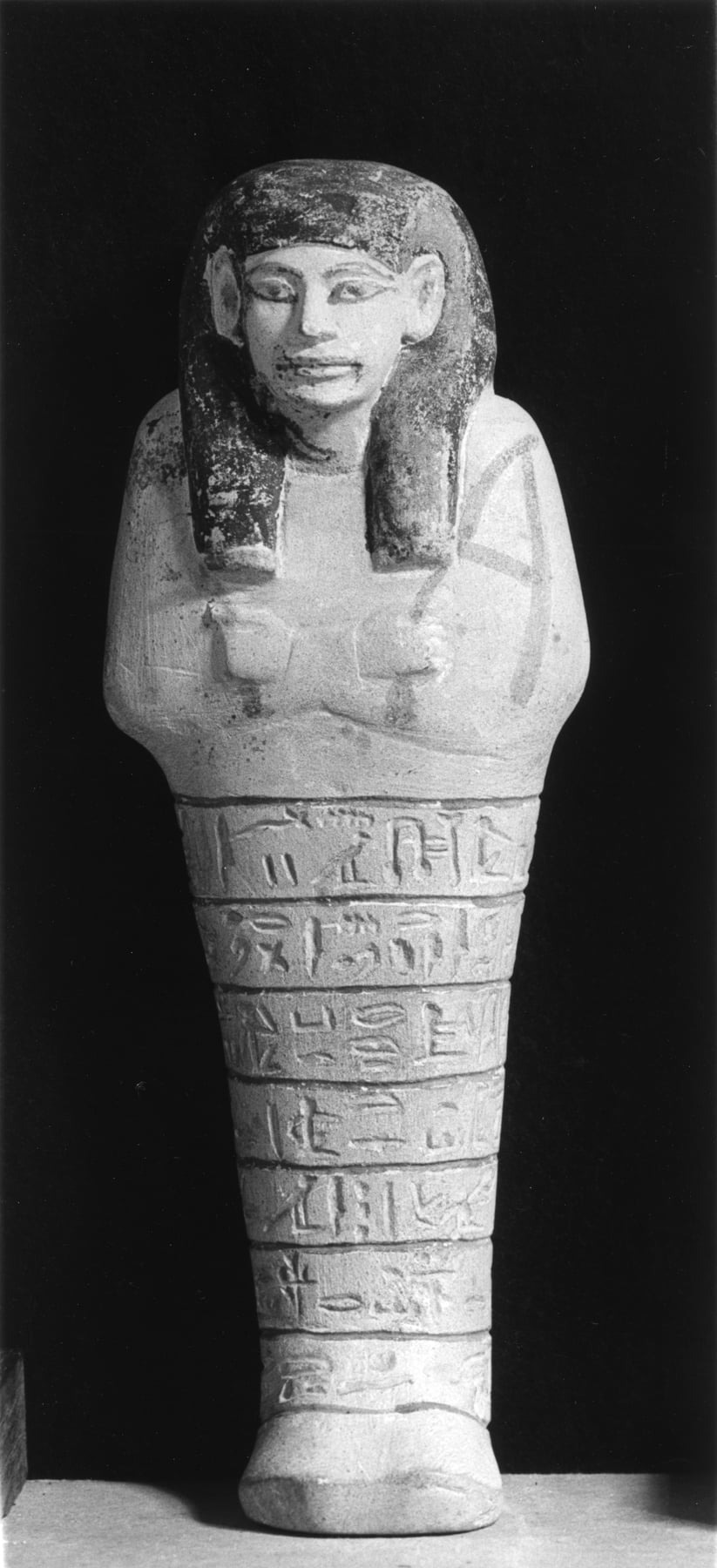
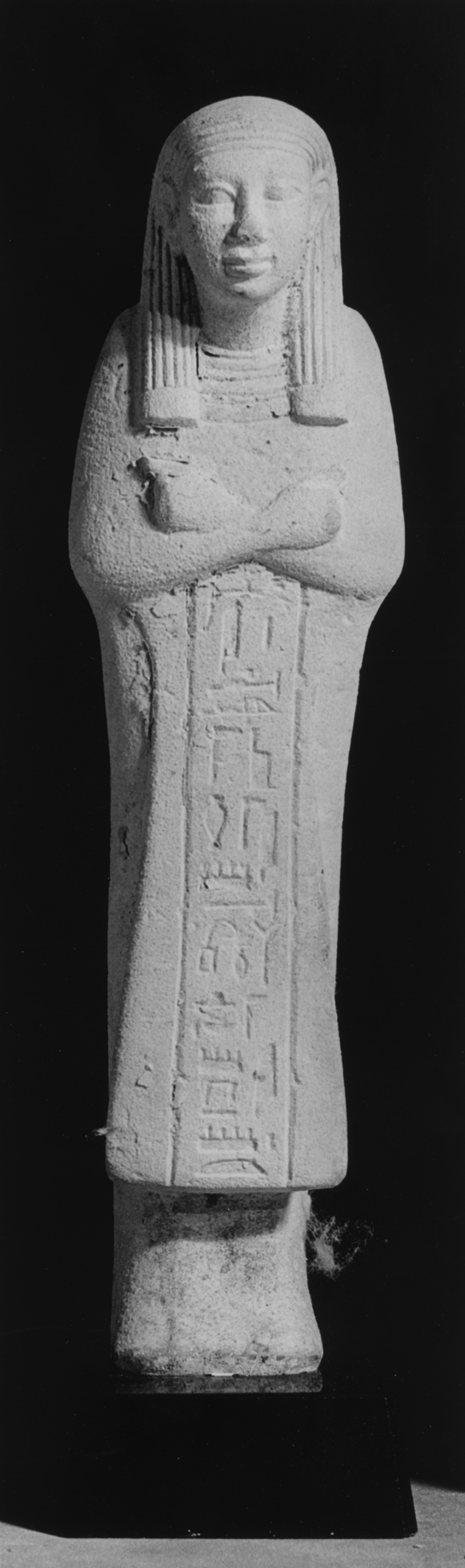
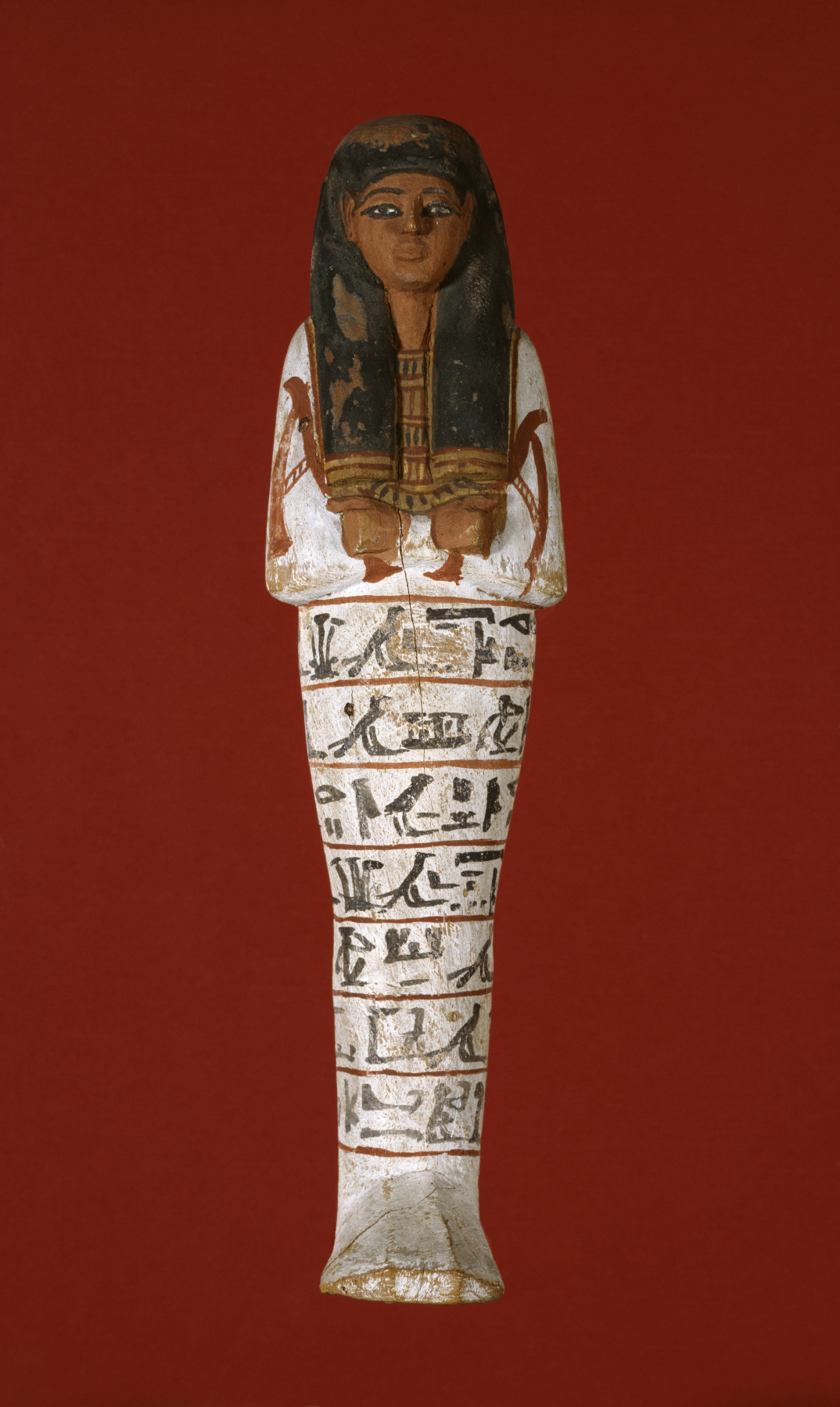
<p>An ebony ushabti was produced for Irtu, a Royal Scribe and Overseer of the Horses of the Lord of the Two Lands. The eyes and eyebrows accented in black pigment. The body is enveloped in a mummiform garment and a tripartite wig. The arms are visible in outline only from the shoulder to the elbow. There are 14 horizontal lines of text across the form of the figure, including the name and titles of the man and an excerpt from Chapter 6 of "The Book of the Dead." There is a small hole in the top of the foot. The back is subtly modeled but is void of detail.</p><p>For the latest information about this object, <cite><a href='https://purl.thewalters.org/art/22.180' rel='external'>Ushabti-Figure of Irtu</a></cite>, visit the Online Collection of the Walters Art Museum.</p>
Machine-generated from the object's image on Jul 2026. Not curatorial; treat deities, names, and signs below as the model's best reading, not authority.
A standing, mummiform ushabti figure of Irtu with incised painted hieroglyphic inscriptions across the body.
The artifact shows a human-shaped, mummiform statue standing upright on a rectangular base. The head has a stylized wig covering the sides and a smooth, rounded face with hands clasped at the chest (or held close to the torso). The torso and legs are covered by dense hieroglyphic signs, incised into the surface and filled with dark pigment. Horizontal bands of text appear along the midsection and continuing down the legs, with some signs also on the chest area. No separate cartouches are clearly identifiable in the provided image, and there is no clearly legible non-hieroglyphic text. The surface appears dark with reflective highlights, consistent with a dark material and pigment remaining in the incisions.
Spotted an error, a mis-mapped findspot, or have a suggestion? We read every note.