WALTERS-EG
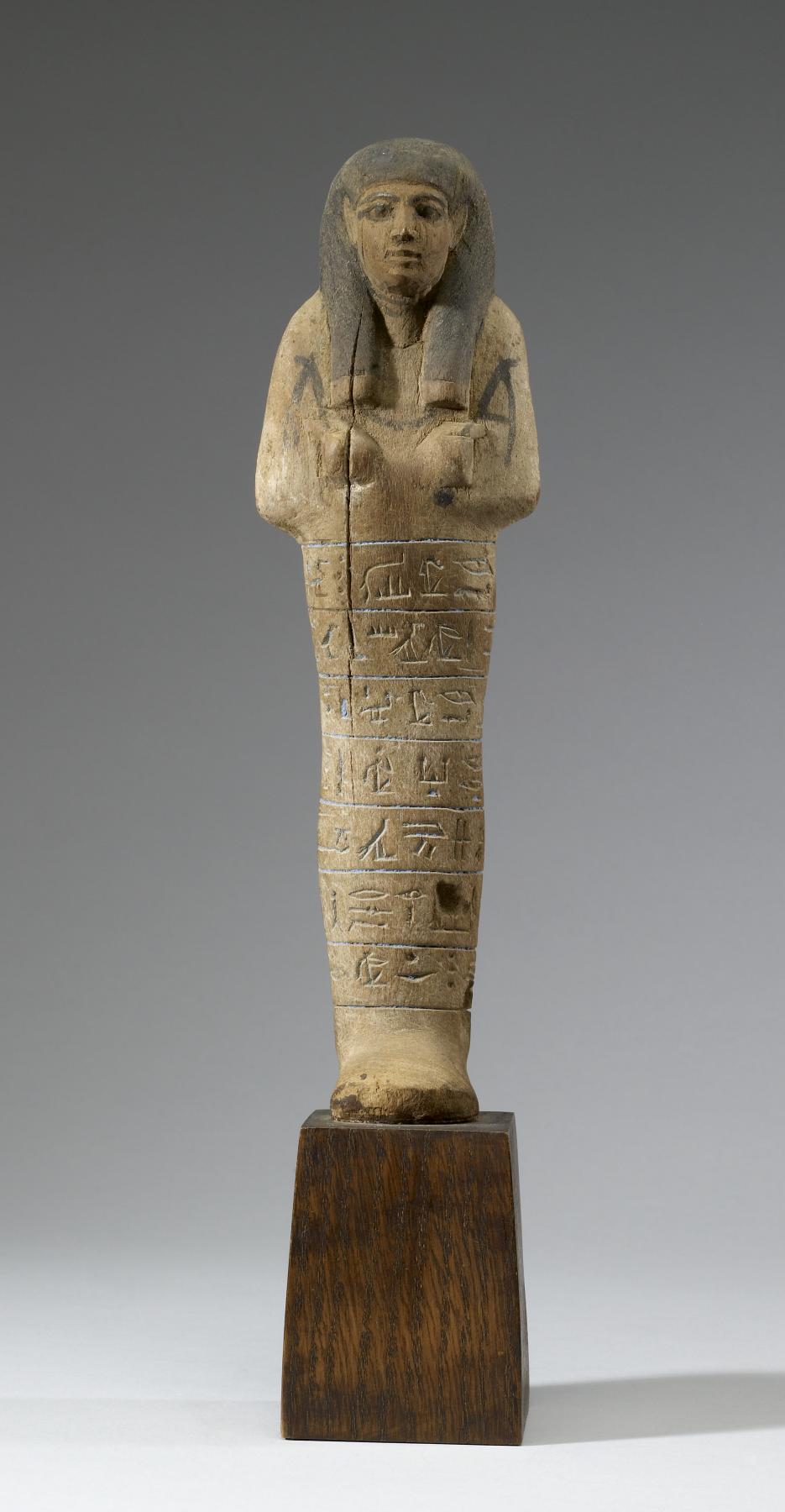
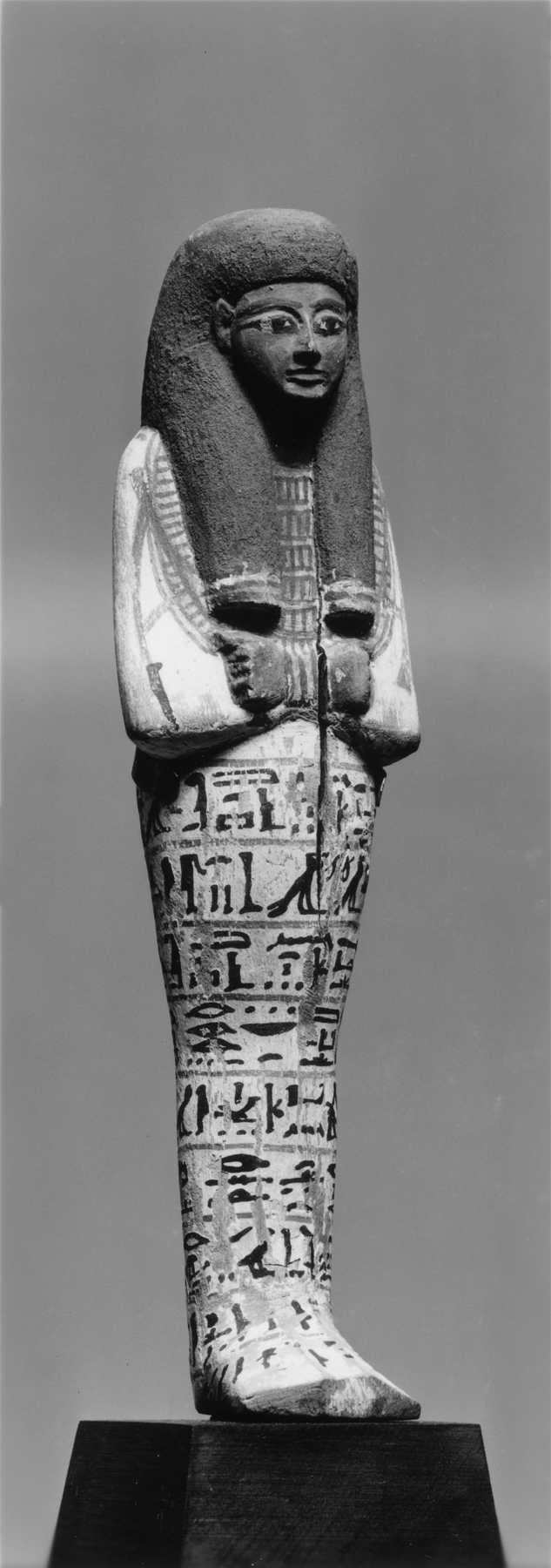
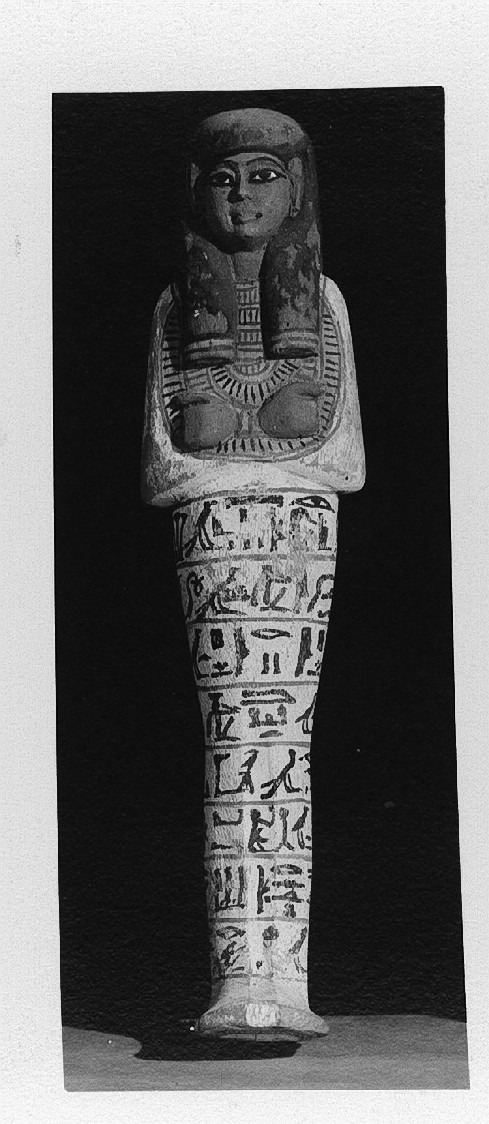
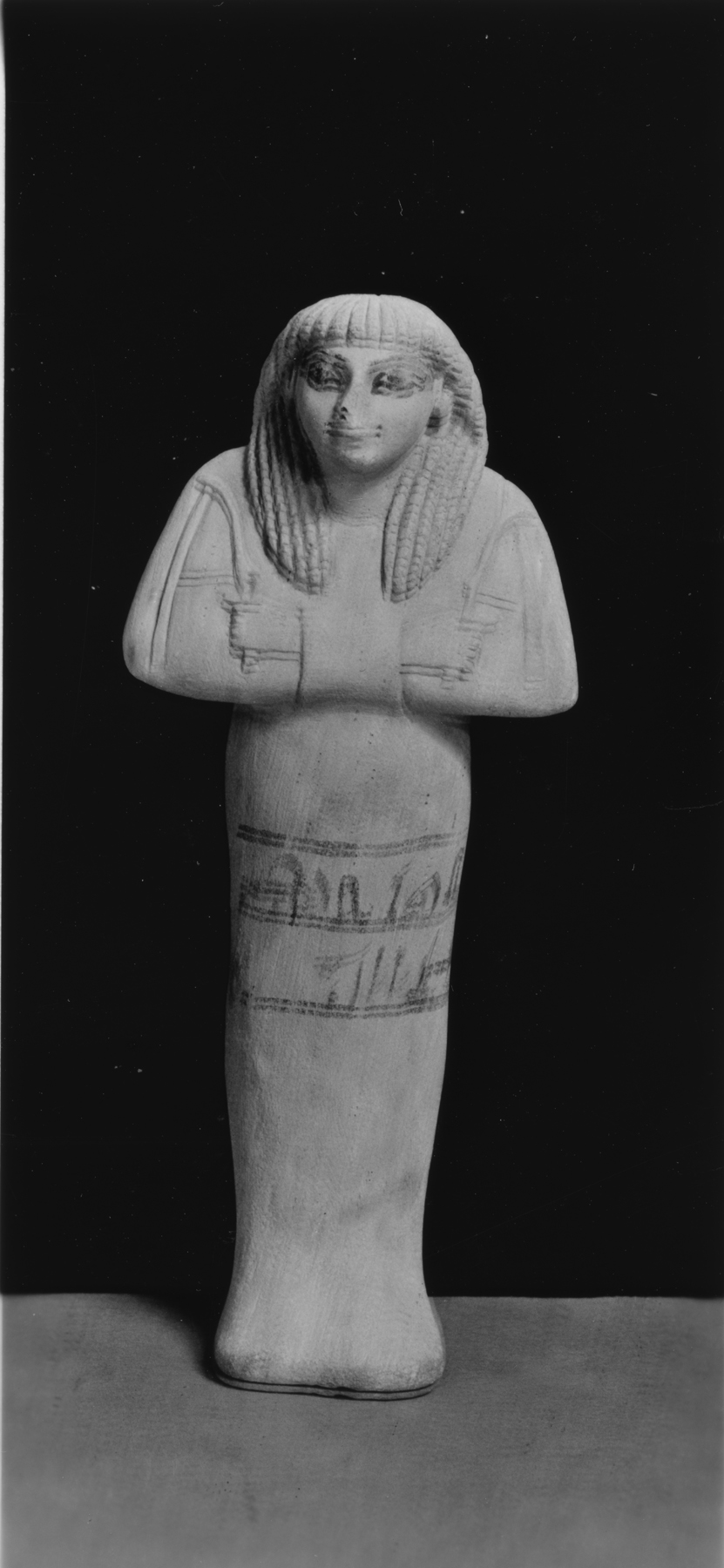
<p>This carved and painted ushabti figure has long hair, necklaces, crossed arms and no tools. The tools may have originally been painted on. There is an inscription on the front of the skirt.</p><p>For the latest information about this object, <cite><a href='https://purl.thewalters.org/art/22.231' rel='external'>Ushabti</a></cite>, visit the Online Collection of the Walters Art Museum.</p>
Machine-generated from the object's image on Jul 2026. Not curatorial; treat deities, names, and signs below as the model's best reading, not authority.
A limestone ushabti figure with a human-like seated/standing body, wearing a tripartite wig and a broad collar, holding a staff-like object and an inscribed base on the torso.
The object is a small sculpted figure in the form of an ushabti: a rounded head with a tripartite-style wig and a stylized face, a broad collar across the chest, and arms held in front. A staff-like element is visible across the lower part of the torso/arms area. The front of the figure’s body includes vertical columns of incised hieroglyphs (text worn but arranged in neat registers) extending down the center. The feet and lower base are partially worn; the figure stands on a rectangular plinth. The surface appears light gray/white limestone; traces of red paint are not clearly confirmable in this image due to lighting and wear, though the catalogue reports red traces. No Greek, Coptic, or Arabic text is visible. No clearly identifiable cartouches or royal names are legible; the hieroglyphs are present but too worn/unclear to reliably extract a specific royal titulary.
Spotted an error, a mis-mapped findspot, or have a suggestion? We read every note.