WALTERS-EG
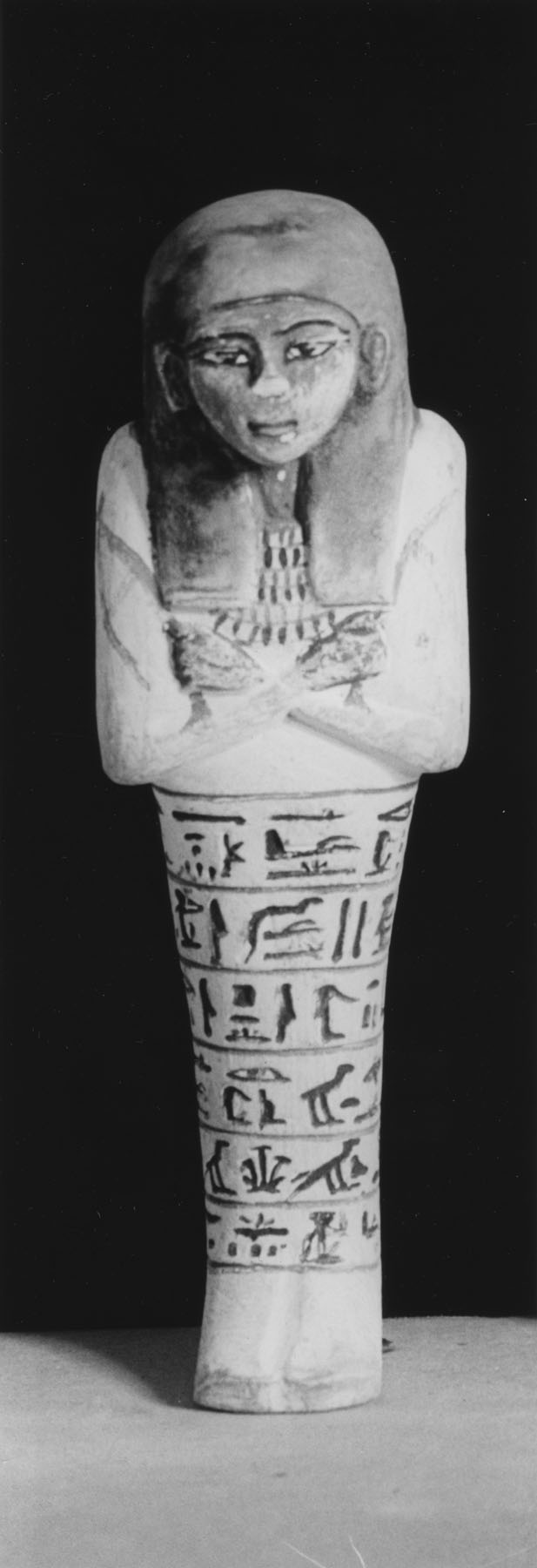
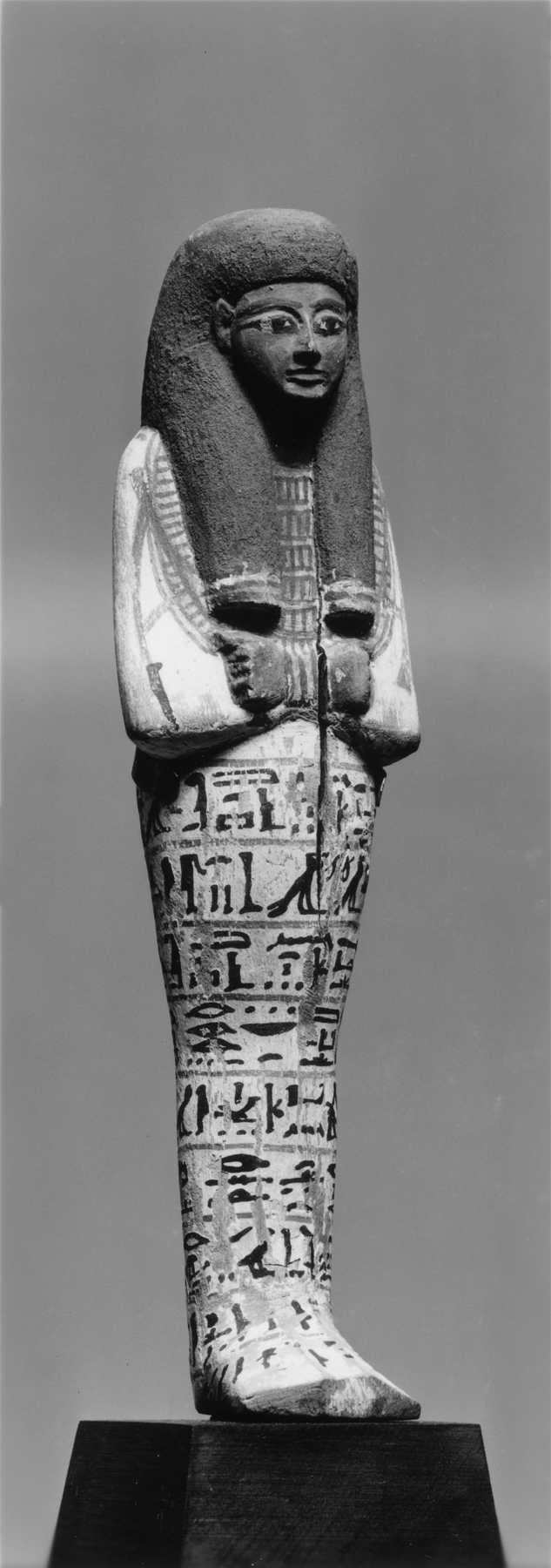
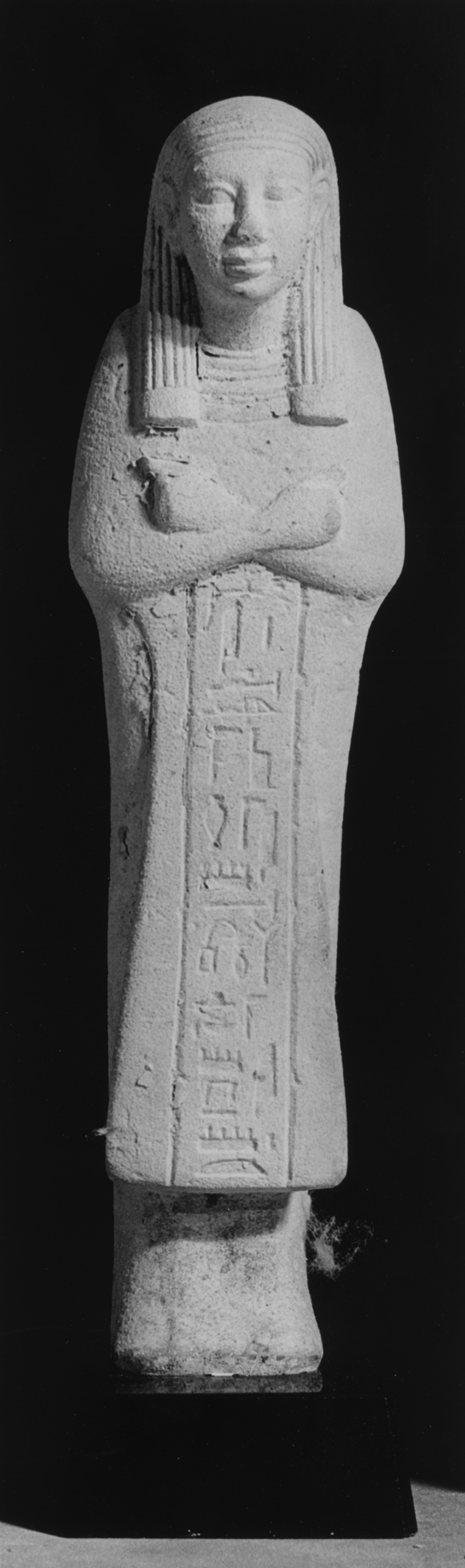
<p>The long inscription on the mummiform body of the figure contains the ushabti spell from the Book of the Dead, the name Psamtik, and his title, "chief royal scribe," as well as the name of his mother, Merit-Neith.</p><p>For the latest information about this object, <cite><a href='https://purl.thewalters.org/art/48.392' rel='external'>Ushabti Figure of Psamtik</a></cite>, visit the Online Collection of the Walters Art Museum.</p>
Machine-generated from the object's image on Jul 2026. Not curatorial; treat deities, names, and signs below as the model's best reading, not authority.
A single small Egyptian figure (shabti/ushebti type) shown standing with arms crossed, wearing a striped collar and a long, beaded-texted garment/body base filled with hieroglyphic-style bands.
The image depicts a sculpted standing figure against a plain background. The figure has a male-presenting face with a nemes-like wig (striped headdress) and a round ear ornament. The arms are crossed across the chest with both hands near the forearms. Around the neck is a broad collar with raised segments. The torso and lower body are covered by multiple horizontal registers/bands of incised or painted linework resembling hieroglyphs, arranged in successive rows wrapping the front of the figure. No clear cartouche shape is visible at this resolution. There is no Greek/Coptic/Arabic text visible. The surface appears smooth and light-toned, consistent with a small ceramic/faience object as catalogued, though the exact material cannot be confirmed solely from the grayscale image. The object is intact overall; details are crisp enough to see decorative bands but not clear enough to confidently transcribe individual signs.
Spotted an error, a mis-mapped findspot, or have a suggestion? We read every note.