WALTERS-EG
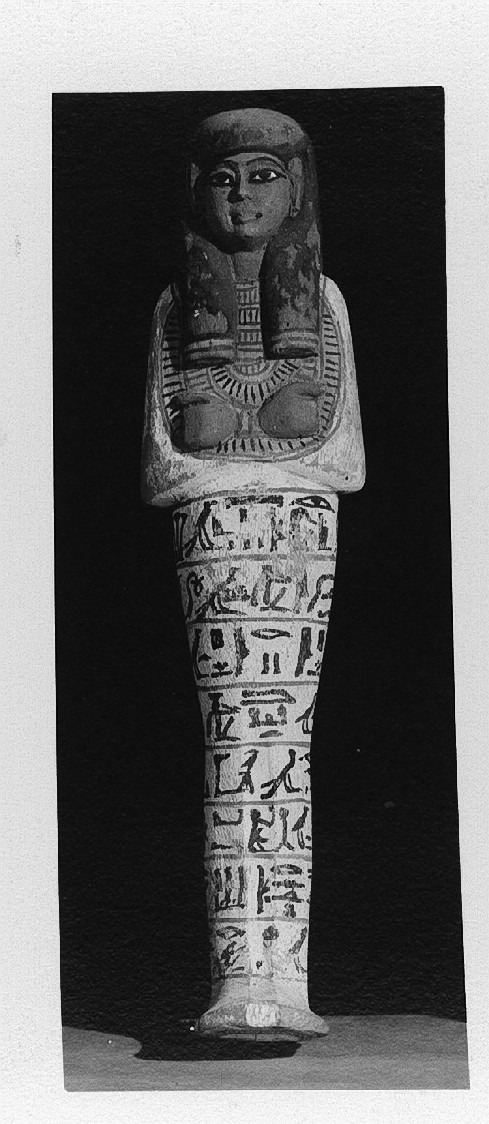
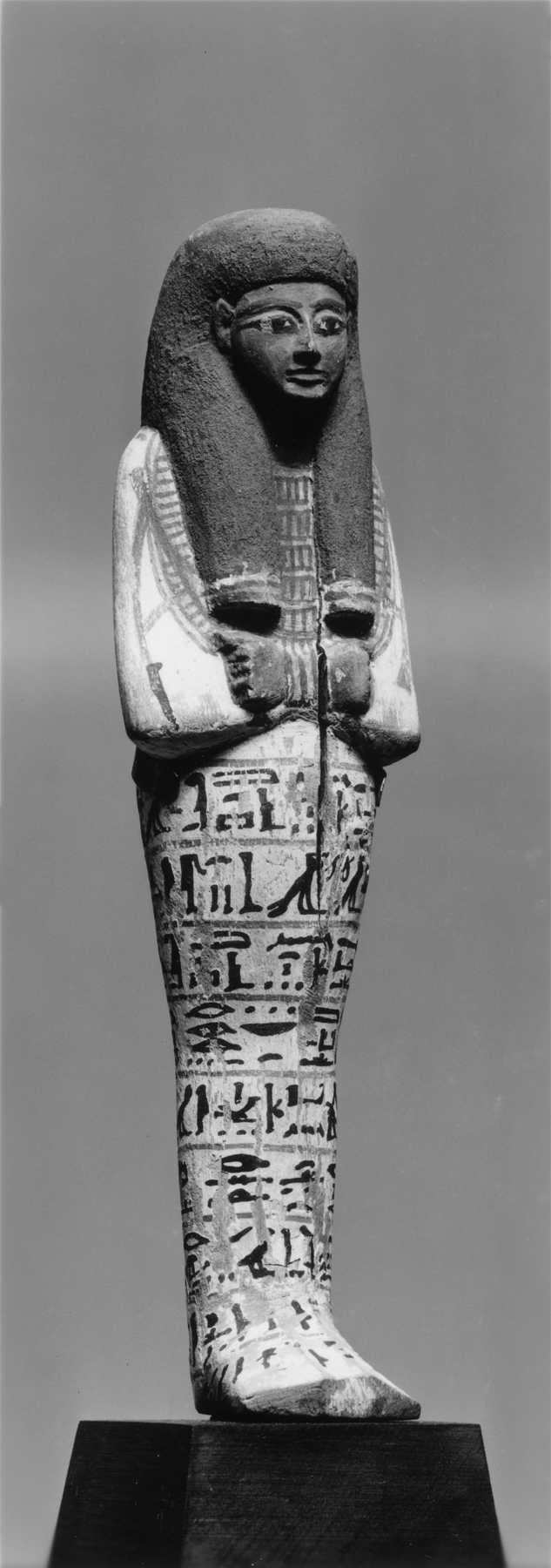
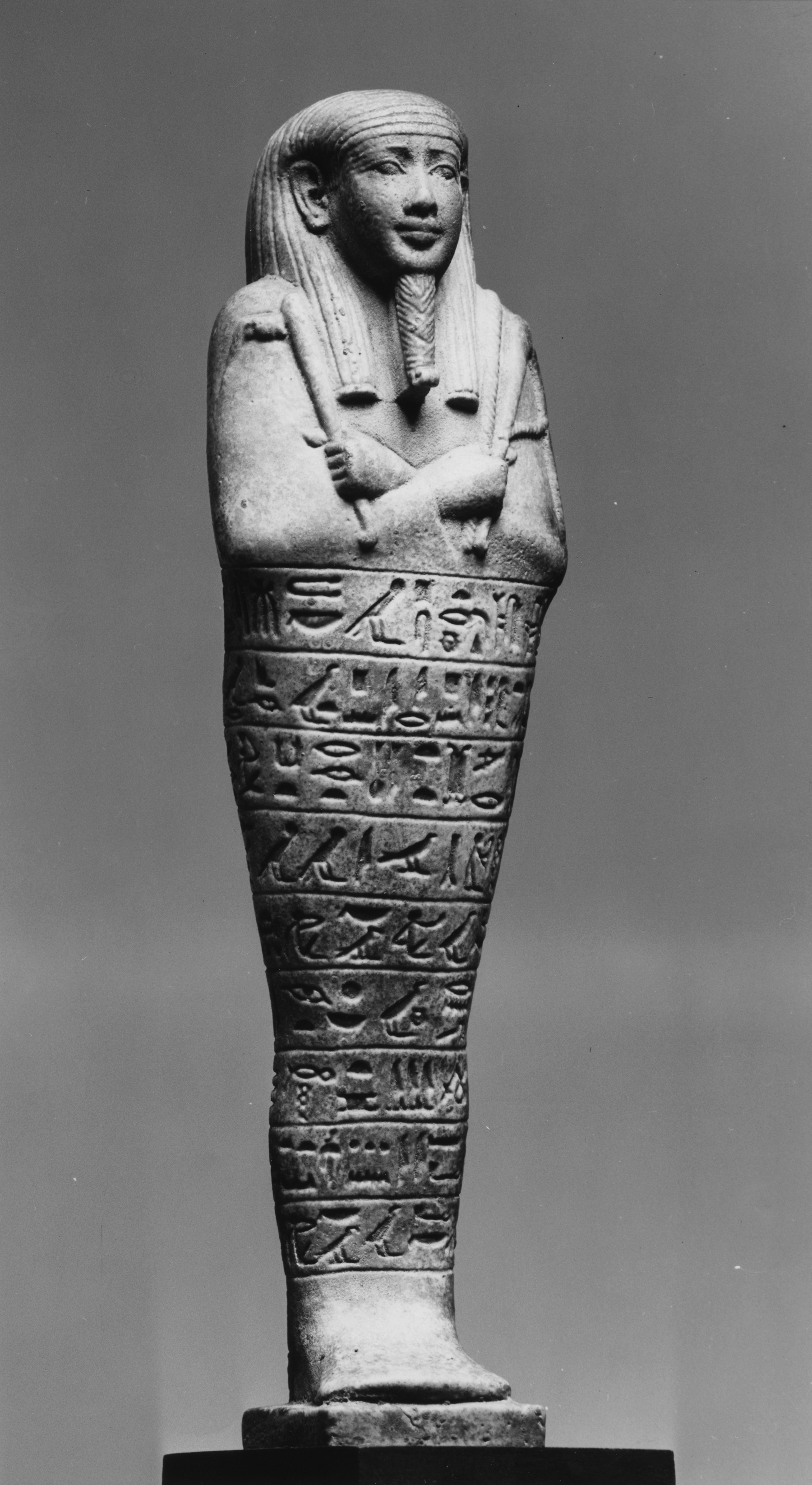
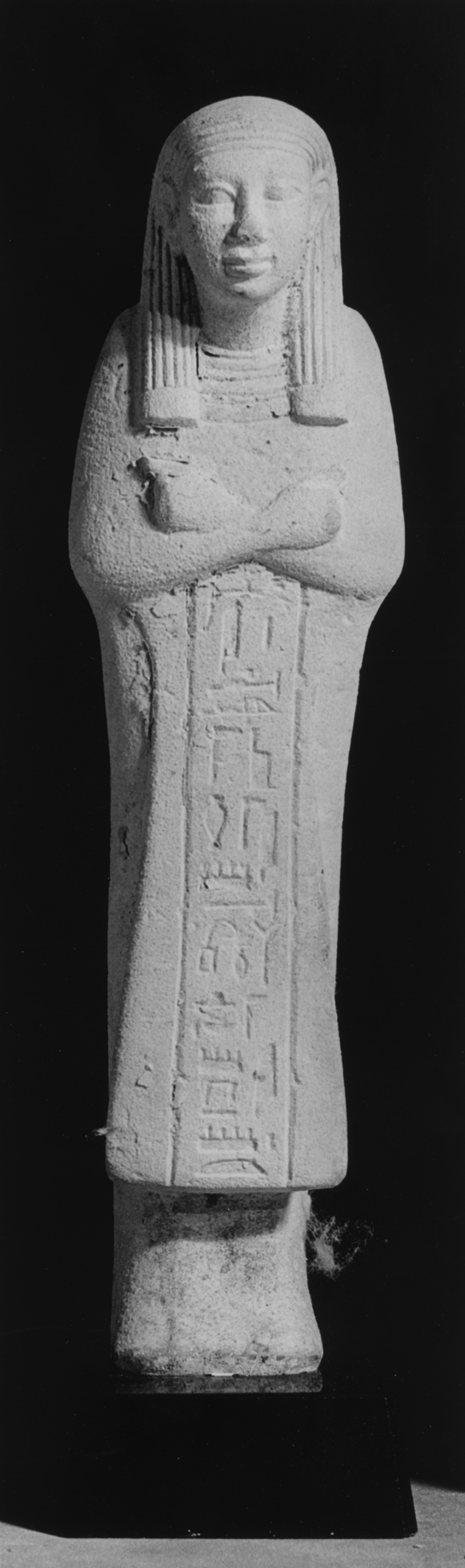
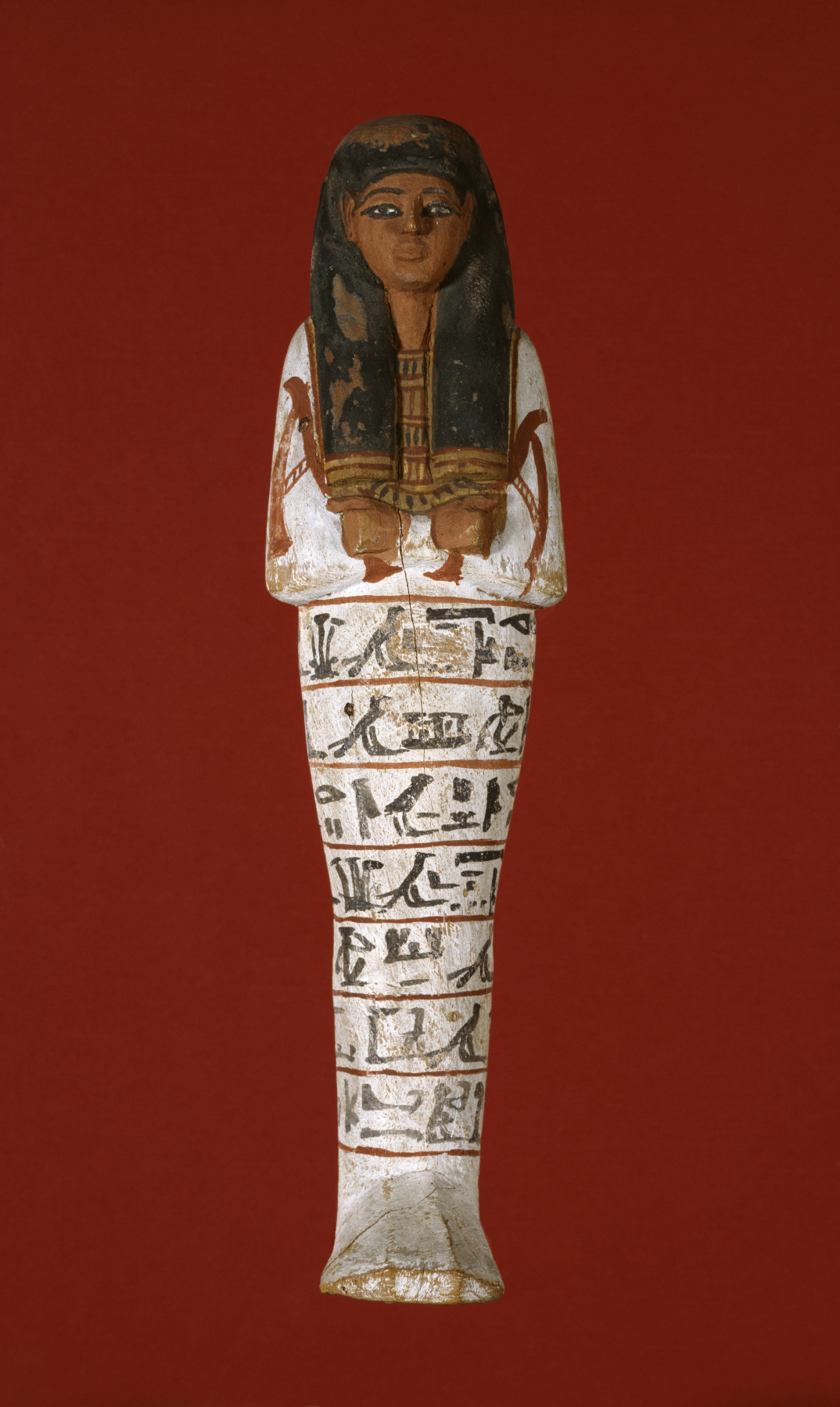
<p>Ushabti (meaning "answerers"), also called "shawabti," which resemble miniature mummies, were made mostly from inexpensive materials such as wood or Egyptian faience. These funerary statuettes represent the individual whom they accompanied into the tomb and the afterlife. If a god called on the deceased to perform labor, this servant substitute, magically invoked by a traditional spell, would answer and do the work on behalf of the tomb's owner.This ushabti served as a proxy for the "chief painter Ka-ha," who worked at Deir el-Medina during the reign of Ramesses III (1185-1153).</p><p>For the latest information about this object, <cite><a href='https://purl.thewalters.org/art/22.187' rel='external'>Ushabti Figure of Ka-ha</a></cite>, visit the Online Collection of the Walters Art Museum.</p>
Machine-generated from the object's image on Jul 2026. Not curatorial; treat deities, names, and signs below as the model's best reading, not authority.
A limestone ushabti figure (mummiform, standing on a pedestal) with painted facial features and extensive painted hieroglyphic text on the body.
The image shows a small mummiform figurine with a rounded head and a stylized face, including painted eyes and a light-painted wig/hairline. The arms are shown crossed over the chest (or upper torso). The lower portion includes a vertically arranged field of painted hieroglyphs spanning the front of the torso down to the base/pedestal. A broad painted band and smaller geometric lines appear around the chest and upper torso, consistent with decorative/inscribed bands typical of ushabti inscriptions. The background is dark, and the figure stands upright on a separate base/pedestal. No clear cartouche is legible at this resolution, and no Greek/Coptic/Arabic text is visible. Deity iconography is not clearly identifiable from this view.
Spotted an error, a mis-mapped findspot, or have a suggestion? We read every note.