WALTERS-EG
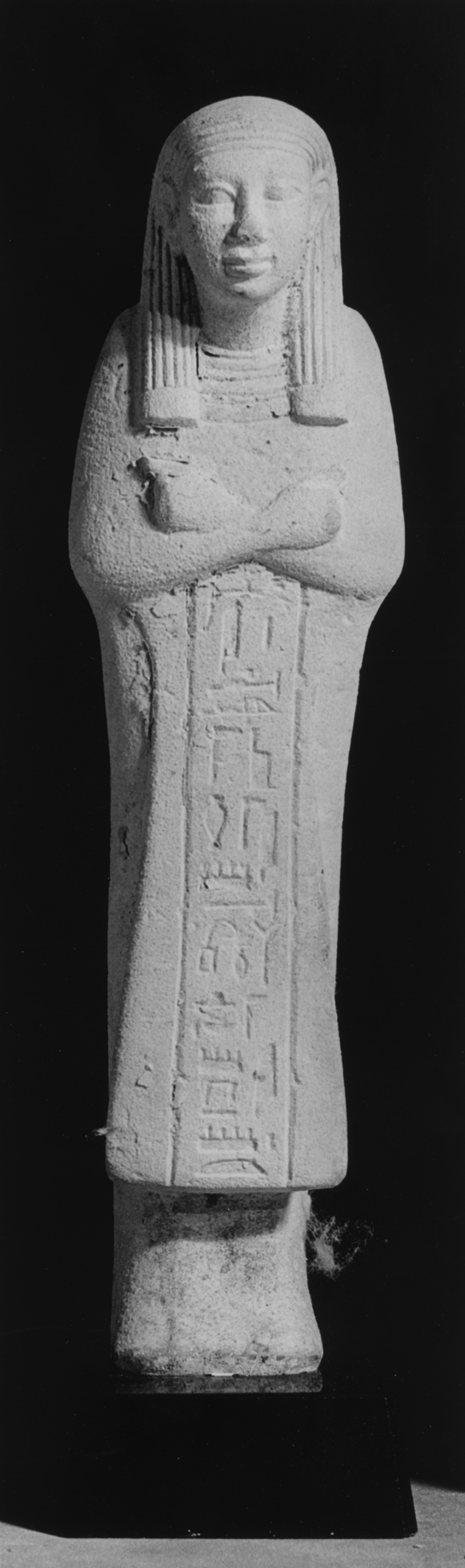
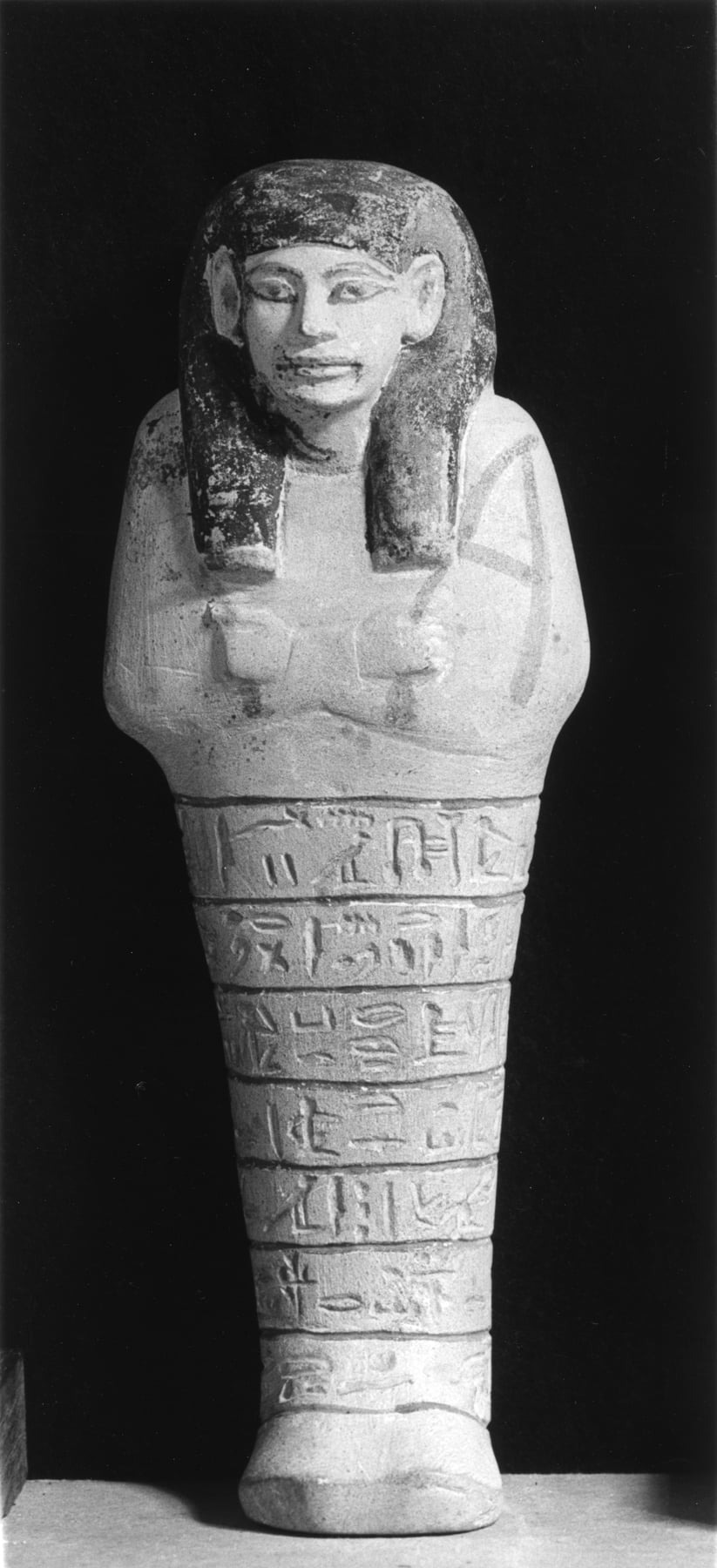
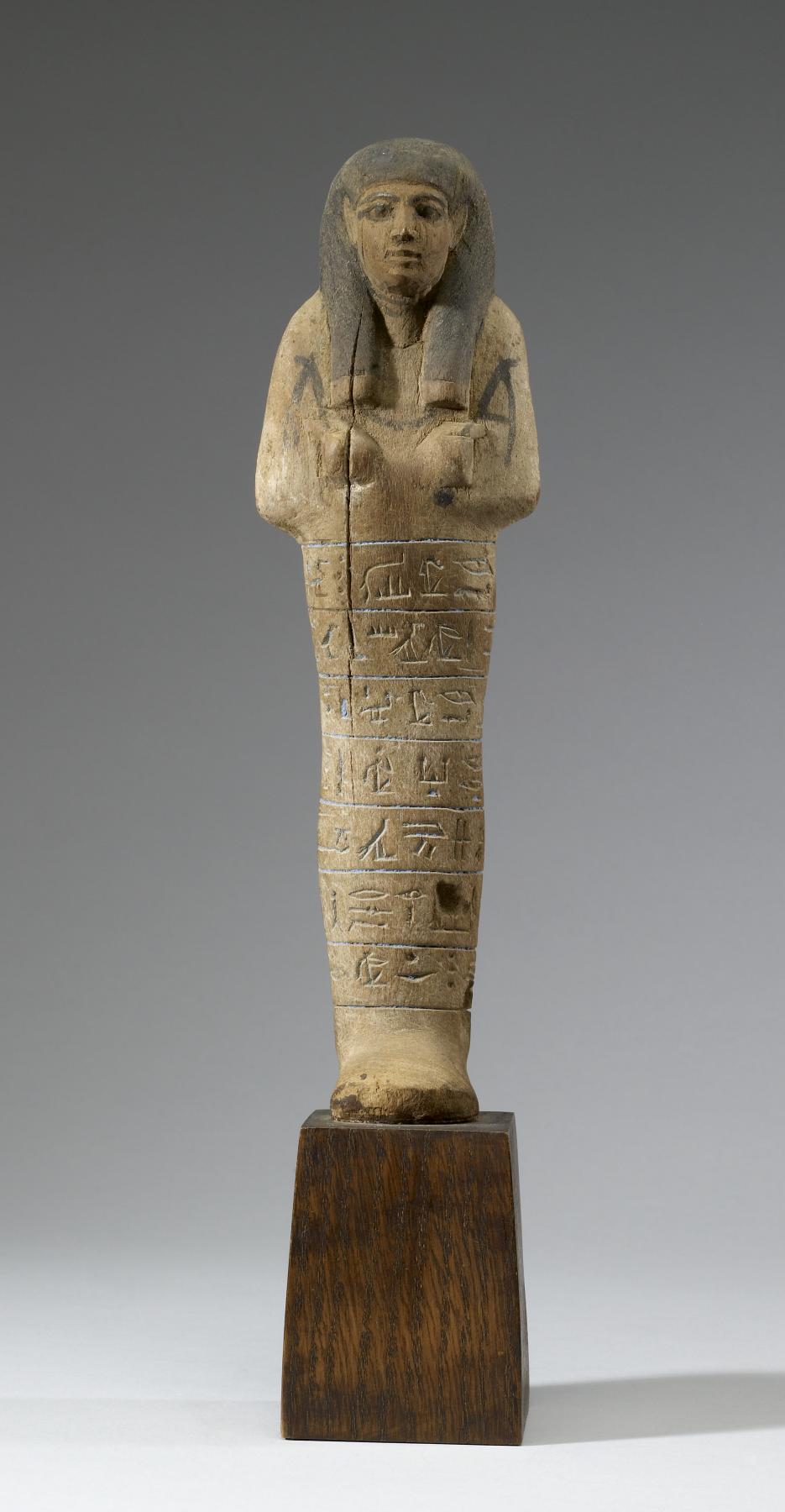
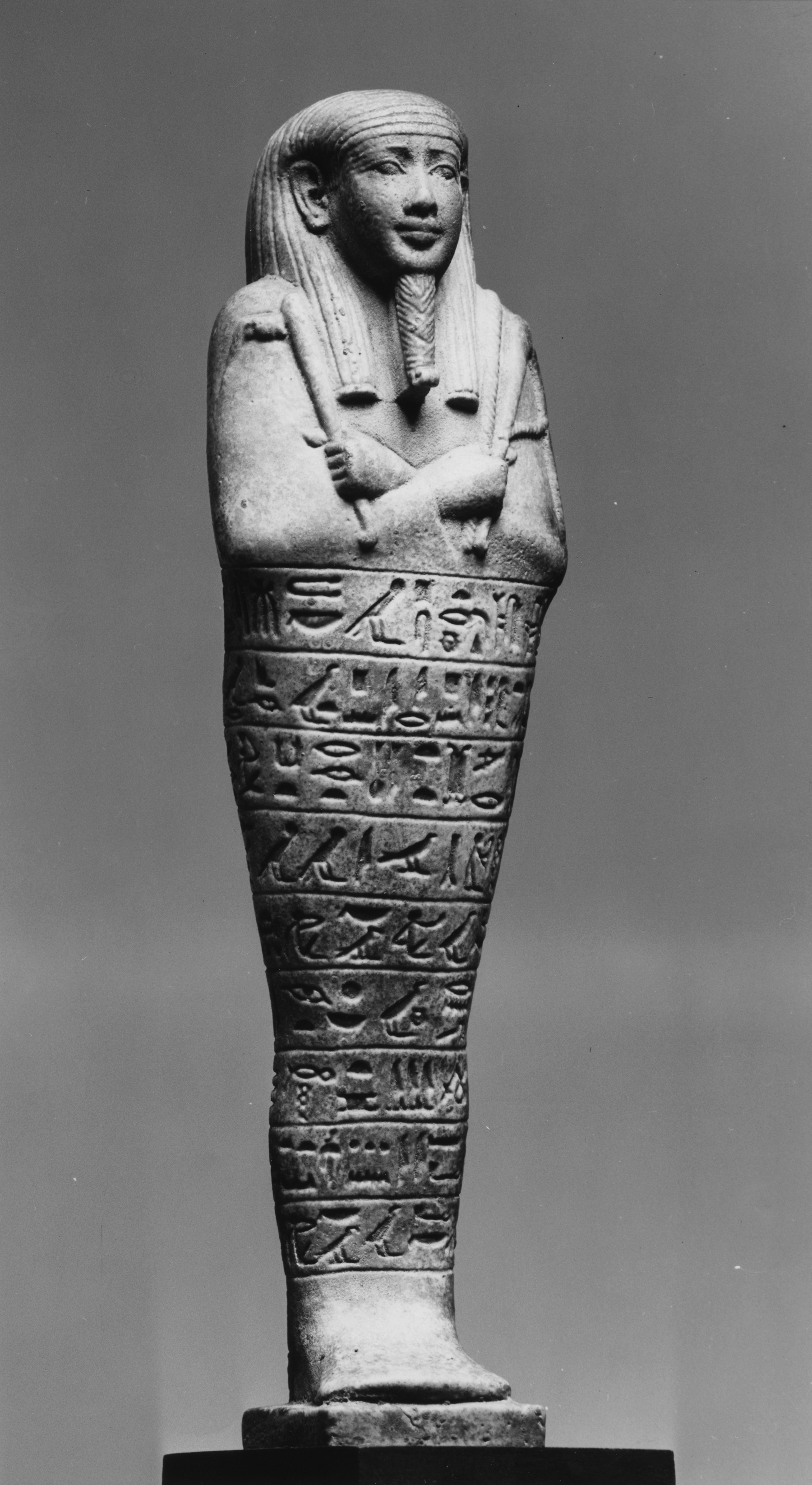
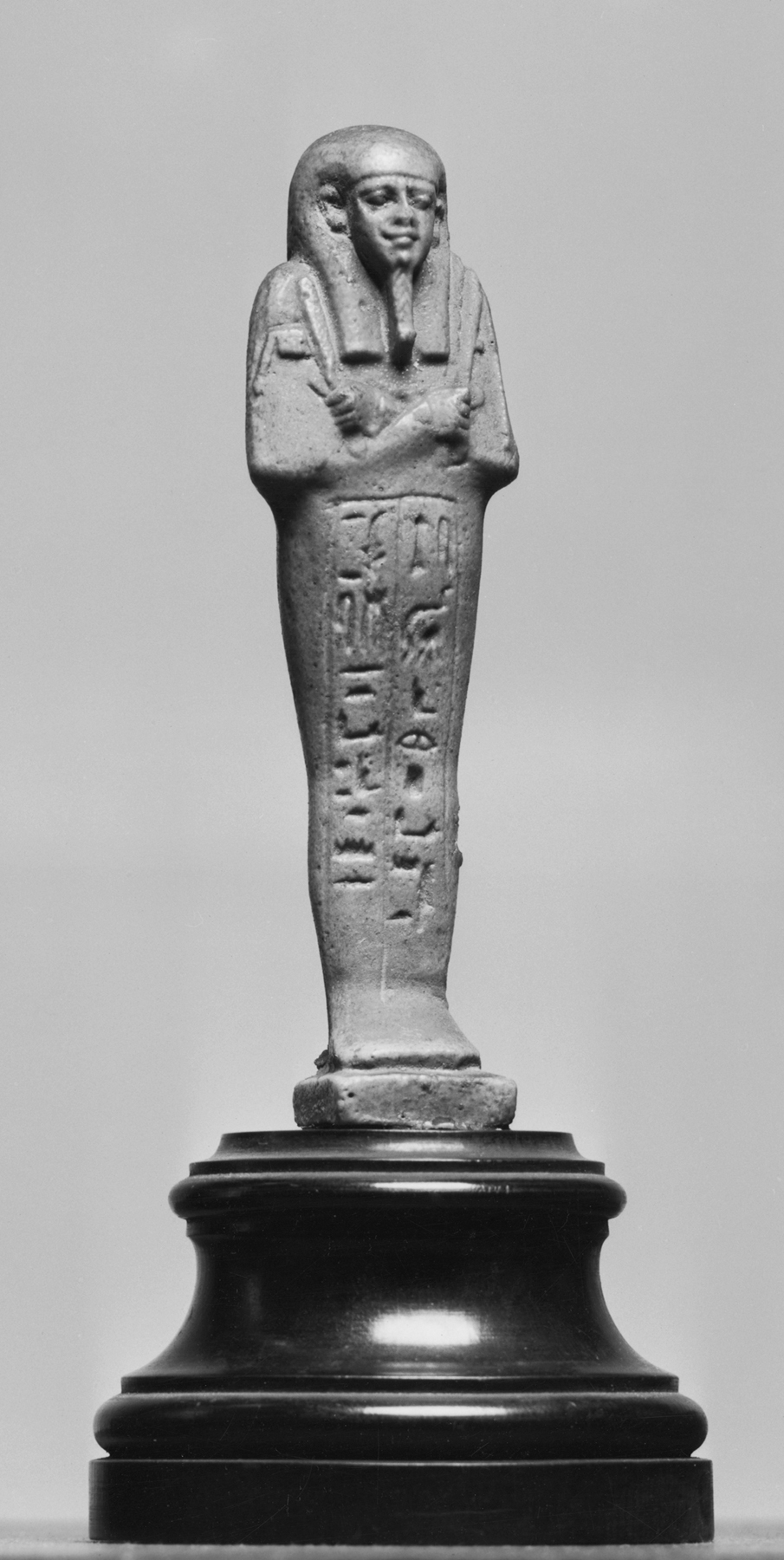
<p>Ushabti (meaning "answerers"), also called "shawabti," which resemble miniature mummies, were made of different materials such as wood or Egyptian faience (ceramic-like material). These funerary statuettes represent the individual whom they accompanied into the tomb and the afterlife. If a god called on the deceased to perform labor in the afterlife, this servant substitute, magically invoked by a traditional spell, would answer and do the work on behalf of the tomb's owner.This ushabti figure displays its owner with a long wig and a divine chin beard with a plaited pattern and curved lower end. He holds hoes for field work in his hands and has a back pillar. The inscription, which contains the "Ushabti-formula" from the sixth chapter of the "Book of the Dead," is laid out in nine rows below his arms.</p><p>For the latest information about this object, <cite><a href='https://purl.thewalters.org/art/48.397' rel='external'>Ushabti of Ah-mose</a></cite>, visit the Online Collection of the Walters Art Museum.</p>
Machine-generated from the object's image on Jul 2026. Not curatorial; treat deities, names, and signs below as the model's best reading, not authority.
A small, light blue glazed faience ushabti (servant figurine) shown standing, with a seated-like head and crossed arms holding tools/objects on the chest.
The image depicts a standing Egyptian ushabti figurine on a rectangular modern display base. The figure has a rounded head with a tripartite/pleated headdress and a simplified facial rendering (almond eyes, arched eyebrows, and a straight nose). The arms are held across the front of the torso, with the hands gripping what appears to be tool-like forms or bundles on the chest. The lower body is covered by dense incised hieroglyphic text bands arranged in rows across the torso, suggesting a dedicatory/worker inscription typical of ushabti. The background is dark and the lighting emphasizes the glossy surface and pale light-blue glaze over the figurine. No cartouche or clearly legible royal titulary is confidently identifiable at this resolution.
Spotted an error, a mis-mapped findspot, or have a suggestion? We read every note.