WALTERS-EG
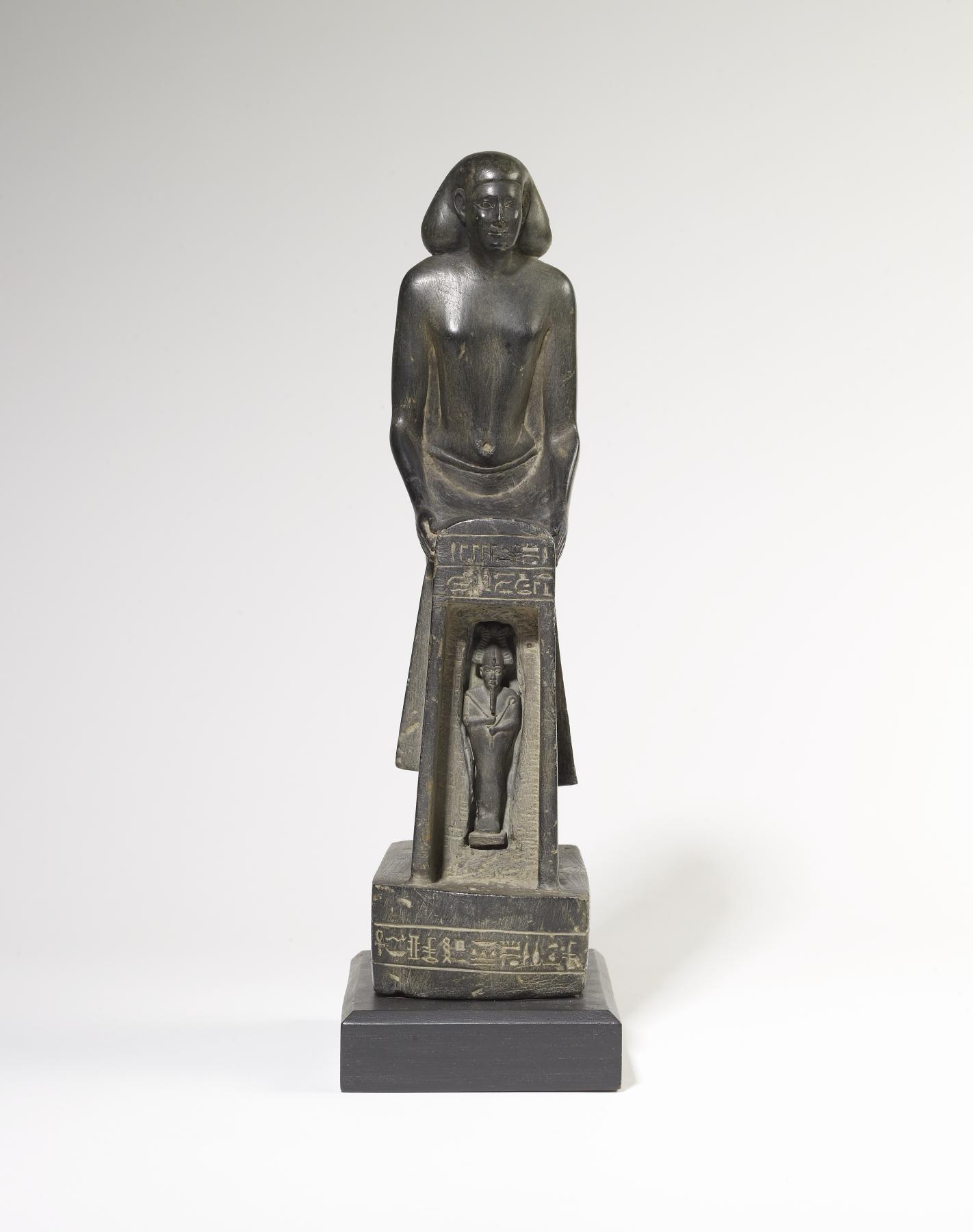
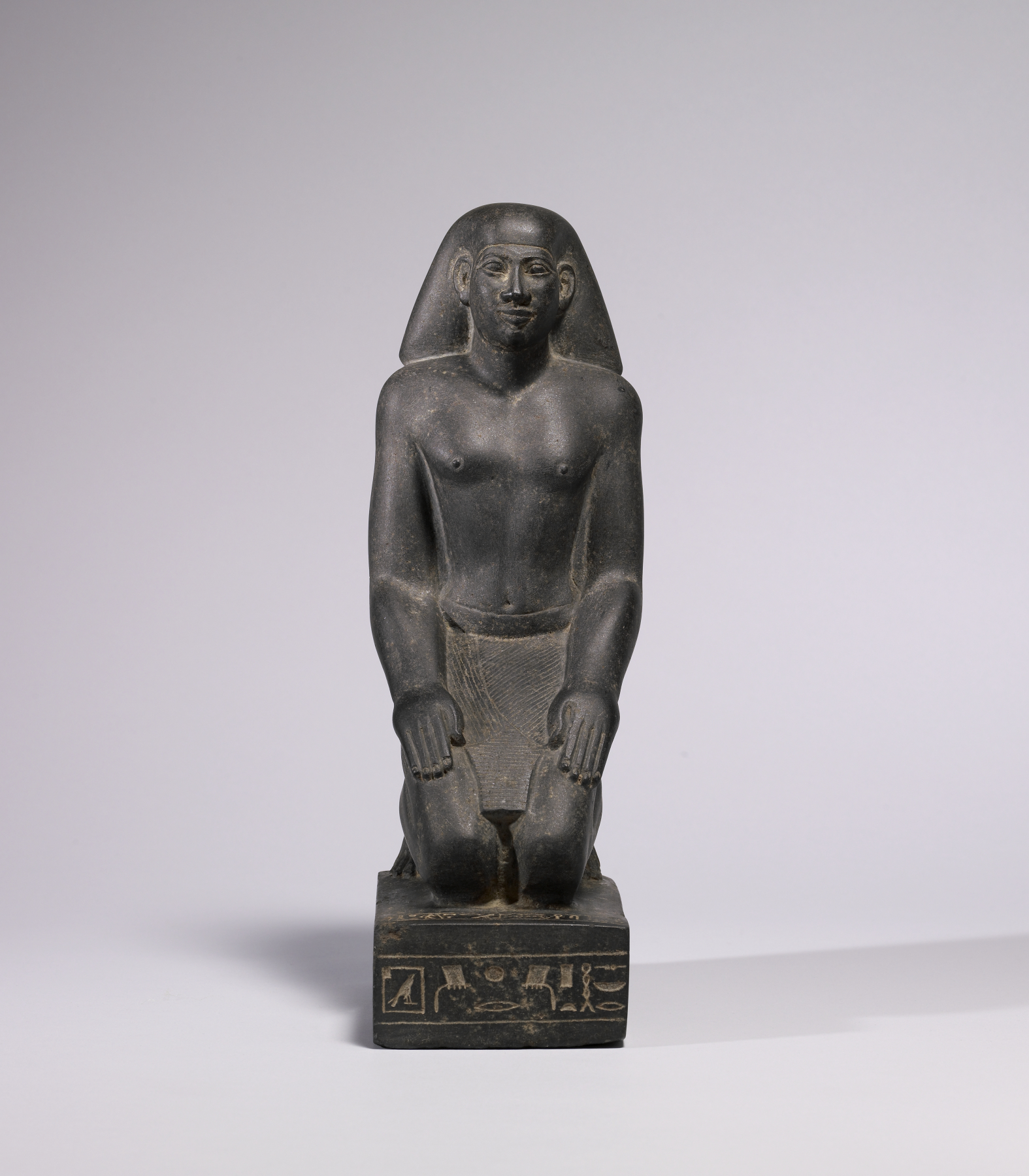
<p>The statue represents the charioteer Psametik-mry-Re. He stands holding a large figure of the god Osiris, Lord of the Underworld. Such "Osirophorus" figures were popular during the Egyptian Late Period (7th-4th century BCE). They were placed in temples to guarantee the participation of the person depicted in the rituals for the gods.</p><p>For the latest information about this object, <cite><a href='https://purl.thewalters.org/art/22.206' rel='external'>Psametik-mry-Re Holding Osiris Figure</a></cite>, visit the Online Collection of the Walters Art Museum.</p>
Machine-generated from the object's image on Jul 2026. Not curatorial; treat deities, names, and signs below as the model's best reading, not authority.
A dark, standing Osiris figure holds a stylized object in front of the chest, with a nemes-style headcloth and a distinctive atef/Osirian crown.
The image shows a standing, human-form deity statue identified as an Osiris-type figure by its elongated posture, frontal stance, and Osirian regalia. The figure wears a nemes headcloth with hanging side lappets. The head and torso are smooth and dark-toned, while the lower body ends in a cylindrical/club-like base. In front of the figure’s torso, both hands grasp a central Osirian emblem/object resembling a bound or vertically held symbol with a ruffled collar-like element above it. The figure’s chest is bare and the arms hang down to hold the object. No clearly readable hieroglyphs, cartouches, or Greek/Coptic/Arabic text are visible in this photograph. The overall surface appears polished and stone-like; the catalogue materials list granodiorite, which matches the general appearance of a dark, dense stone, though the exact stone cannot be confirmed from the image alone.
Spotted an error, a mis-mapped findspot, or have a suggestion? We read every note.