Description
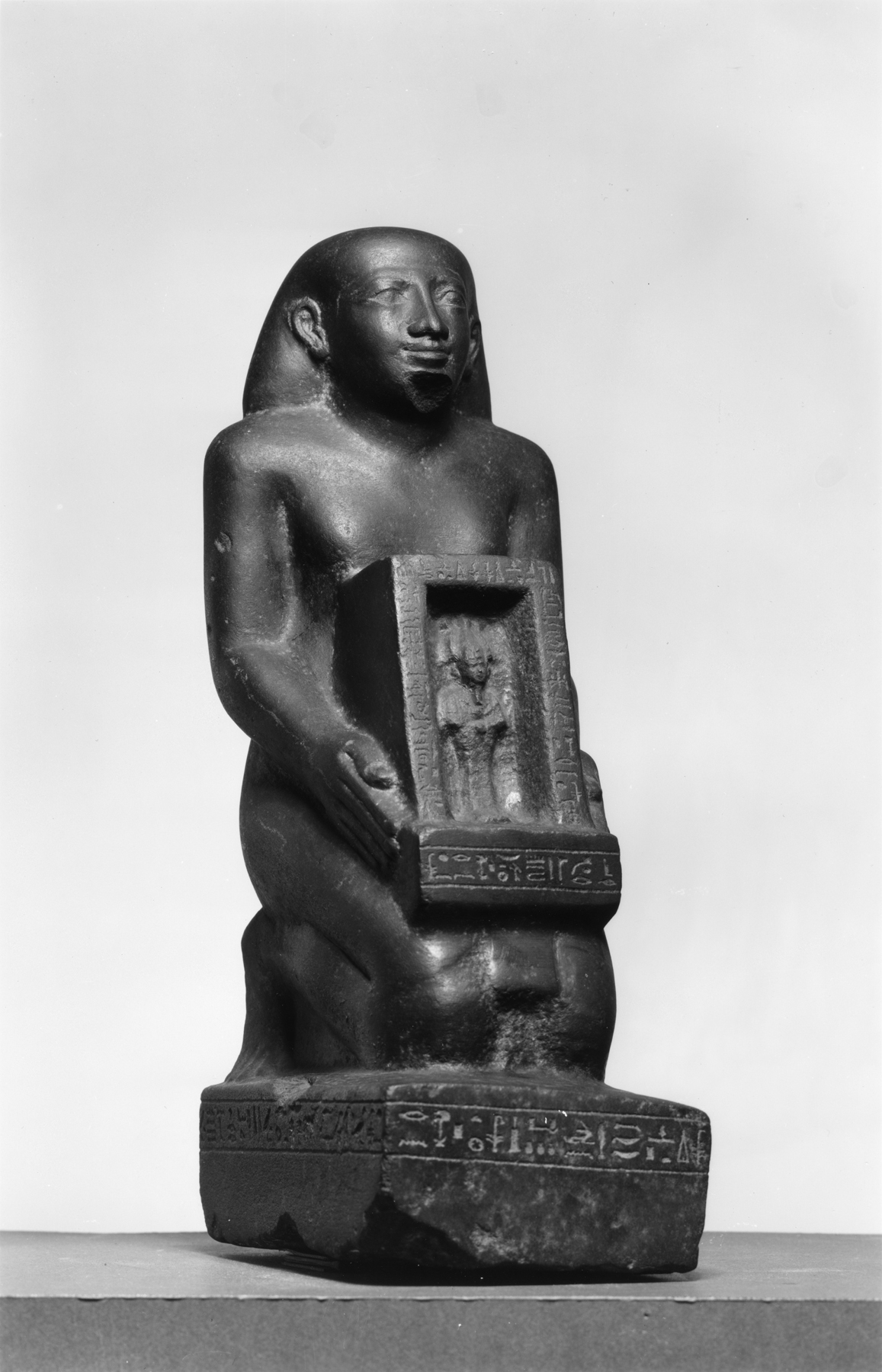
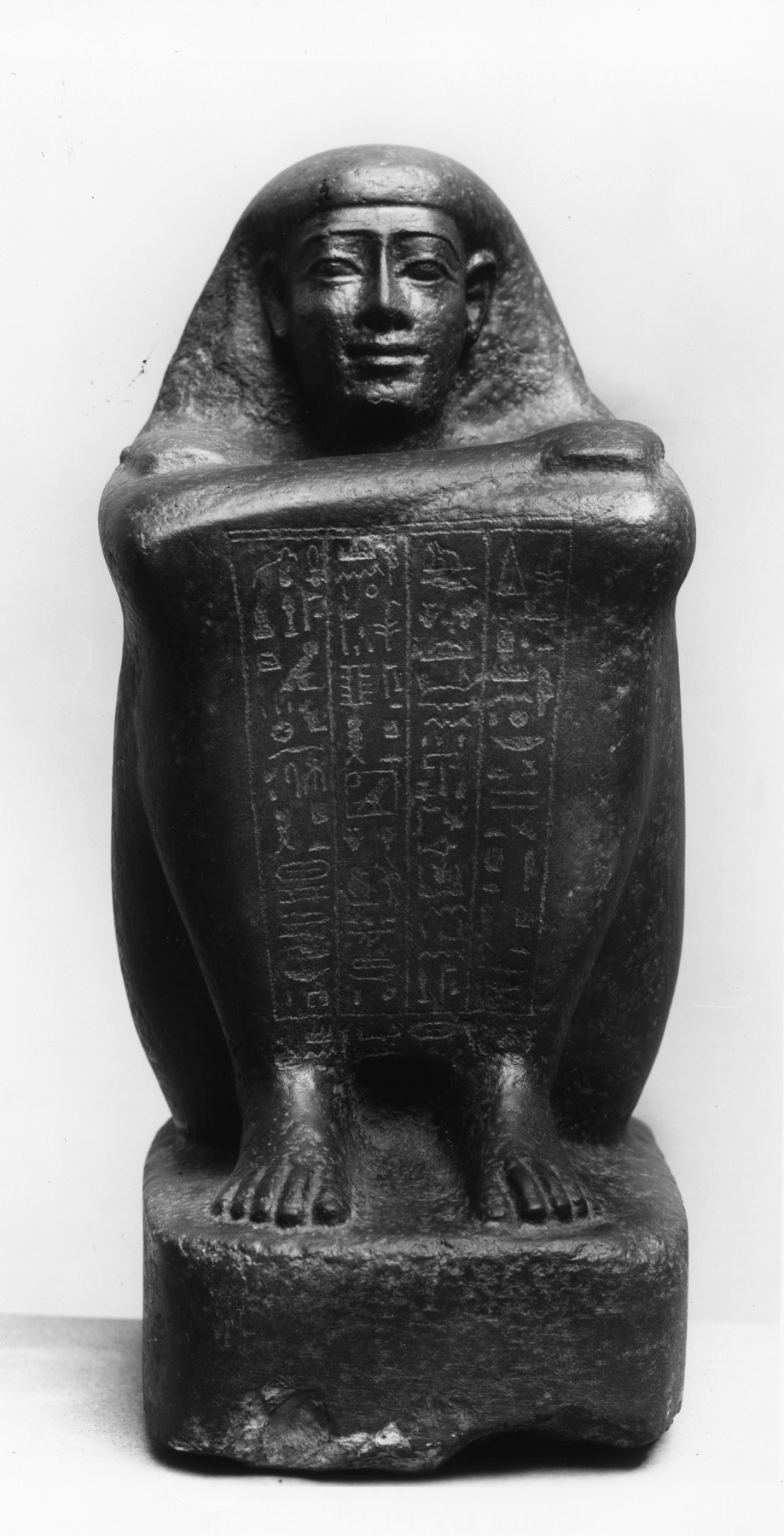
<p>This piece is sculpted in the round and has an inscription around the pedestal, on b oth sides of the shrine, over the shrine entrance, to the left side of the rear column and on the rear of the rear column.</p><p>For the latest information about this object, <cite><a href='https://purl.thewalters.org/art/22.159' rel='external'>Nes-Ptah Holding Shrine with Osiris</a></cite>, visit the Online Collection of the Walters Art Museum.</p>
AI image analysis GPT-5.4-nano
Machine-generated from the object's image on Jul 2026. Not curatorial; treat deities, names, and signs below as the model's best reading, not authority.
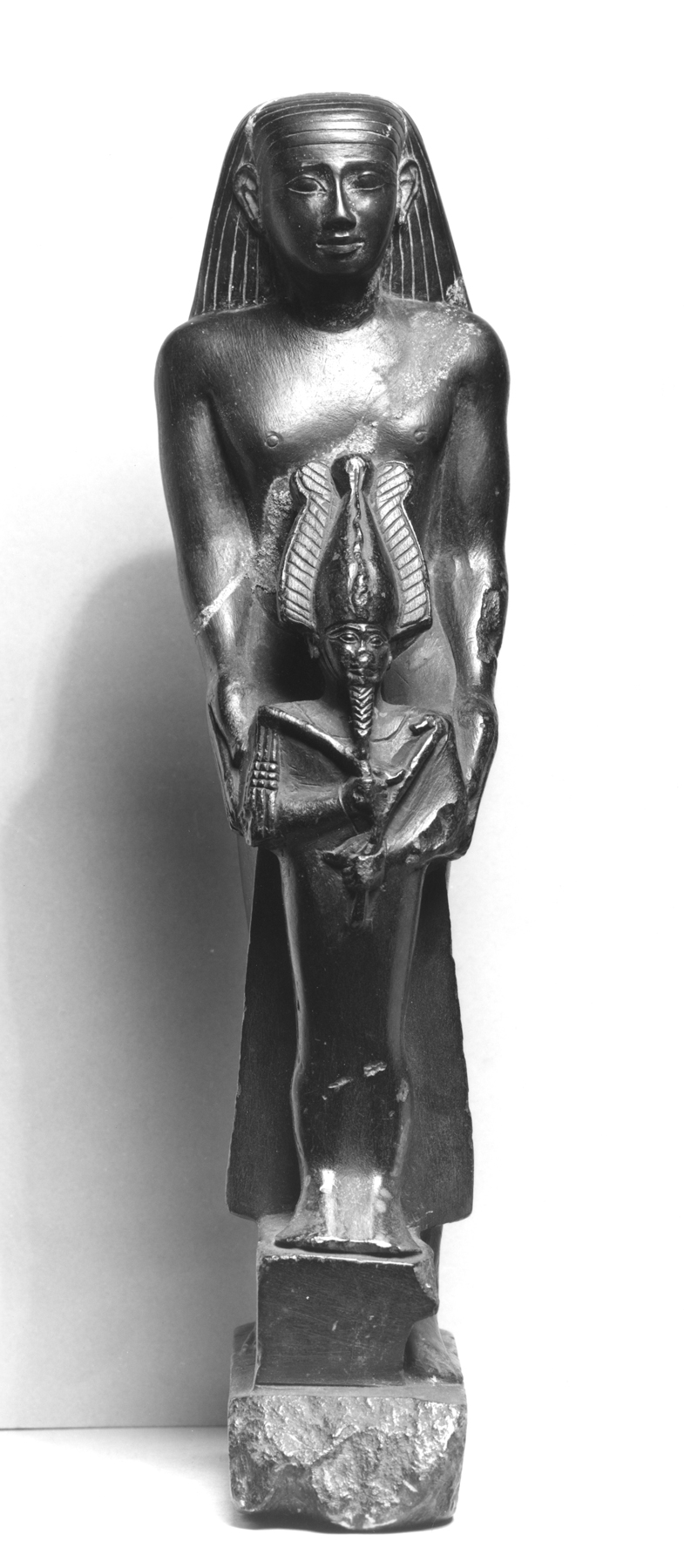
A small standing Egyptian figure holding a shrine-like element, shown with a secondary kneeling/standing figure in relief on the front panel.
The image shows a dark, metallic-looking stone (catalogued as greenish stone) object in the form of a seated/standing statue figure with a rounded head and stylized facial features. The person stands upright with arms held close to the body. Behind/around the figure is a shrine-like rectangular enclosure; on the front of this enclosure is a depiction in low relief of a standing or kneeling Osirid figure with the characteristic ceremonial headgear/crown shape. The base and enclosure are decorated with incised bands and blocks of hieroglyphic signs and formulaic lines, though the exact signs are not fully legible in the photograph. No Greek, Coptic, or Arabic text is visible. The overall form matches a funerary/religious Osirid shrine type as described in the catalogue title, but the exact identification of all hieroglyphs is unclear from the image resolution.
religious
unclear (likely late Pharaonic/Egyptian religious small sculpture tradition, specific date unknown)
good
Deities
Osirisunknown Osirid figure (likely Osiris)
Materials
greenish stone
Signs
incised hieroglyphic text in bands (unreadable individual signs) ×20
Visible text
"unreadable hieroglyphic bands on the shrine enclosure and base (exact text not legible)"
Inscriptions (5)
Inscription #1
English description
[Multipart inscription; A, on base beginning at left front] An offering which the king gives (to) Amon-re, lord of the thrones of the Two Lands, (to) Ptah-resy-ineb-f, lord of 'life of the Two Lands' (sanctuary at Memphis), (to) Soker and Osiris, the great (god), who is in the Holy Place that they may give funerary offerings of bread, beer, oxen, and fowl, of incense, unguent, and all good things on which a god lives, to the prophet-priest of Amon-re, king of the gods, and divine father and prophet-priest of Anubis of Ro-setaw (the realm of the dead), to Nes-Ptah, son of Ankh-Wen-nofru (Onnophris).
Inscription #2
English description
[B, on rear column, the ""Saitic Formula""] The local god of the prophet-priest of Amon-re, king of the gods, Nes-Ptah, son of Ankh-Wen-nofru... etc.
Inscription #3
English description
[C, on the right side of the back] Made to his son, as he was in the netherworld, the prophet-priest of Amon-re, king of the gods, Ankh-Wen-nofru, born of the lady, Irterow.
Inscription #4
English description
[D, over the door of the shrine] The prophet-priest of Amon-re, king of the gods, the revered before Osiris, Nes-Ptah, says.
Inscription #5
English description
[E, on the right side of the shrine] An offering which the king gives (to) Osiris, that he may give funerary offerings of bread, beer, and all good things, on which a god lives, to the prophet-priest of Amon-re, king of the gods, Nes-Ptah, may he (?) keep you from being held back, when you seize your enemies, and your name from ever being destroyed; the revered before Osiris, Nes-Ptah, the blessed.
Cross-references (2)
-
Walters-AccNum
22.159
tier-2
-
Walters-id
4741
tier-2
Similar inscriptions · by content embedding
About this record's data
- From the source institution — accession, description, dimensions, and dating are as catalogued by Walters Art Museum (Egyptian).
- AI-inferred — the image-analysis panel (deities, names, signs) is machine-generated and may be wrong.
- Approximate location — most map points are plotted at the site centroid, not the exact findspot.
- Inferred links — cross-references marked with a match method other than explicit-source-field were matched by us, not stated by the source.