WALTERS-EG
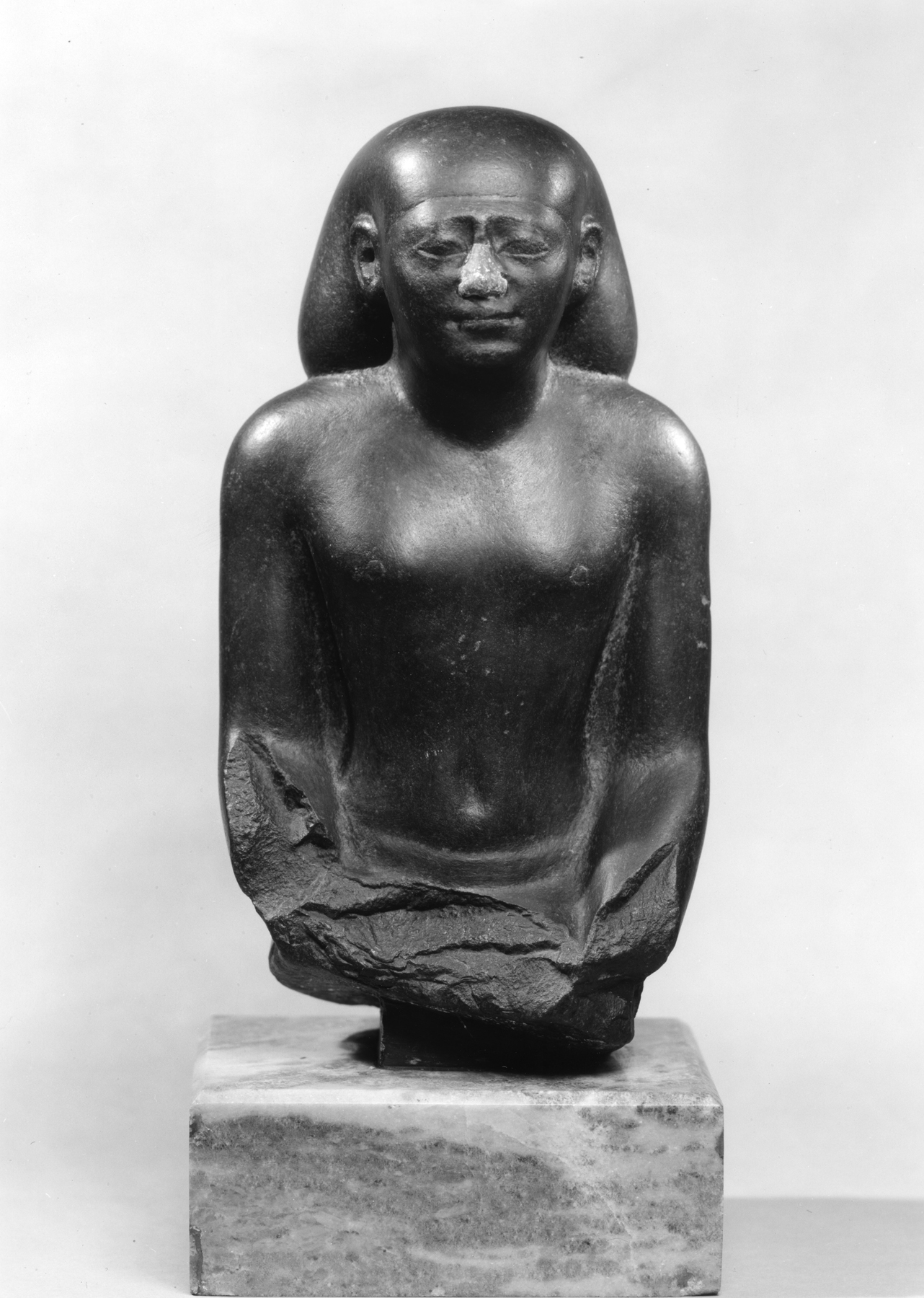
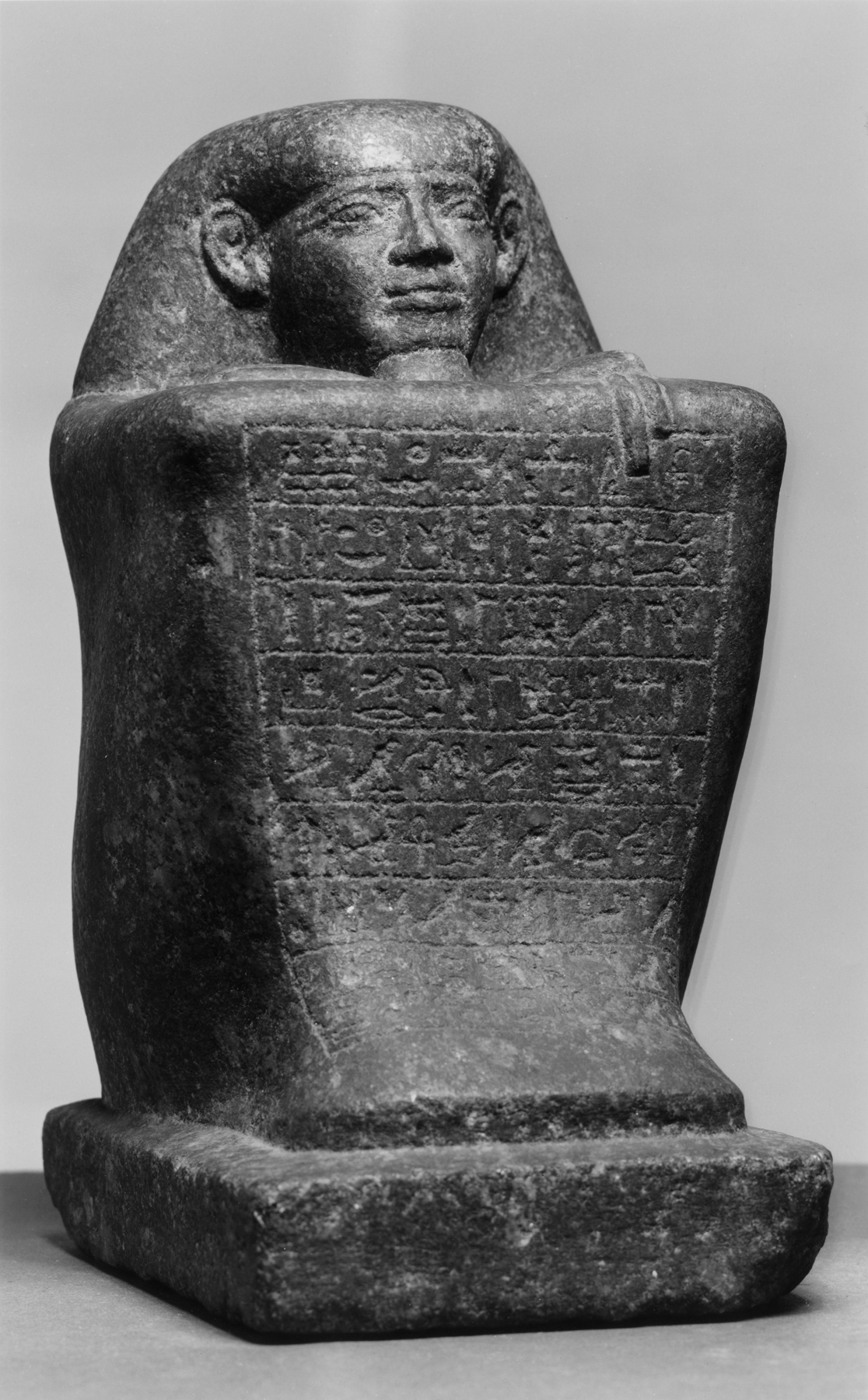
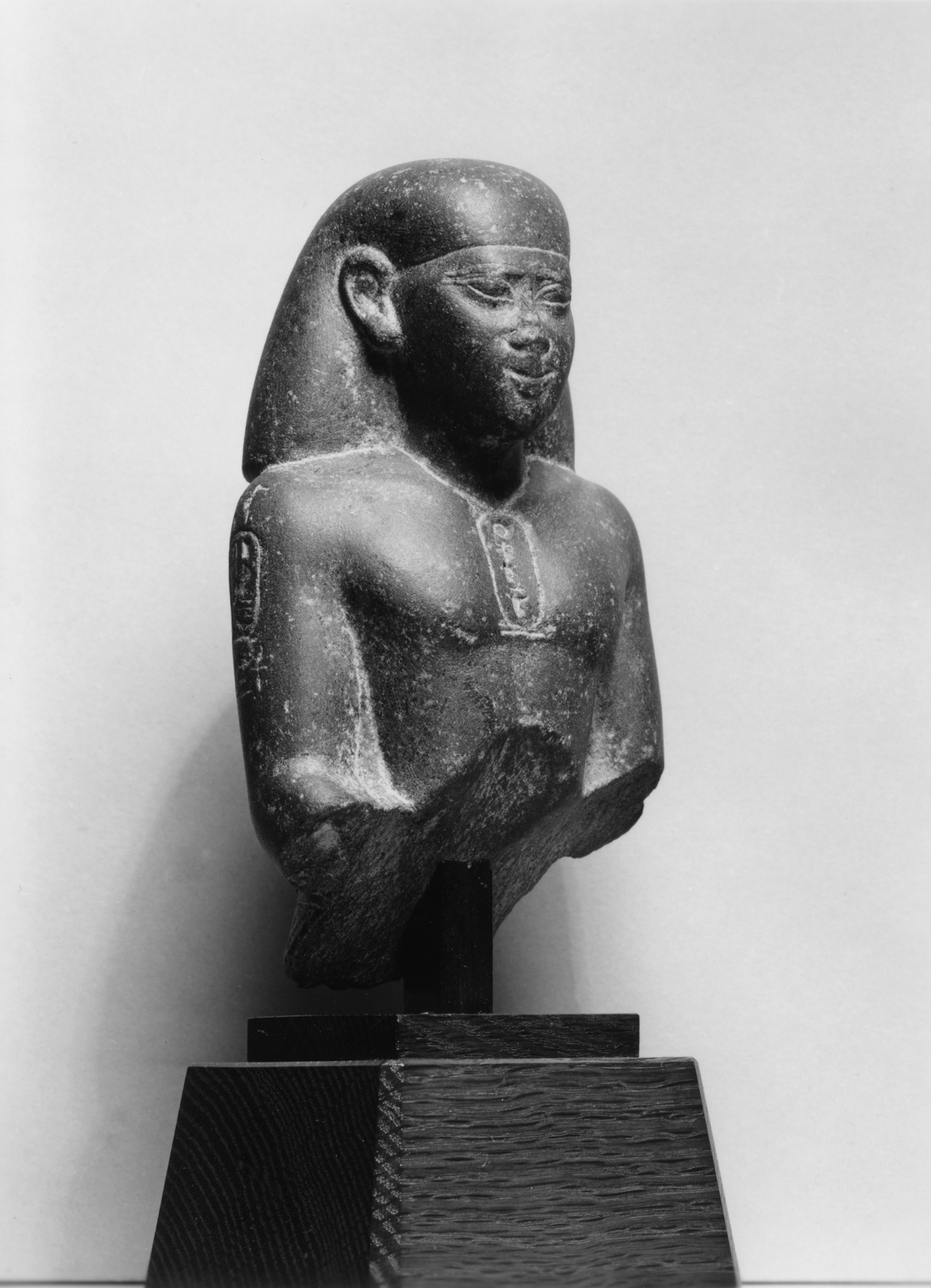
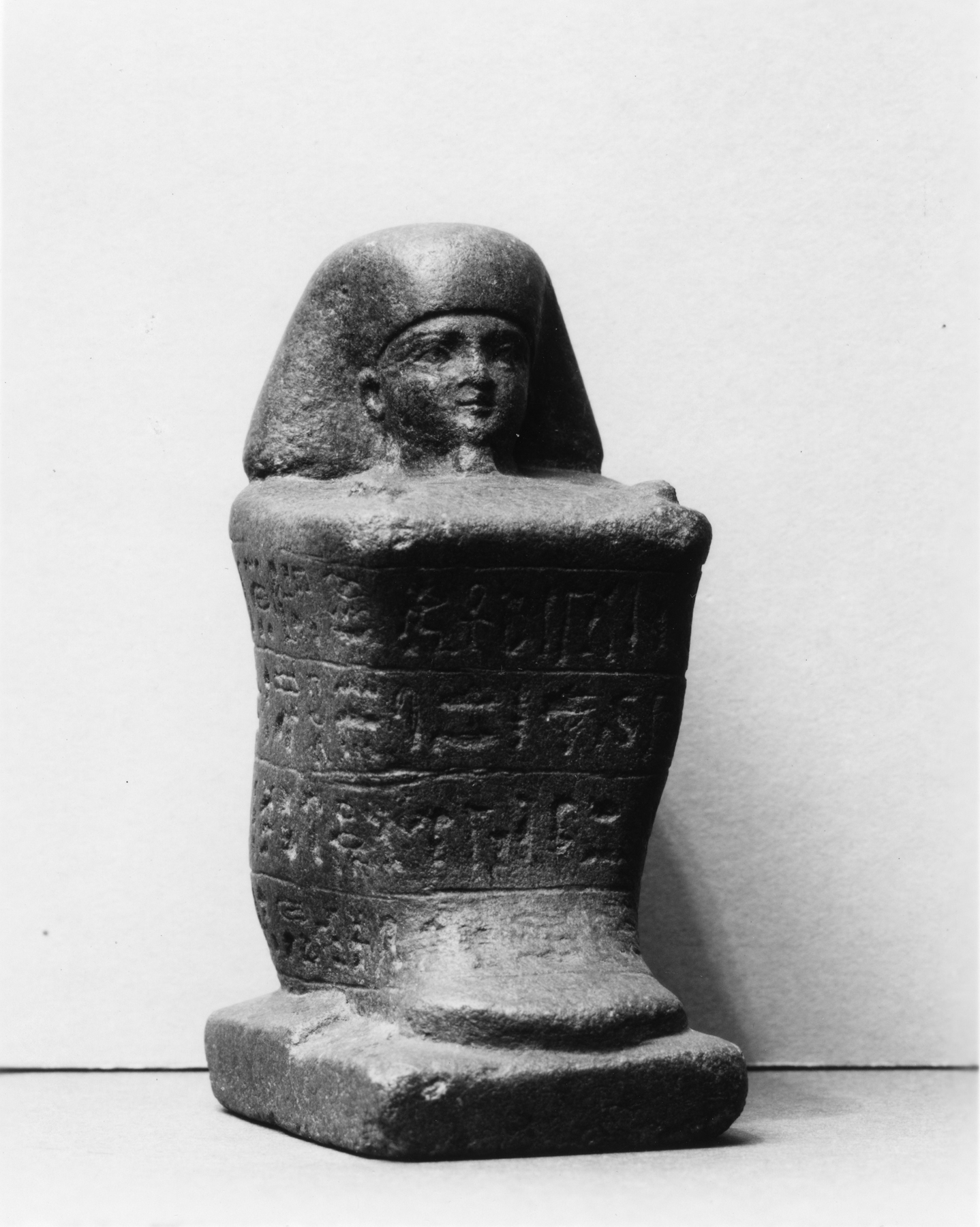
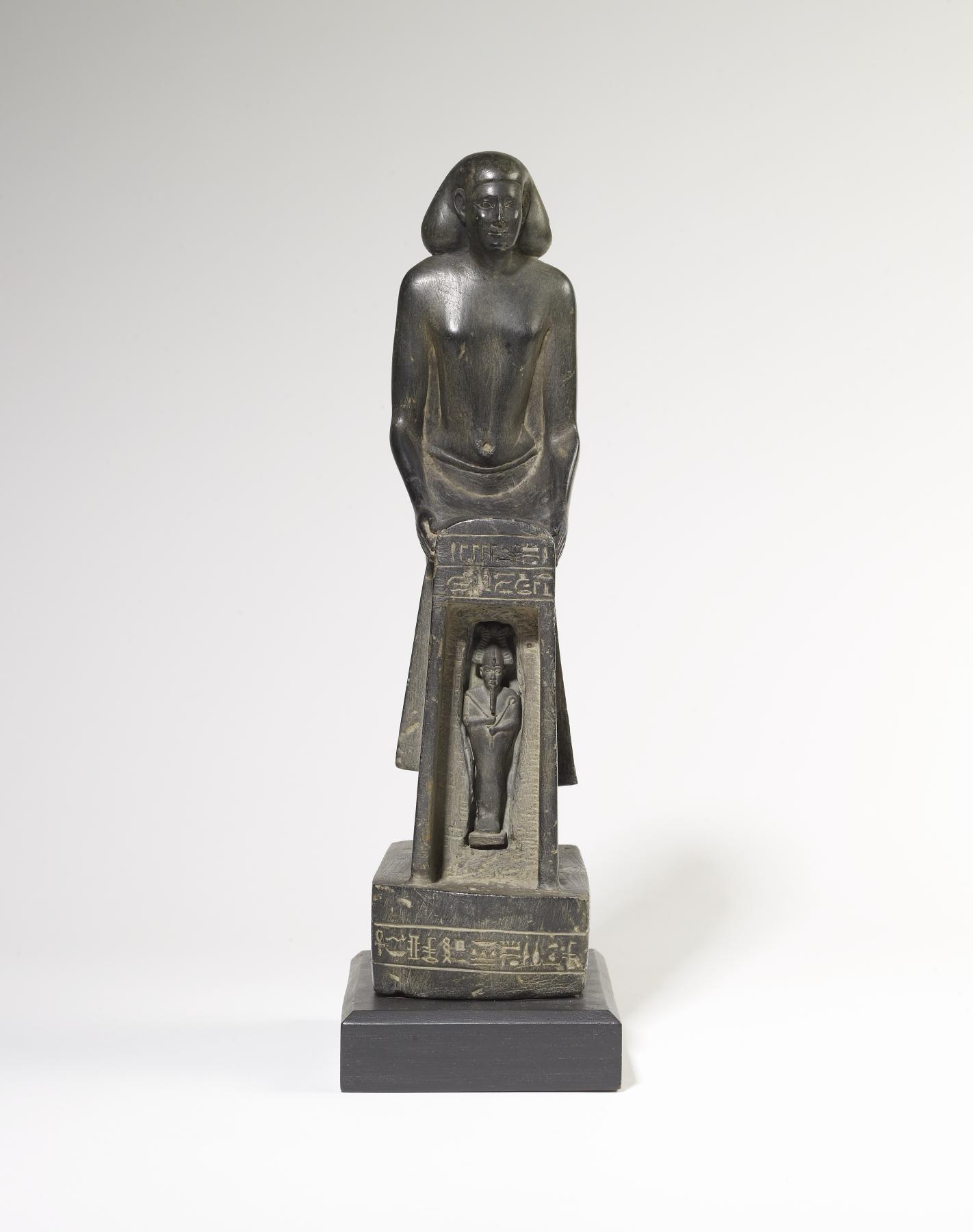
<p>Hor-wedja was the son of Vizier Sasobek, the highest-ranking official during the reign of King Psammetichus I. Hor-wedja's son Meryptah commissioned this temple sculpture for him. Hor-wedja kneels, presenting only himself to his god. He abases himself in the deity's presence but keeps his head erect, expressing respect and confidence.A hieroglyphic inscription gives the lineage and titles of Hor-wedja running in a horizontal band around the base, in a line across the top of the base and in a single vertical column on the back pillar. Hor-wedja kneels upon a rectangular base and his toes are splayed out in an unnatural way. He wears a belted shendyt kilt and a simple bag wig. The wide width of the wig is common for the Saite Period. The orientation of the wig onto the top of the back pillar is echoed in other sculptures from the 26th Dynasty through the reign of Apries. As is characteristic for the Saite Period his image is quite idealized. The body appears strong but the definition of the musculature is subtle. A strong median line is visible. His hands are placed flat upon his thighs and appear unusually plump. His facial features are also typical for the Saite Period: long almond-shaped eyes with straight brows above, long smooth cheeks, a long straight nose and a softly smiling mouth. The statue is well preserved and the polish is only marred by a few minor nicks.</p><p>For the latest information about this object, <cite><a href='https://purl.thewalters.org/art/22.79' rel='external'>Kneeling Figure of Hor-wedja</a></cite>, visit the Online Collection of the Walters Art Museum.</p>
Machine-generated from the object's image on Jul 2026. Not curatorial; treat deities, names, and signs below as the model's best reading, not authority.
A kneeling ancient Egyptian male figure is shown seated on a rectangular base, with a long wig/hood covering the head and a short kilt. The base bears incised hieroglyphic decoration and possibly a cartouche-like element, though the text is not fully legible in the image.
The artifact is a dark stone kneeling statue of a standing? (kneeling posture) human figure facing forward. The figure has a smooth shaved/outlined face, large almond-shaped eyes, and a stylized facial expression. The head is covered by a rounded headdress/wig that falls down on both sides, forming a hood-like shape. The torso is nude with arms lowered; the hands are clenched near the thighs. The lower body wears a short, pleated kilt tied at the waist; the legs appear bent in a kneeling stance. The figure is mounted on a rectangular plinth/base with a blackened border and an incised register of hieroglyphs. The hieroglyphs are visible as carved signs, but the individual signs and any full cartouche text are too unclear to transcribe reliably from this image resolution. No Greek, Coptic, or Arabic script is visible. No modern inscriptions are apparent. The stone appears dark gray to black; although the catalog specifies graywacke, the visible surface finish and coloration are consistent with dark stone, but exact stone identification cannot be confirmed solely from the image.
Spotted an error, a mis-mapped findspot, or have a suggestion? We read every note.