WALTERS-EG
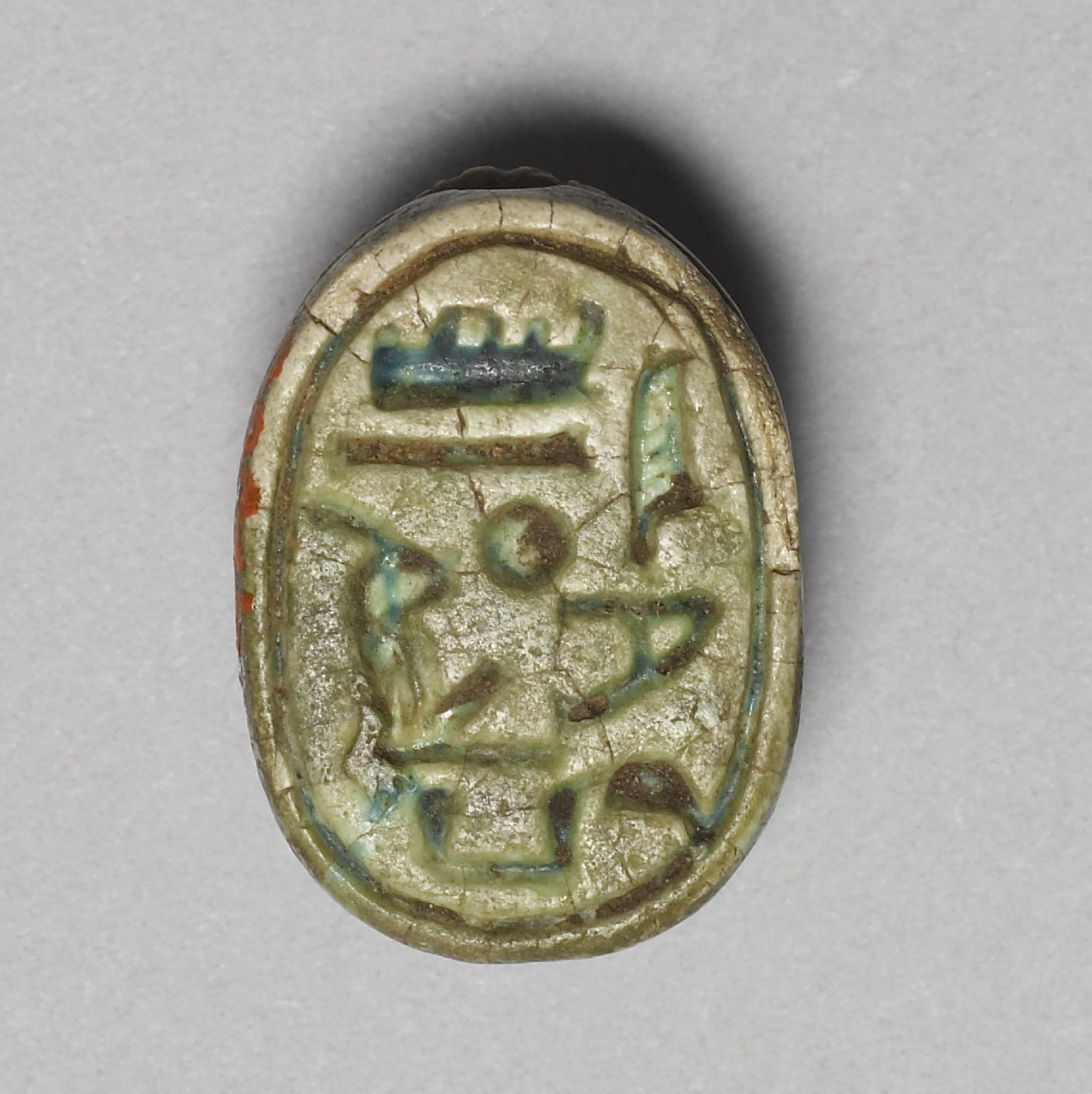
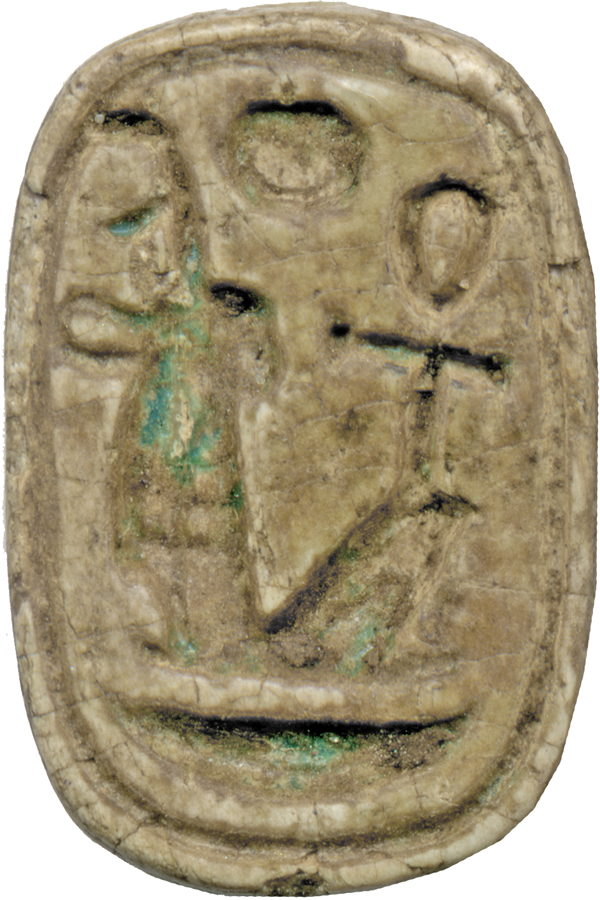
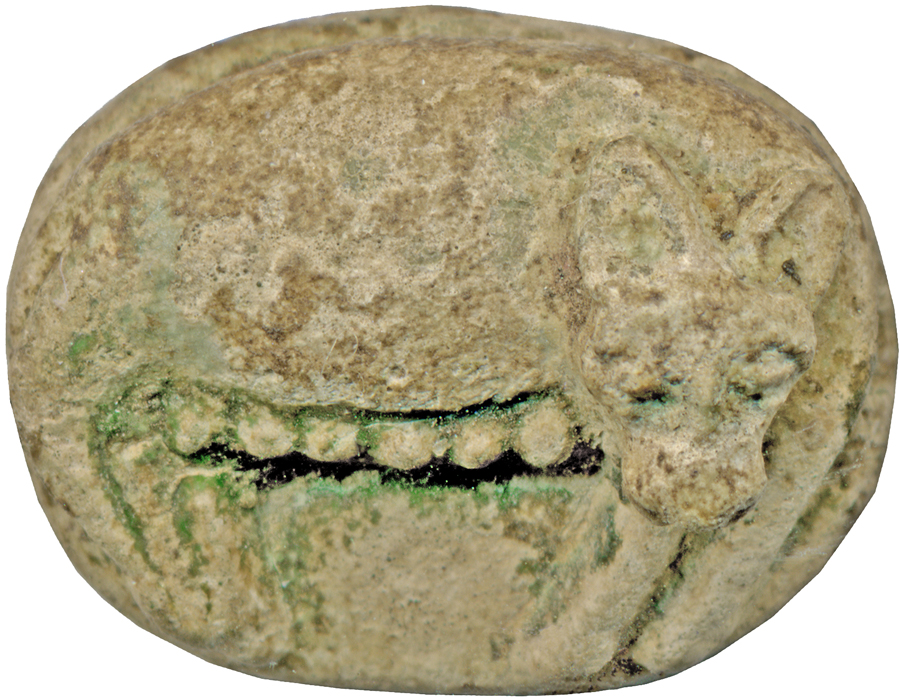
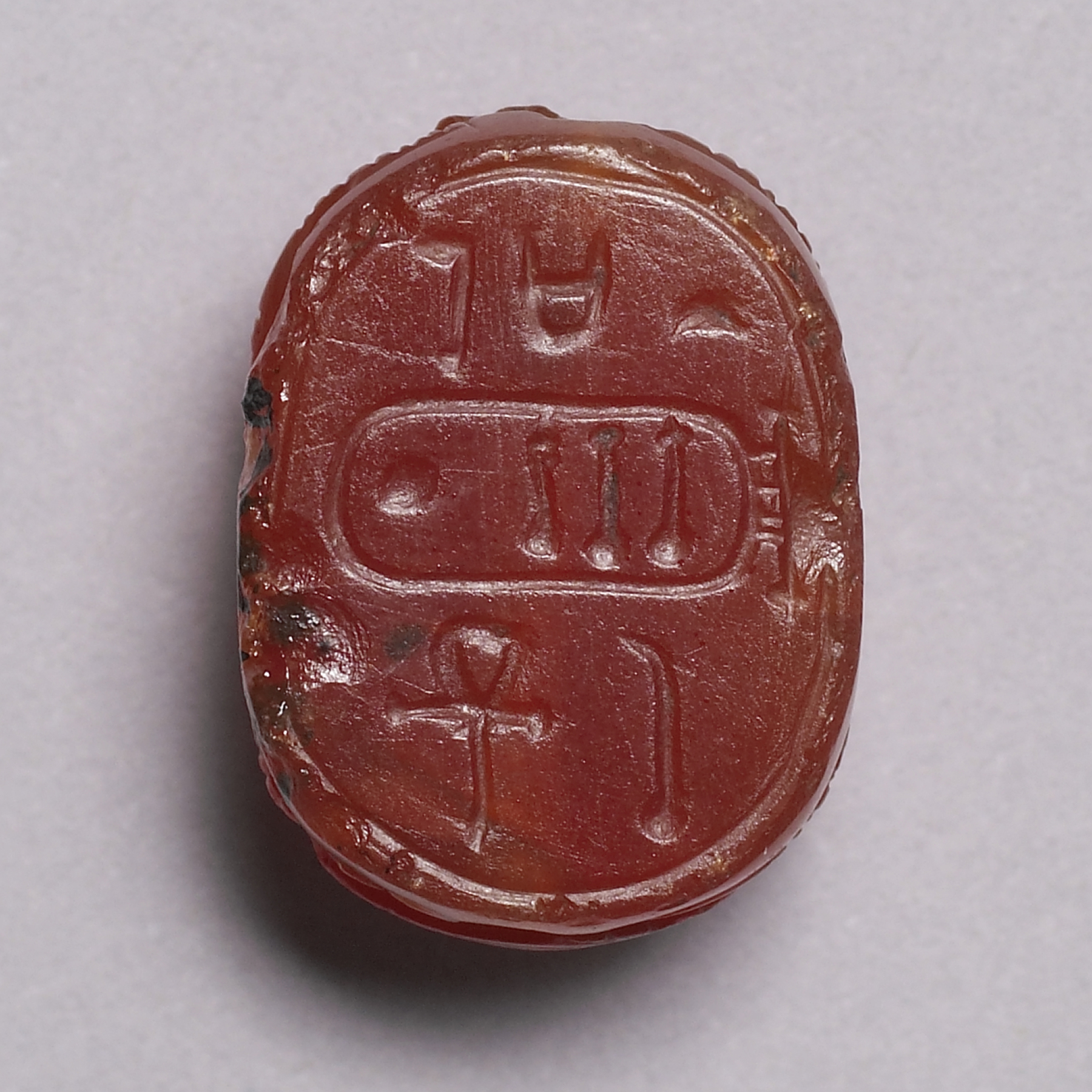
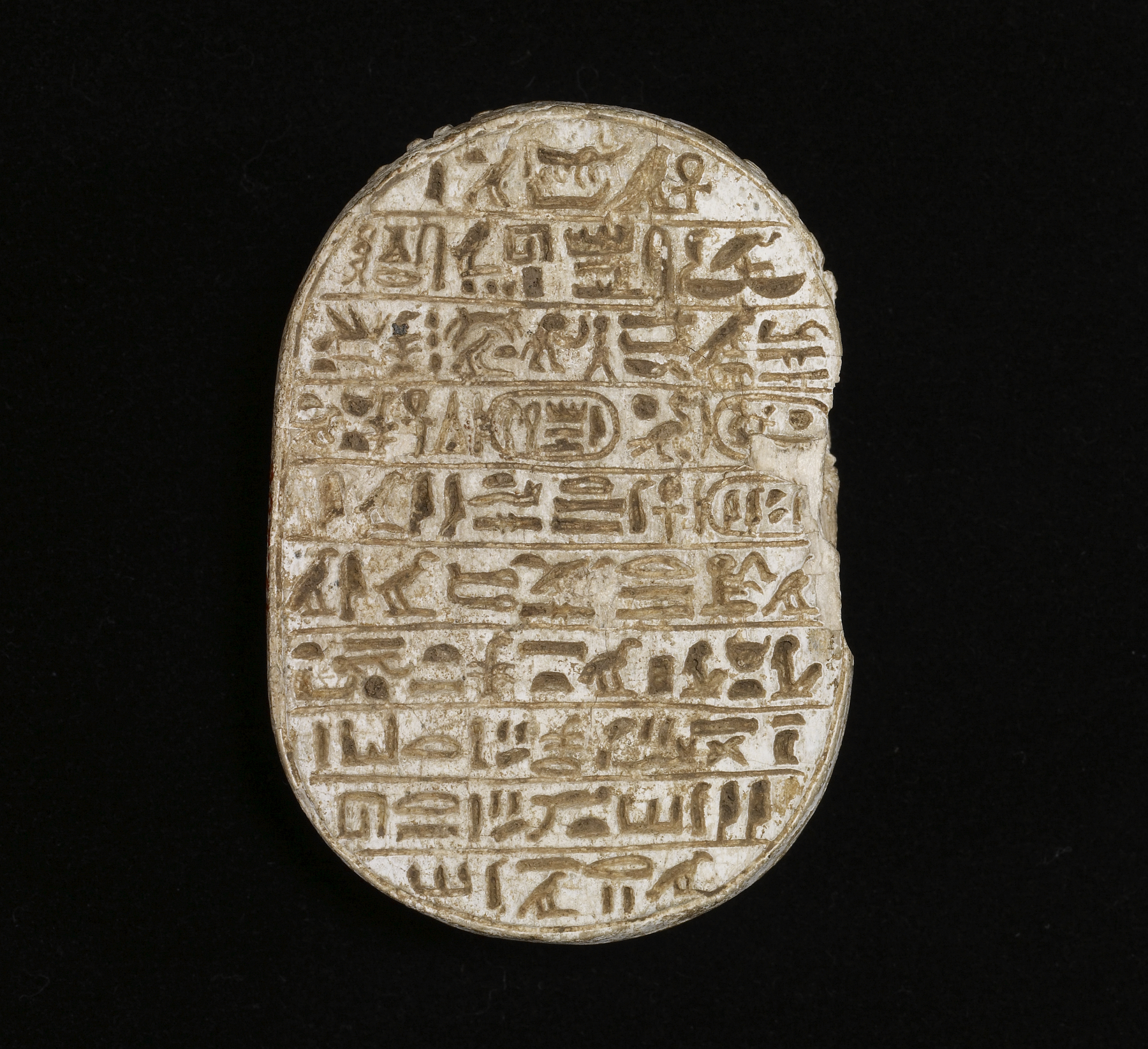
<p>This steatite scarab is inscribed on the bottom in partly sunk relief with the name of Queen Tiye. The top is medium high and is shallowly incised with details of good workmanship. This piece functioned as an individualized amulet, and was originally mounted or threaded. Scarabs with Tiye's name and title are very well known, and have been found in Egypt and abroad. They should secure Tiye's royal status, but also guarantee her royal patronage for a private owner of the amulet. Moreover, it is likely that the Egyptians believed that Tiye had a special relation to the gods, and would function as a mediator. There are many scarabs and plaques with the name of Queen Tiye, and most of them are not personal seals, but supportive amulets given to honorable people in Egypt and abroad. The impressive amount of scarabs with Tiye's name (alone or together with the name of her husband, Amenophis III) demonstrates beside many other monuments the very special role of this queen, and her political and religion importance.</p><p>For the latest information about this object, <cite><a href='https://purl.thewalters.org/art/42.13' rel='external'>Scarab with the Name of Queen Tiye</a></cite>, visit the Online Collection of the Walters Art Museum.</p>
Machine-generated from the object's image on Jul 2026. Not curatorial; treat deities, names, and signs below as the model's best reading, not authority.
Oval scarab/seal amulet with a recessed design and traces of red pigment on a light beige stone surface.
The image shows a flat, oval object interpreted as a scarab or scarab-type seal. The field is worn and mottled light beige/cream with darker patches and surface abrasions consistent with steatite. The carving includes vertical and horizontal recessed elements forming a stylized inscription or name on the left and a separate motif on the right; some red pigment remains in crevices, especially toward the lower-left and near the central/right recessed areas. The right side includes a recessed shape resembling an abbreviated sign or emblem, but the individual hieroglyphs are too eroded to identify reliably as specific cartouche text. No clear full royal cartouche or determinative can be read from this image alone. No Greek, Coptic, or Arabic script is visible.
Spotted an error, a mis-mapped findspot, or have a suggestion? We read every note.