WALTERS-EG
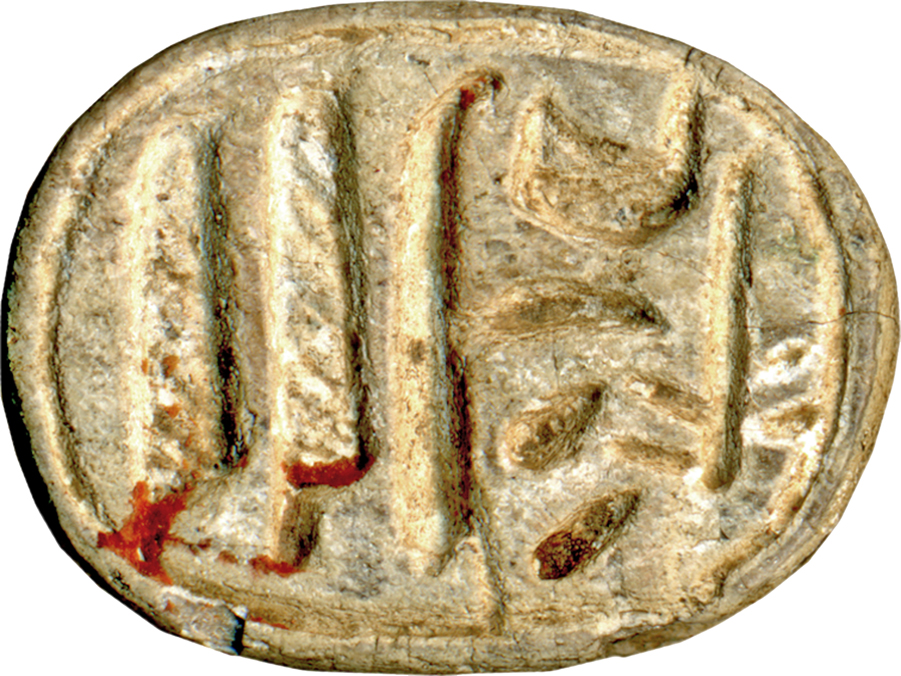
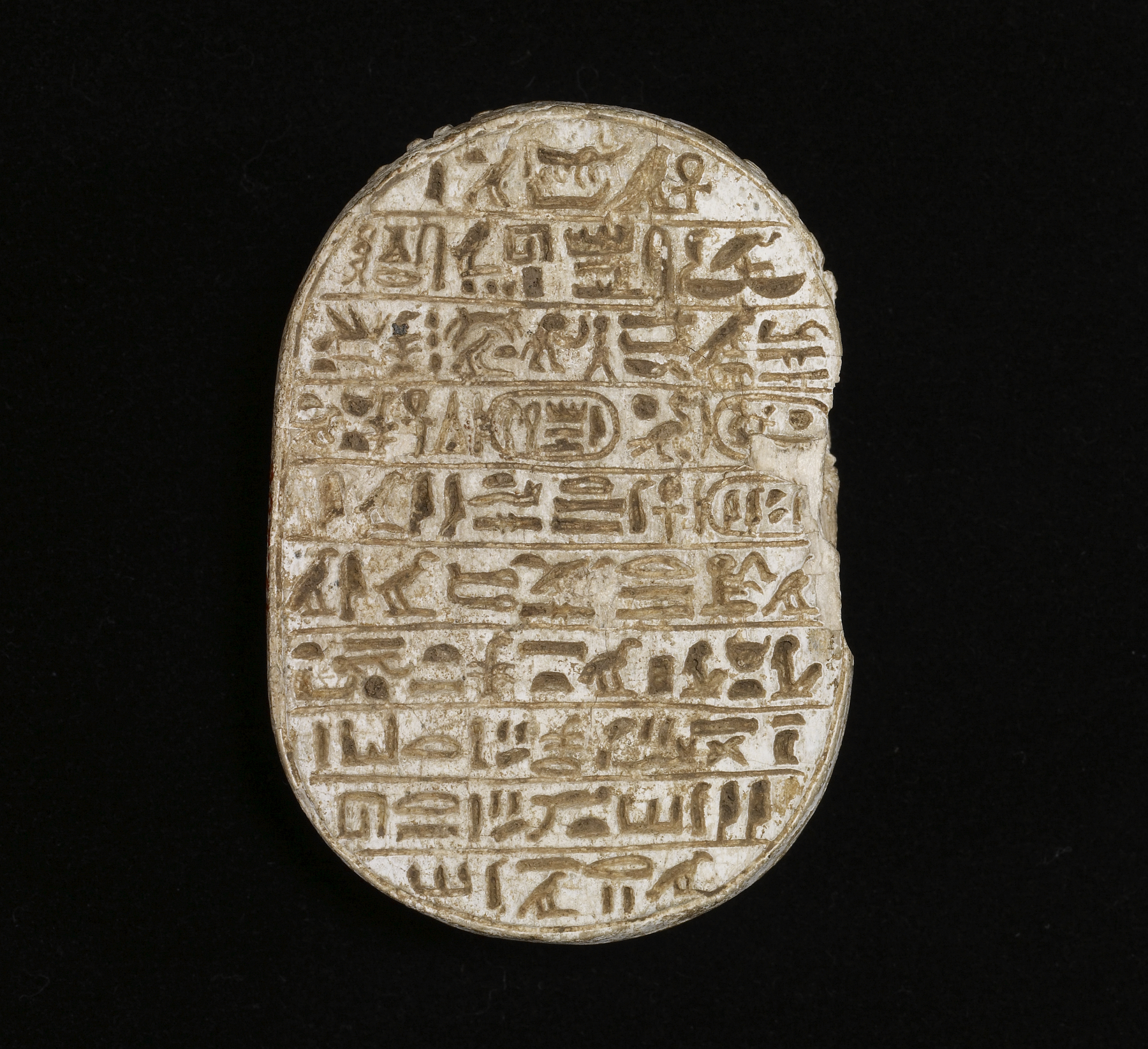
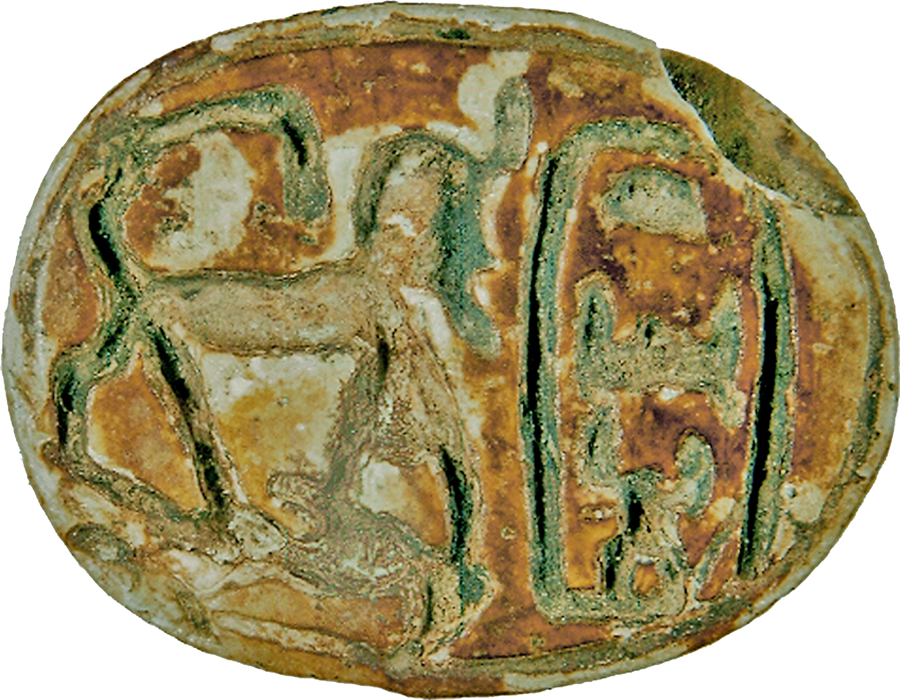
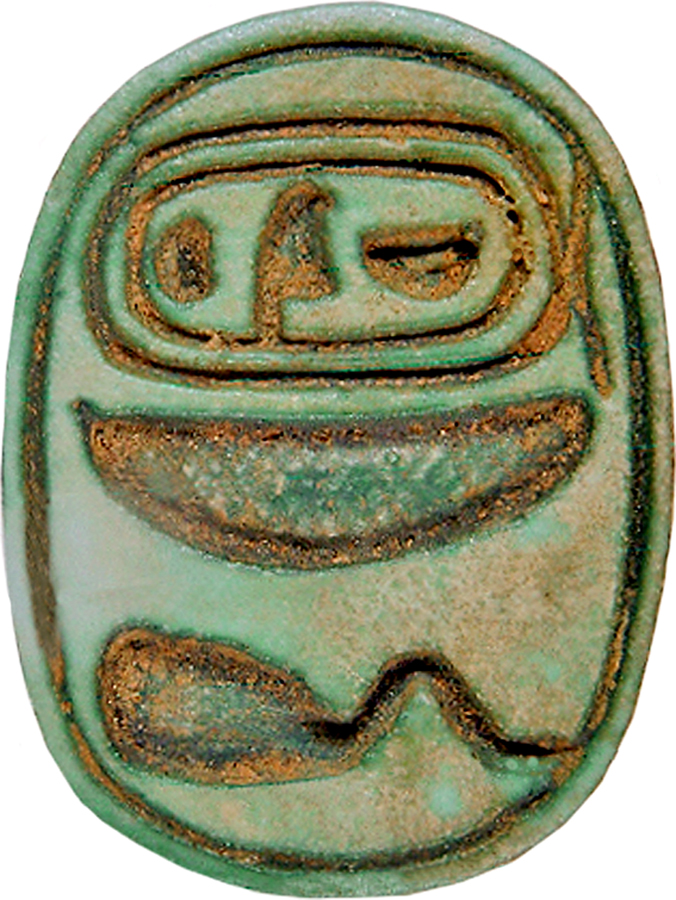
<p>This symmetrically carved long oval plaque has sunk relief inscriptions on both the front and back of the piece. The front has the throne name of Amenophis III (1388-1351/1350 BCE). The reverse lists the name and royal title of the Queen Tiye. The workmanship on the piece is good, and it is simply made. The plaque functioned as a individualized amulet, and was originally mounted, probably as part of a finger ring. The amulet should secure the special role of Queen Tiye, and assure the royal patronage of king and queen for its owner. In addition, it is likely that this royal couple were considered to be successful mediators to the gods, especially to Amun-Re. There are many examples of plaques and scarabs with the names Amenophis III and his wife Tiye, found in and outside of Egypt. The possibility of reading the throne name as an Amun's trigram increases the magical value of the amulet.</p><p>For the latest information about this object, <cite><a href='https://purl.thewalters.org/art/42.67' rel='external'>Amulet with the Names of Amenophis III (1388-1351/1350 BCE) and Queen Tiye</a></cite>, visit the Online Collection of the Walters Art Museum.</p>
Machine-generated from the object's image on Jul 2026. Not curatorial; treat deities, names, and signs below as the model's best reading, not authority.
Oval Egyptian amulet showing blue-green painted/blue glaze elements and faint carved marks forming what appear to be hieroglyphic signs within an incised oval border.
The image depicts a small, rounded-oval amulet with a worn, light beige-brown body. Portions of the surface show a blue-green/blue glaze (most noticeable in narrow patches and thin lines), suggesting that the inscribed signs and/or background received blue color. The center contains multiple darker incised strokes and blocks that resemble hieroglyphic sign forms, though the exact signs are not clear enough to reliably identify specific names or spellings. An oval frame/border is visible around the perimeter. No Greek, Coptic, or Arabic text is apparent. No identifiable cartouche contours (as distinct closed oval/rectangle cartouches) can be confirmed from this resolution, and the precise royal names are not readable.
Spotted an error, a mis-mapped findspot, or have a suggestion? We read every note.