WALTERS-EG
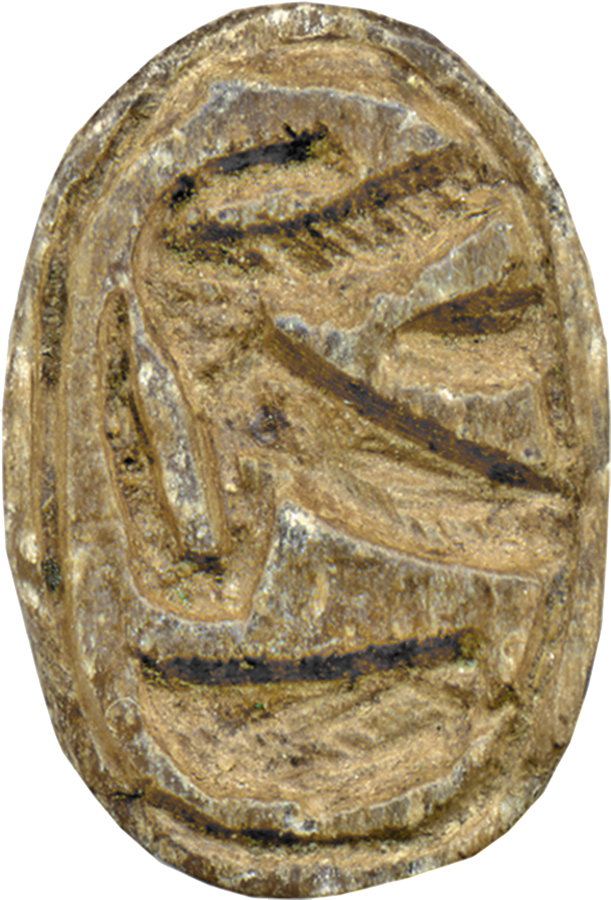
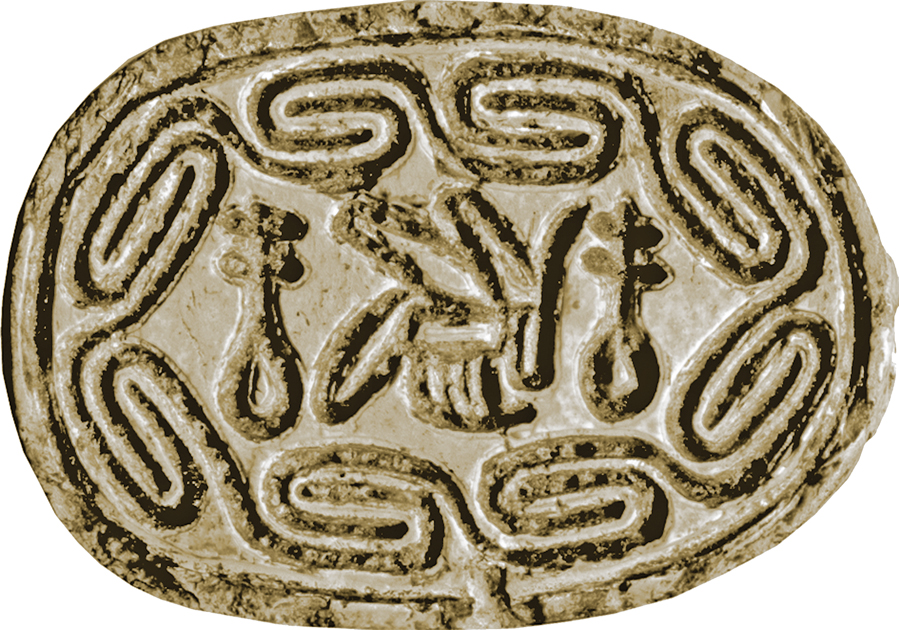
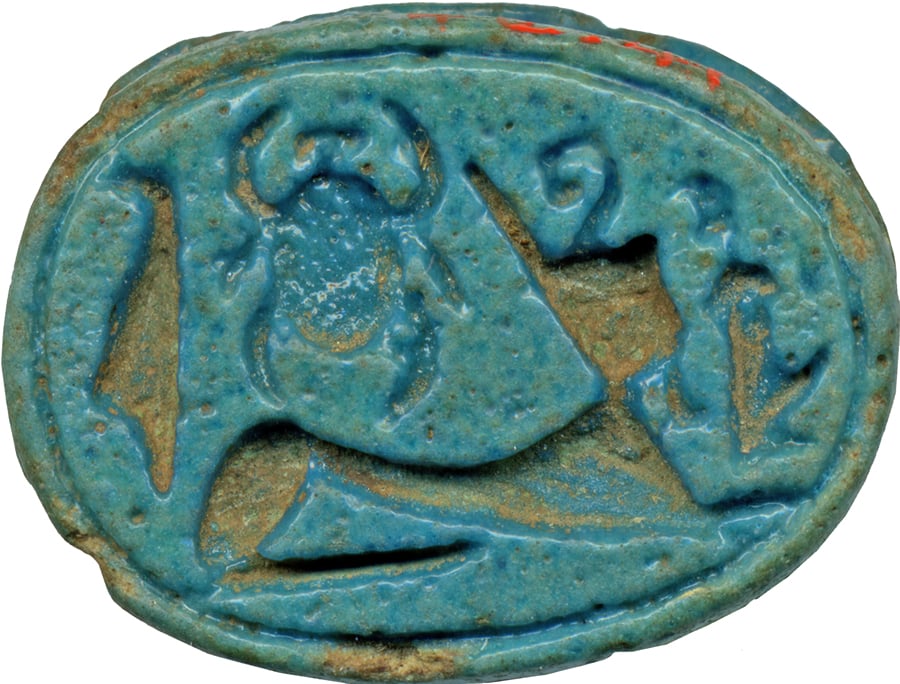
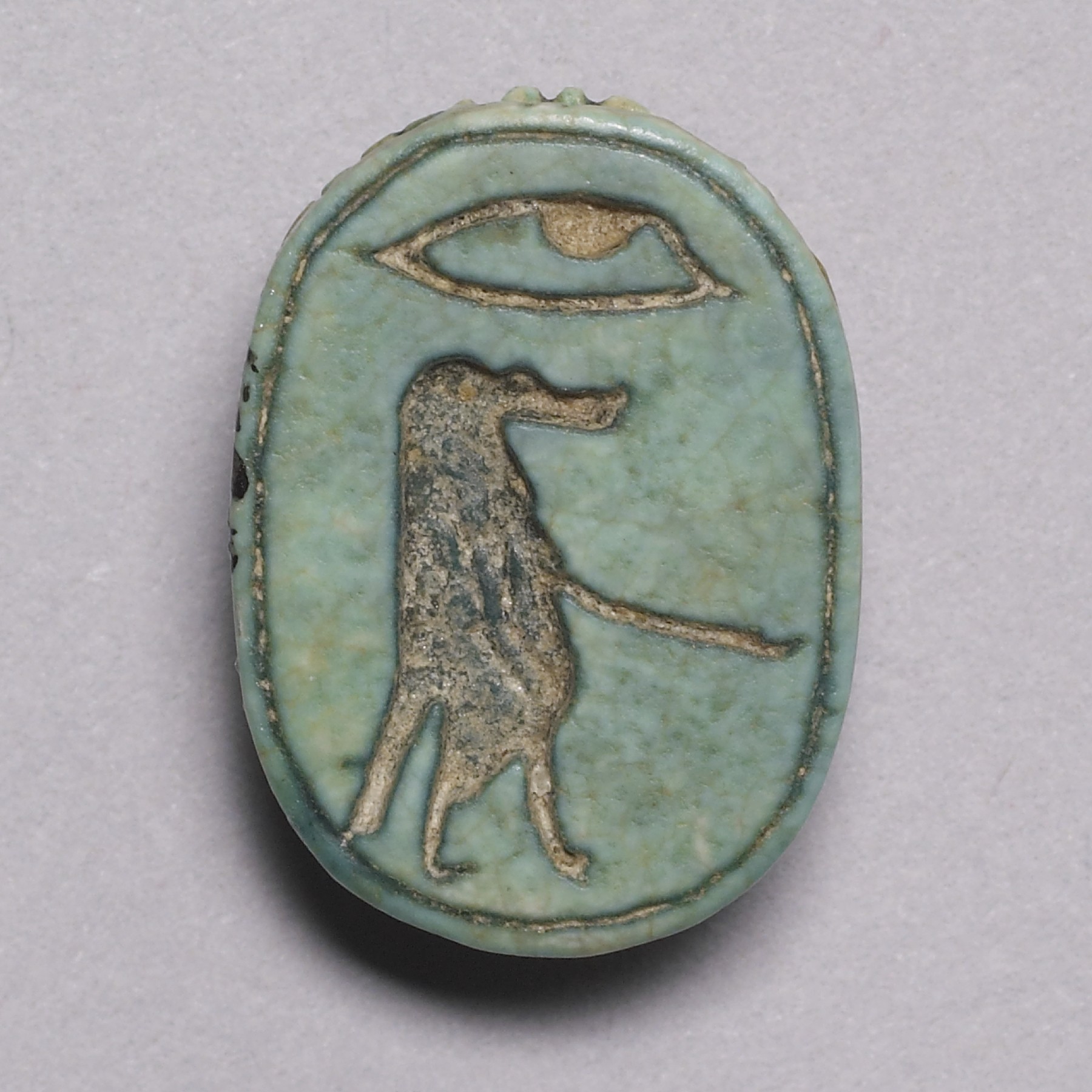
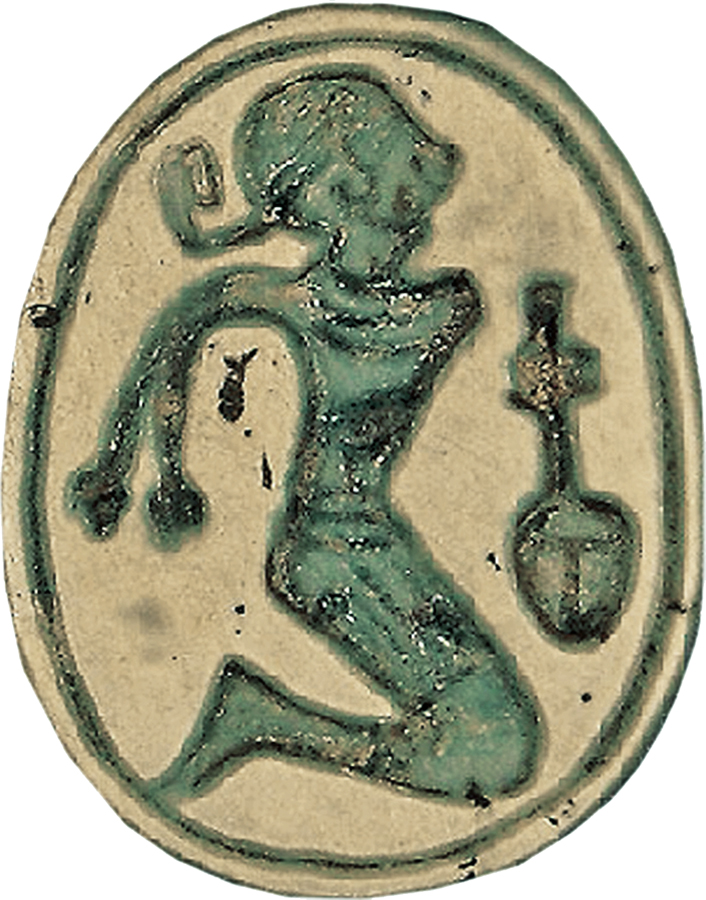
<p>This light beige steatite scarab was originally glazed blue or green. The piece is inscribed on the flat underside with an image of a captive Libyan and a short column of hieroglyphics. The top of the piece is high with a detailed incised design. The workmanship is good and the piece is carefully made. This scarab functioned as a protective amulet and had royal connotations. It was originally mounted or threaded. The bottom motif refers to the royal control over all foreign countries and should ward off all dangers for its owner. It is imaginable that soldiers on an expedition or at the frontier used such amulets. The image of a fettered captive is a popular motif on scarabs, however, the figure of a captive is usually subordinate to the figure of a king. In this case, there is no representation of the king, only the short inscription, which refers to him. It is possible that such an amulet should provide magical protection for Egyptians traveling abroad or for Egyptian allies. The very round base and the style of the carvings are typical for the early 18th Dynasty.</p><p>For the latest information about this object, <cite><a href='https://purl.thewalters.org/art/42.10' rel='external'>Scarab with Bound Captive</a></cite>, visit the Online Collection of the Walters Art Museum.</p>
Machine-generated from the object's image on Jul 2026. Not curatorial; treat deities, names, and signs below as the model's best reading, not authority.
A photographed/engraved oval scarab-shaped amulet with a carved figure resembling a bound captive within the scarab field.
The object is shown front-on as an oval/teardrop scarab-like seal or amulet. The surface is light beige/cream with dark brown/black incised linework. Within the inner oval are curving, stylized lines forming a human-like profile and body arrangement; the right side includes a figure with bent arms/legs, suggesting binding restraints as described by the catalogue title. The border is defined by a thick dark outline around the rim, and the interior shows mottling, wear, and small specks consistent with an older carved stone surface. No clear cartouches or readable hieroglyphs are visible from this image at this resolution. No Greek/Coptic/Arabic text is visible.
Spotted an error, a mis-mapped findspot, or have a suggestion? We read every note.