WALTERS-EG
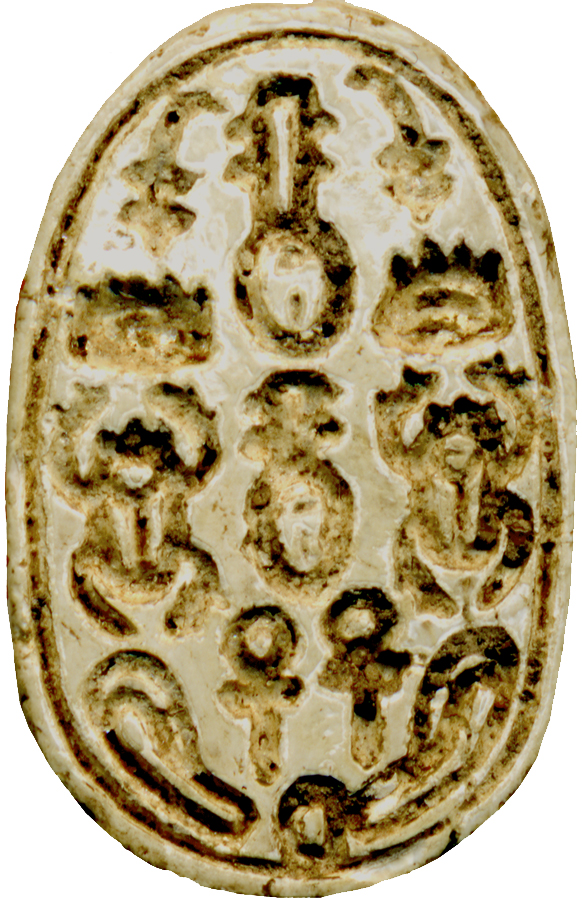
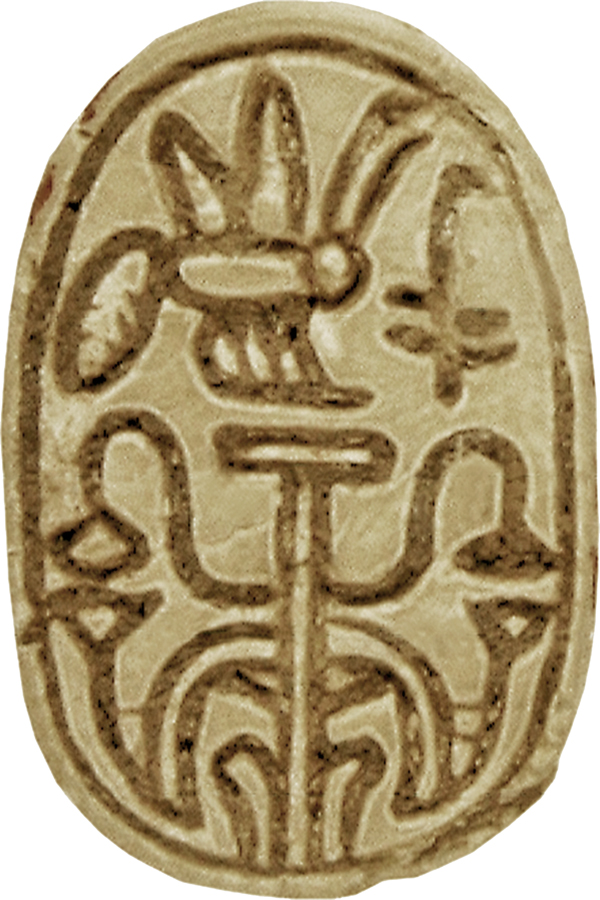
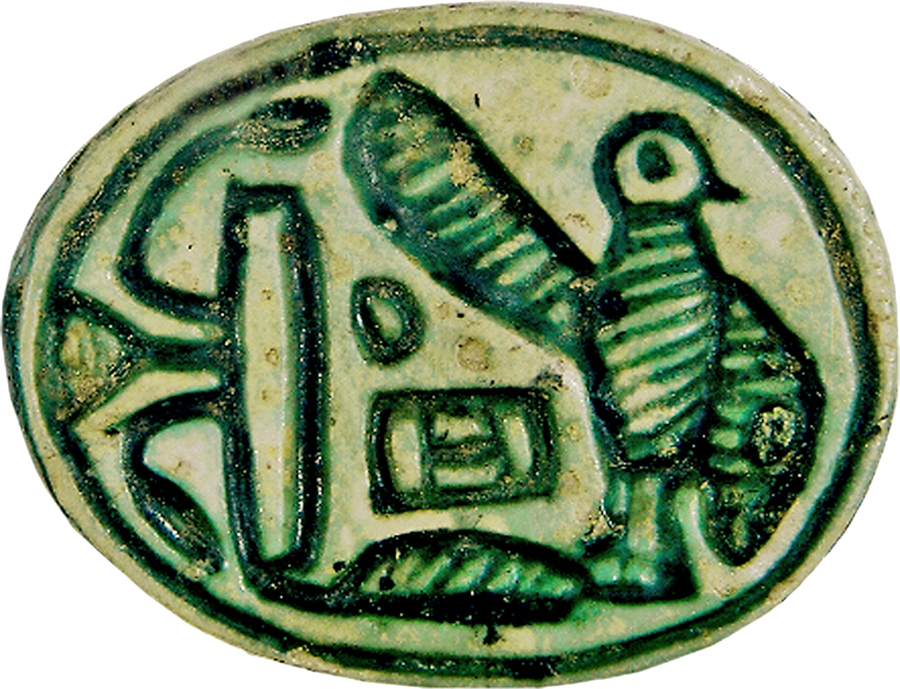
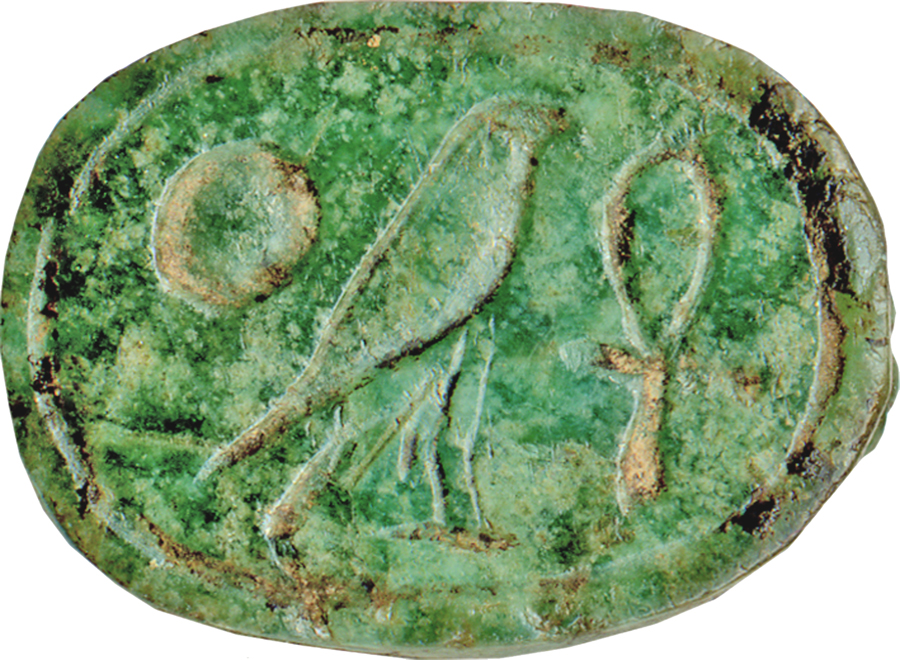
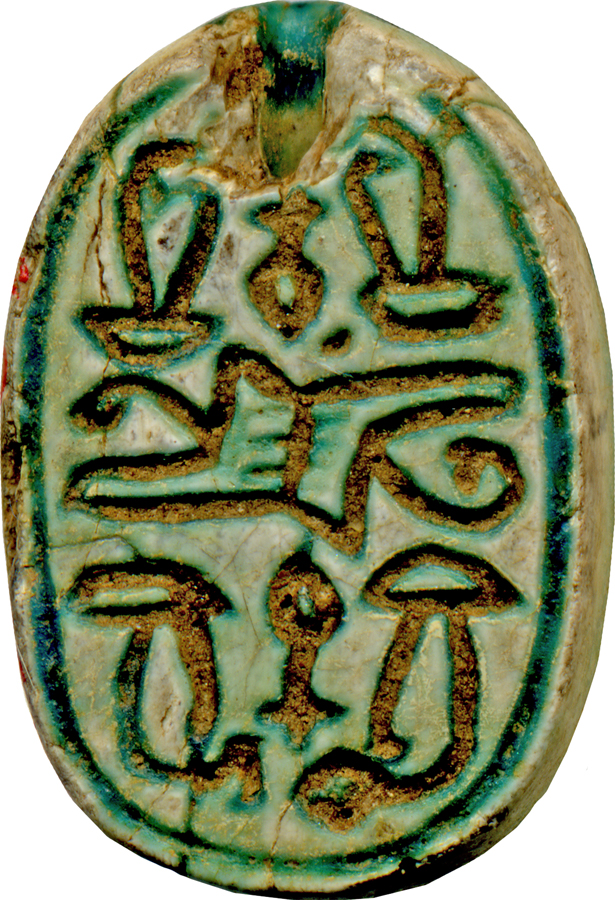
<p>This steatite scarab has a flat underside with a vertically arranged design in sunk relief. The design depicts a winged cobra with a raised head, shield, and tail, a crossed-line pattern beneath her body, and a sun disc between her wings. The back is incised with deeply incised details. The piece is poorly made and the workmanship is rough. The scarab functioned as a provider individualized amulet, and was originally mounted or threaded. The amulet should protect its owner and provide the support of Amun. The Egyptians used winged cobras as protective icons in many different contexts, mostly in combination with royal or divine names or images.</p><p>For the latest information about this object, <cite><a href='https://purl.thewalters.org/art/42.61' rel='external'>Scarab with a Cobra and Script Signs</a></cite>, visit the Online Collection of the Walters Art Museum.</p>
Machine-generated from the object's image on Jul 2026. Not curatorial; treat deities, names, and signs below as the model's best reading, not authority.
An oval scarab-shaped object carved in relief, bearing dark incised linework that includes a cobra-like form and several script-like sign strokes.
The image shows a small, oval scarab seal with an upper domed surface and carved decoration in dark pigment/linework. The prominent motif appears to include a snake/cobra with an extended hooded head-like area near the upper portion, followed by curving body lines. Around and below the snake are additional short, linear strokes that could represent hieroglyphic script signs, though the individual signs are not clear enough to identify confidently. No cartouche, throne name, or clearly legible royal titulary is visible. The surface shows mottled light-brown tones consistent with stone/steatite, with worn edges and speckling.
Spotted an error, a mis-mapped findspot, or have a suggestion? We read every note.