WALTERS-EG
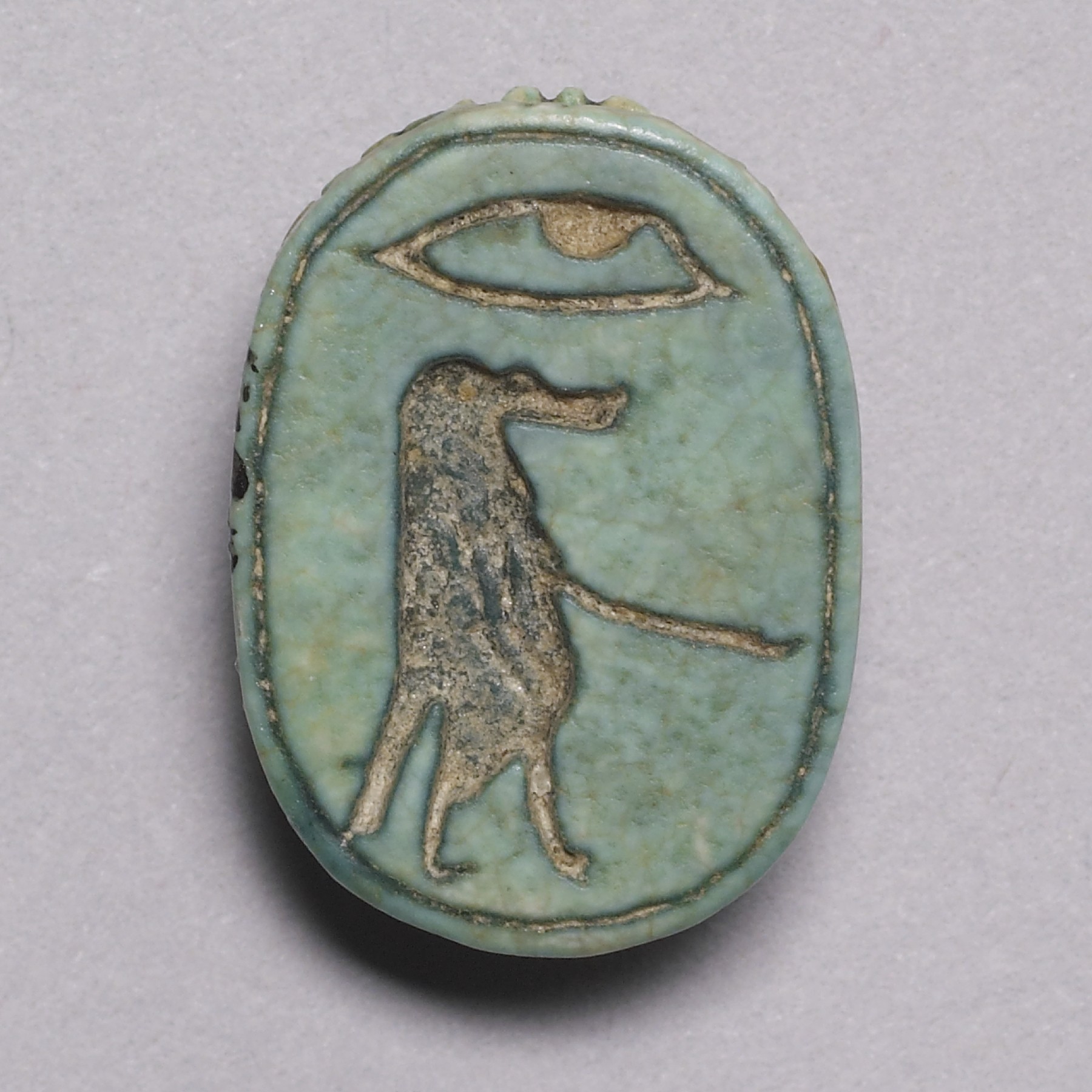
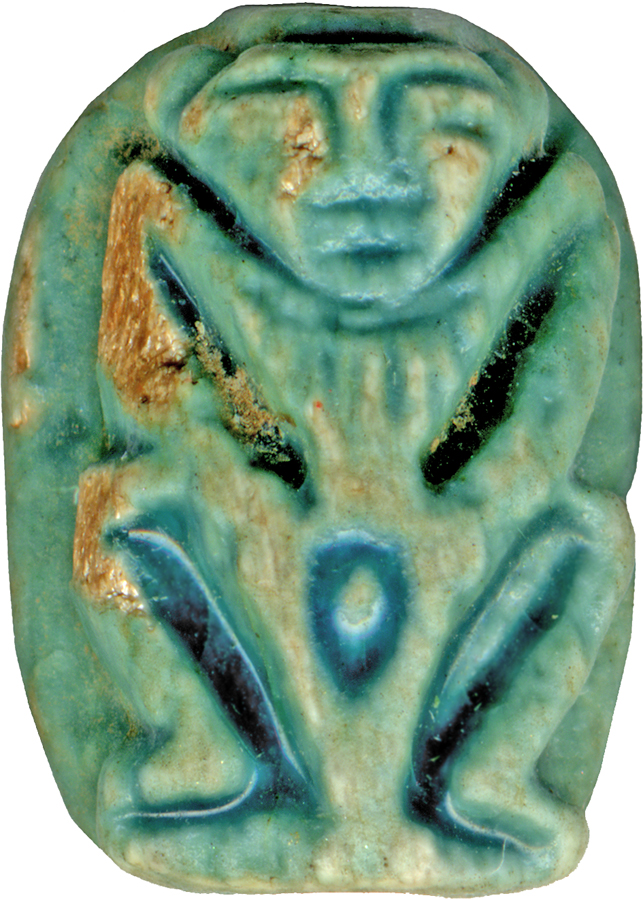
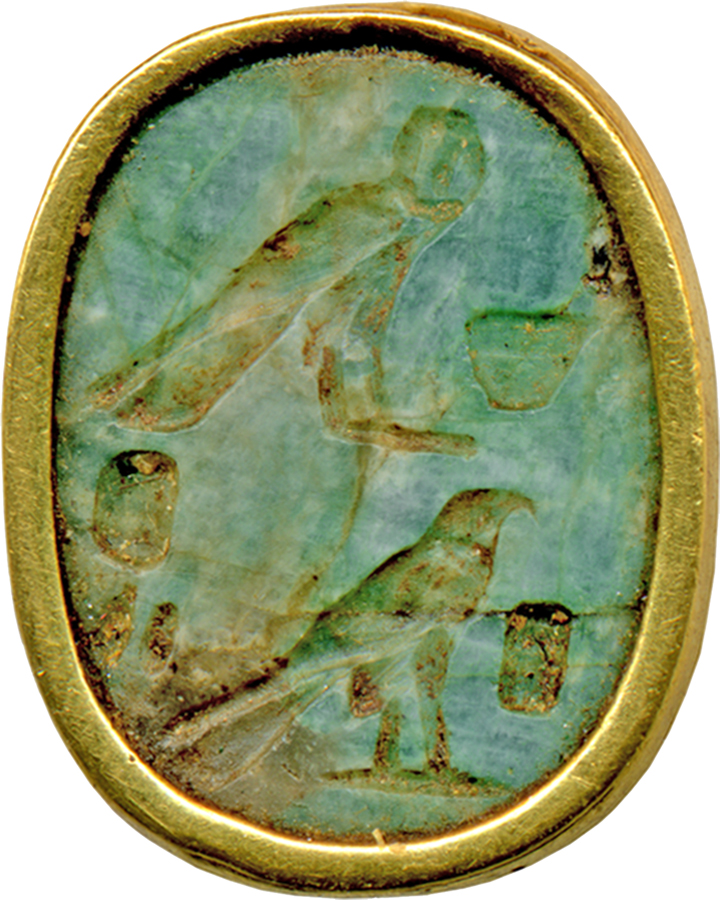
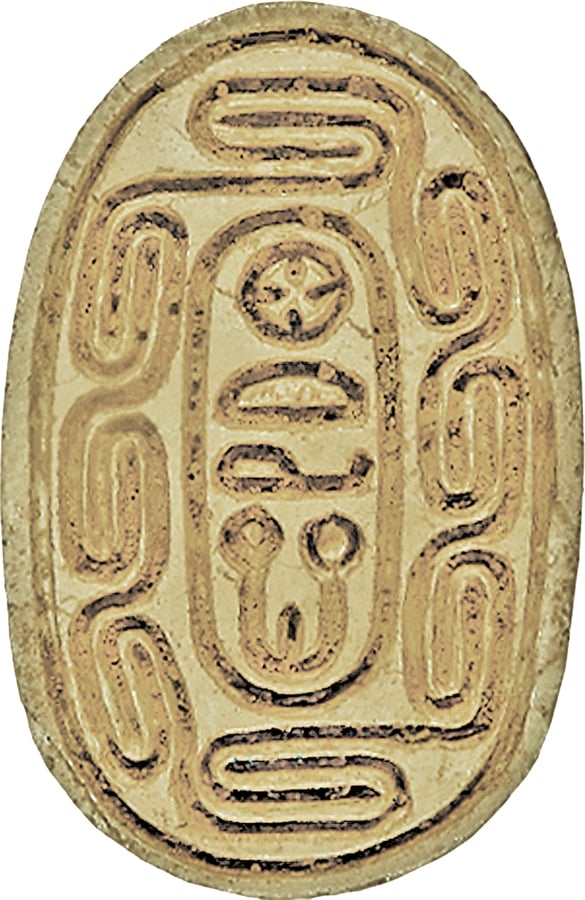
<p>Some of the hieroglyphic signs have a cryptographic determination as an Amun's trigram: the feather represents "j" in exchange for the reed-leaf, the Maat-figure stands for "m," and the beetle for "n" (derived from "ntr.j", "the divine one"). The sphinx does not seem to be part of the trigram, and with its Red Crown of Lower Egypt and divine beard, represents divine kingship. This amulet should provide the owner with the support of the divine king and Amun.</p><p>For the latest information about this object, <cite><a href='https://purl.thewalters.org/art/42.41' rel='external'>Scarab Amulet</a></cite>, visit the Online Collection of the Walters Art Museum.</p>
Machine-generated from the object's image on Jul 2026. Not curatorial; treat deities, names, and signs below as the model's best reading, not authority.
The image shows a blue-green glazed scarab amulet with molded/inscribed back details. Raised markings on the surface resemble a stylized scarab and/or vertical decorative elements, with no clearly readable text.
The object is a small, oval scarab amulet rendered in a light turquoise/blue-green glaze over a dark core. The top/belly area is filled with raised relief that appears scarab-like, including a central form with curving lines suggesting the body and legs/wings, and a short curved element near the lower center. On the left edge there is a vertical raised bar/column-like form, and on the right there is a raised, angular/looped element. The background and fields are matte with visible pitting consistent with ceramic glaze wear. No cartouche or royal titulary is clearly legible, and no distinct hieroglyph groups can be confidently read at this resolution.
Spotted an error, a mis-mapped findspot, or have a suggestion? We read every note.