WALTERS-EG
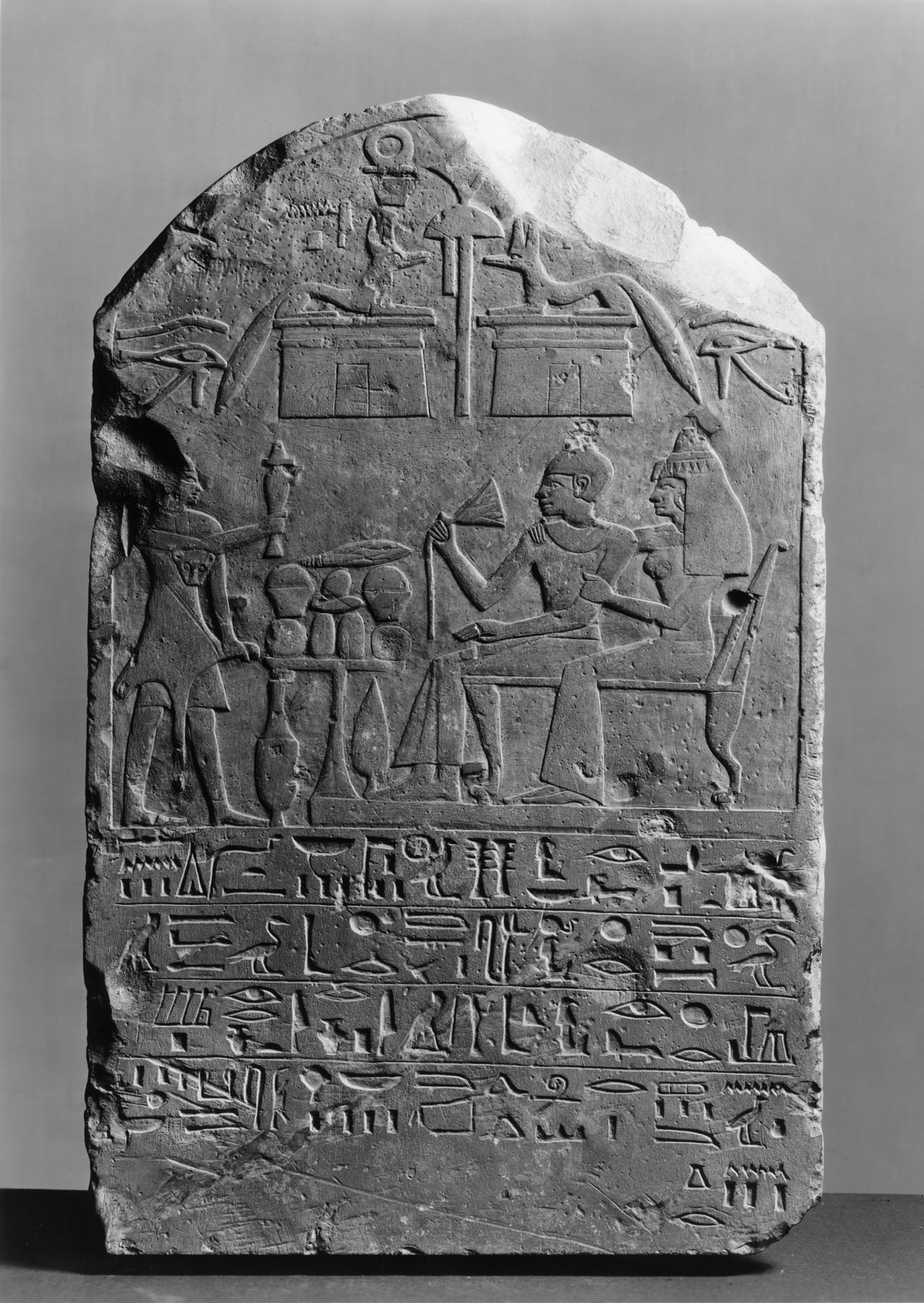
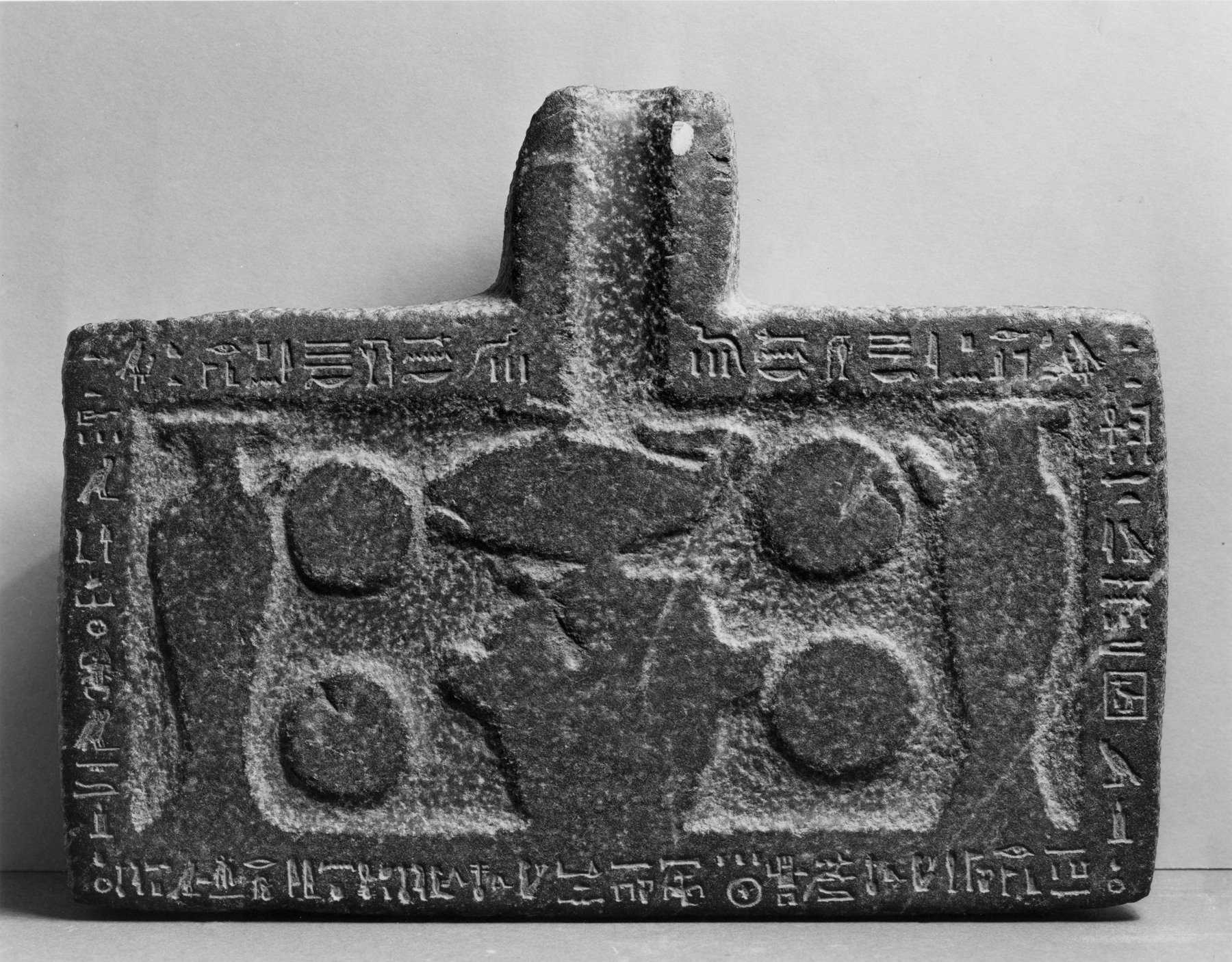
<p>The offering table was an essential element of the funerary cult and was usually placed near the deceased's tomb in an offering niche or chapel. If the cult ceased to function, the carved images of food and drink on the table served as magical substitutes, thus insuring the survival of the deceased's ka, or spirit.</p><p>For the latest information about this object, <cite><a href='https://purl.thewalters.org/art/22.91' rel='external'>Offering Table</a></cite>, visit the Online Collection of the Walters Art Museum.</p>
Machine-generated from the object's image on Jul 2026. Not curatorial; treat deities, names, and signs below as the model's best reading, not authority.
Stone offering-table relief depicting a seated divine image (or god-like figure) receiving offerings, surrounded by columns of hieroglyphic text.
The object is a rectangular, white limestone offering table/tile featuring a recessed central scene in low relief. Inside the bordered central panel, two round, halo-like elements flank a central figure-like form; beneath and around them are stylized offering elements (including what appear to be vessels/loaves) arranged on a bed-like or offering surface. The relief is framed by multiple vertical registers and columns of hieroglyphs on the outer border, with additional horizontal/ground-line hieroglyphs along the bottom edge. No Greek, Coptic, or Arabic script is visible. No clearly legible royal cartouche is identifiable from the image resolution; hieroglyphic text is present but the exact wording cannot be safely transcribed.
Spotted an error, a mis-mapped findspot, or have a suggestion? We read every note.