ARTIC-EG
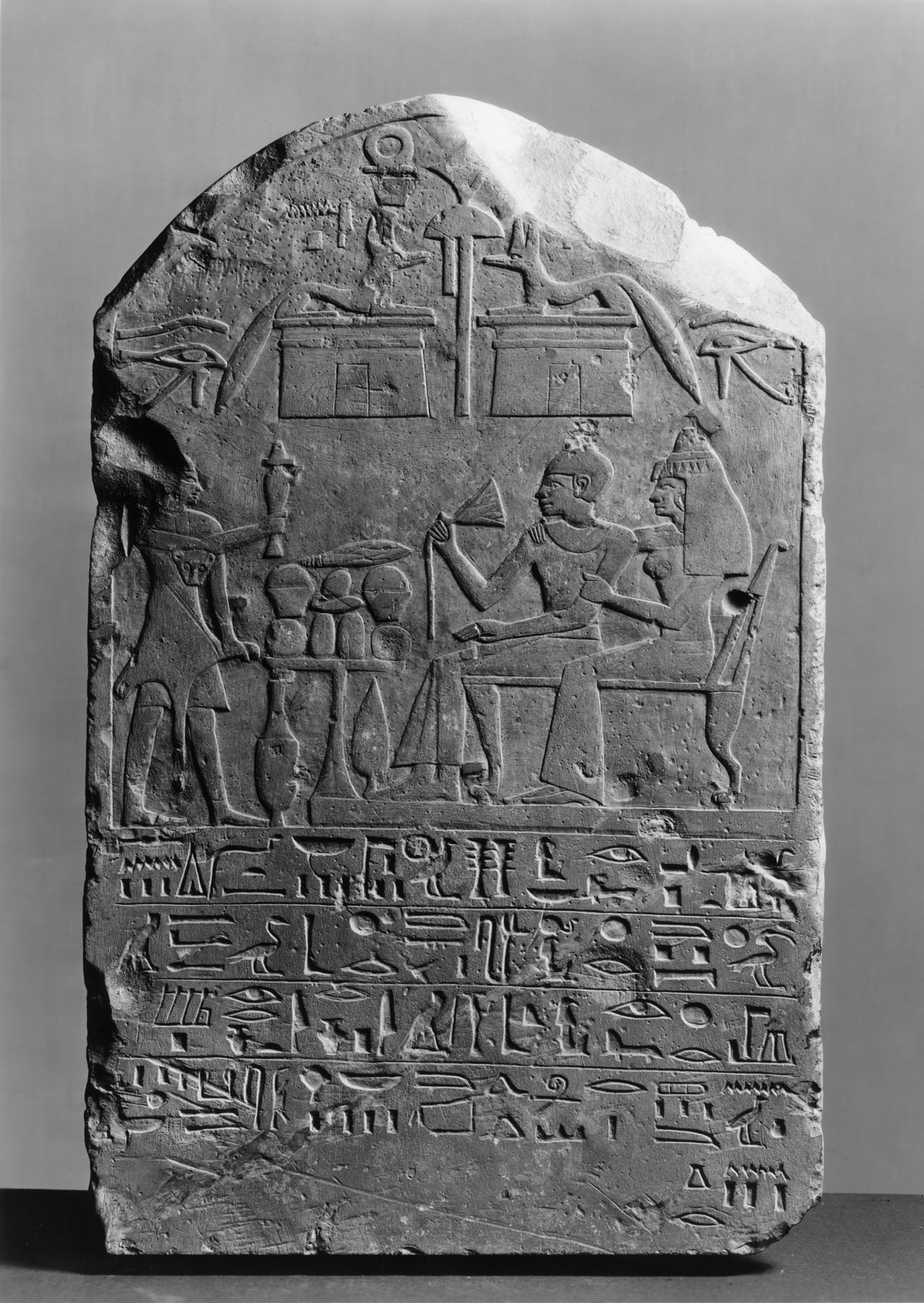
This round-topped stela (or commemorative monument) depicts a mother and son surrounded by the objects they hoped to use in the afterlife. The mother, Yatu, and her son, Amenemhat, sit in chairs with oversized cosmetic containers placed underneath. The distinctive flared shape of the white and red vessel beneath Yatu indicates that it holds ointment. Under Amenemhat’s seat, a thin, white applicator sticks out of a blue jar containing eye paint called kohl. The vessel’s color suggests that it is carved out of anhydrite, a fashionable choice for cosmetic vessels during the Middle Kingdom period when this mother and son lived.
Machine-generated from the object's image on Jul 2026. Not curatorial; treat deities, names, and signs below as the model's best reading, not authority.
Painted limestone funerary stela showing two human figures seated at a low table with offerings, beneath bands of hieroglyphic text.
The artifact appears as a rectangular, arched-top stela made of light-colored stone with preserved polychrome pigment. The upper register contains multiple horizontal lines of hieroglyphs, though the specific signs are not fully legible at this resolution. Two painted figures are shown in the lower register seated side-by-side facing inward toward a low offering table. The table holds multiple red-and-white offering items (including what look like rows of vessels and/or food items). The right figure wears a red garment and a head covering/wig; the left figure is in lighter colors. A red, green, and black painted frame and inner border lines run along the edges, with symmetrical decorative bands flanking the central scene. No Greek, Coptic, or Arabic text is visible.
Spotted an error, a mis-mapped findspot, or have a suggestion? We read every note.