ARTIC-EG
Ancient Egyptians used mummification and ritual to transform the body into a new entity called a sah, a crucial step in preparing the deceased for life after death. A ceremony called the Opening of the Mouth, depicted here, was a pivotal step in the process. As the name suggests, the rite restored function to the deceased’s mouth, allowing them to eat and drink in the afterlife. At the right end of this scene, a jackal-headed figure holds Ramose’s anthropoid (human-shaped) coffin upright. A pair of priests in front of the coffin burn incense and pour libations, while a third recites sacred texts from a papyrus scroll.
Machine-generated from the object's image on Jul 2026. Not curatorial; treat deities, names, and signs below as the model's best reading, not authority.
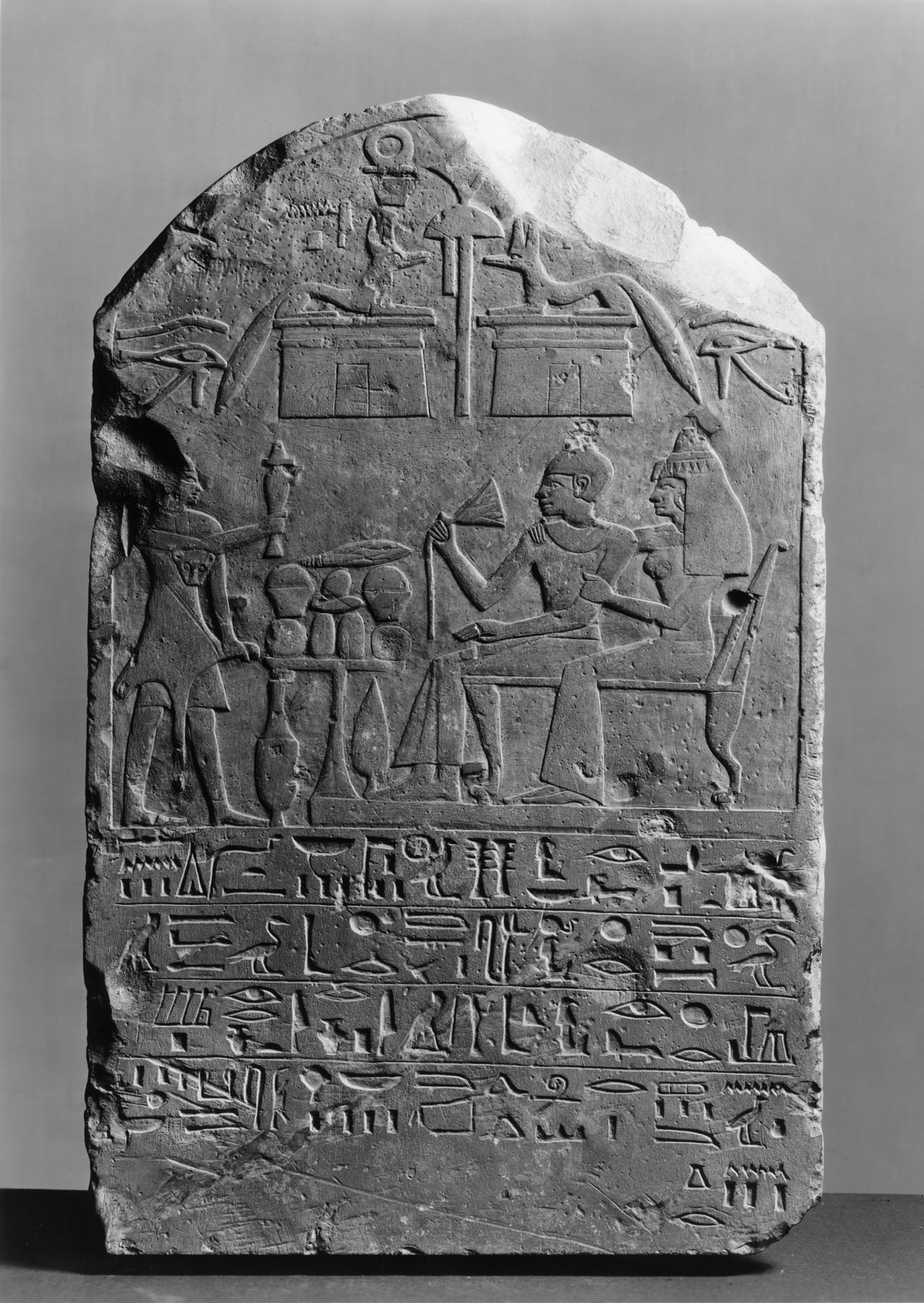
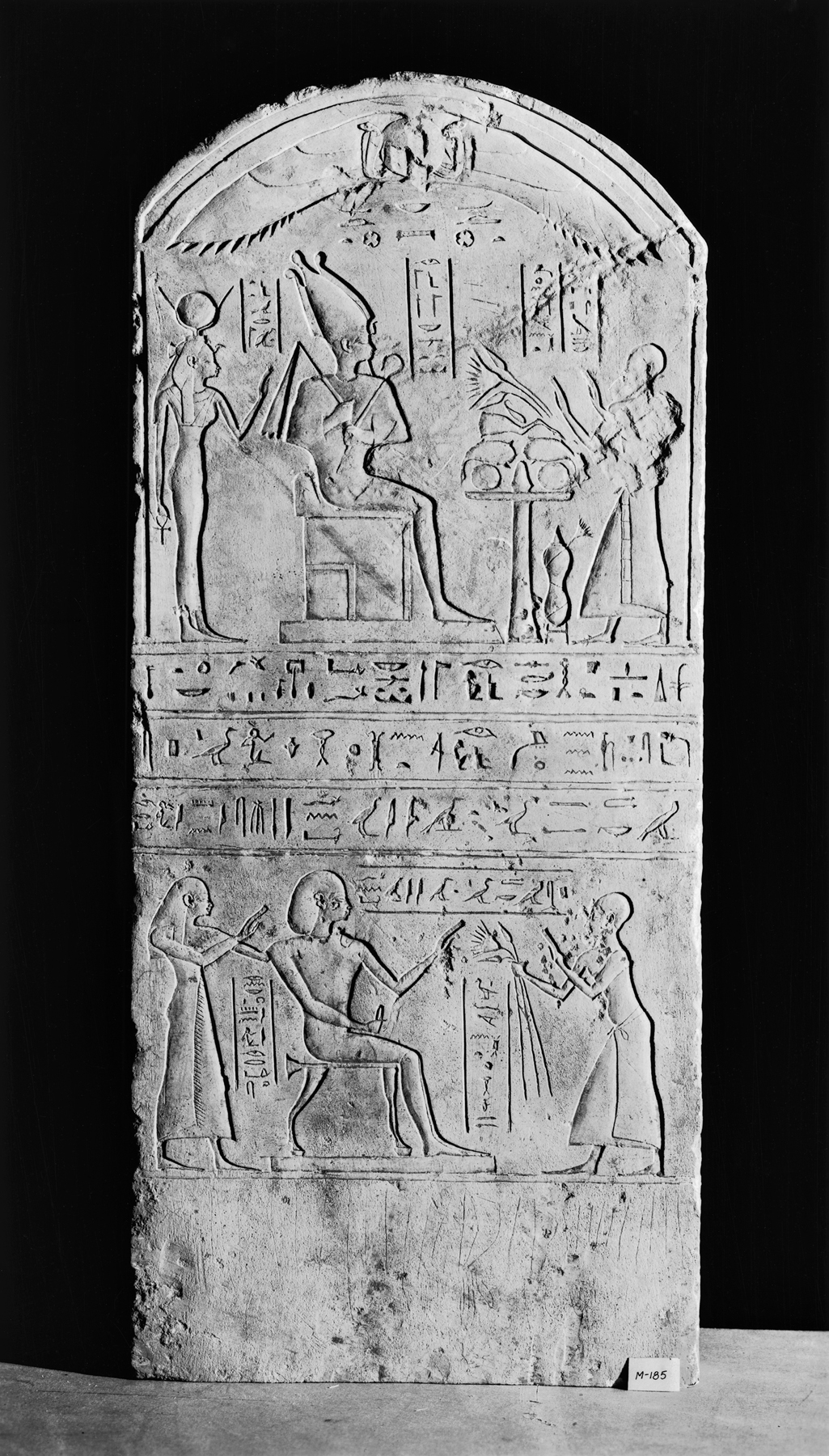
Rectangular Egyptian stela with a painted relief scene of a funeral procession: three standing mourners/attendants face inward toward a central figure, with a stylized bier or coffin-like form and surrounding hieroglyphic text bands.
The artifact appears as a rectangular, horizontally oriented stela of tan sandstone with areas of remaining pigment. In the main register, three nude-to-partially draped human figures are shown in profile facing inward; the left and right figures wear short kilts and hold arms close to the body, while the central figure stands holding an implement-like object at the chest or forearms. Between/among the figures is a geometric, coffin/bier-like element with carved/painted bands. Additional smaller figures and objects are rendered in relief and paint behind or between the larger figures. Multiple horizontal bands of hieroglyphs fill both the upper background and the lower border of the stela; the signs are too abraded to reliably transcribe precisely at this resolution. No Greek, Coptic, or Arabic text is visible. A clear royal cartouche is not identifiable, and no specific deity attributes are unambiguously legible.
Spotted an error, a mis-mapped findspot, or have a suggestion? We read every note.