WALTERS-EG
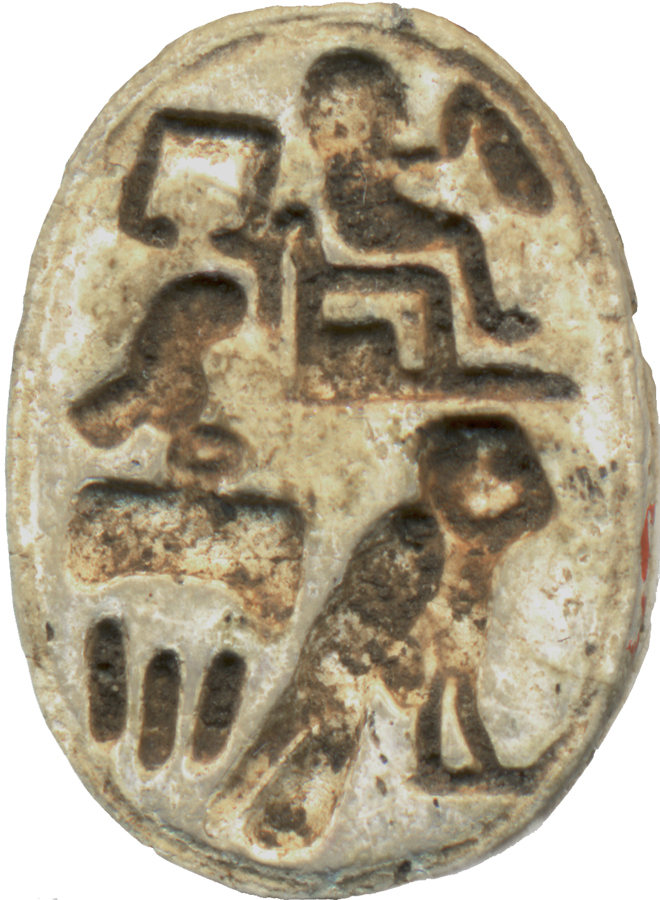
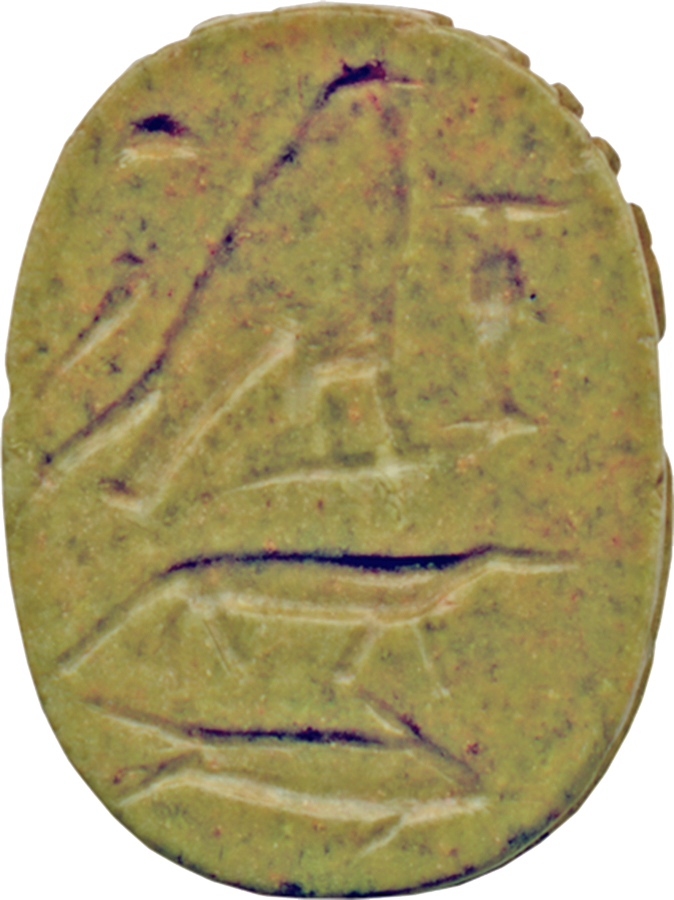
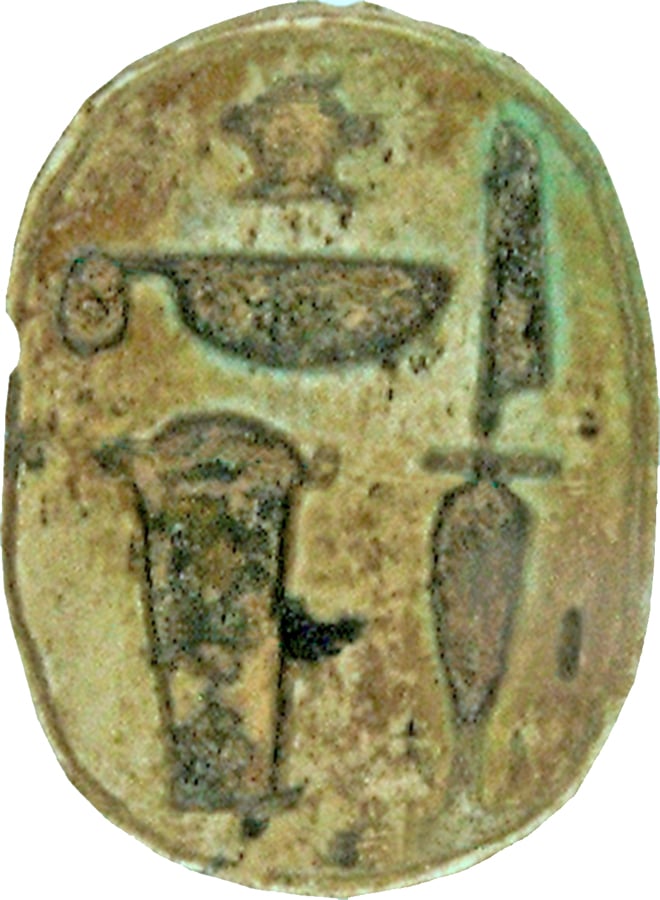
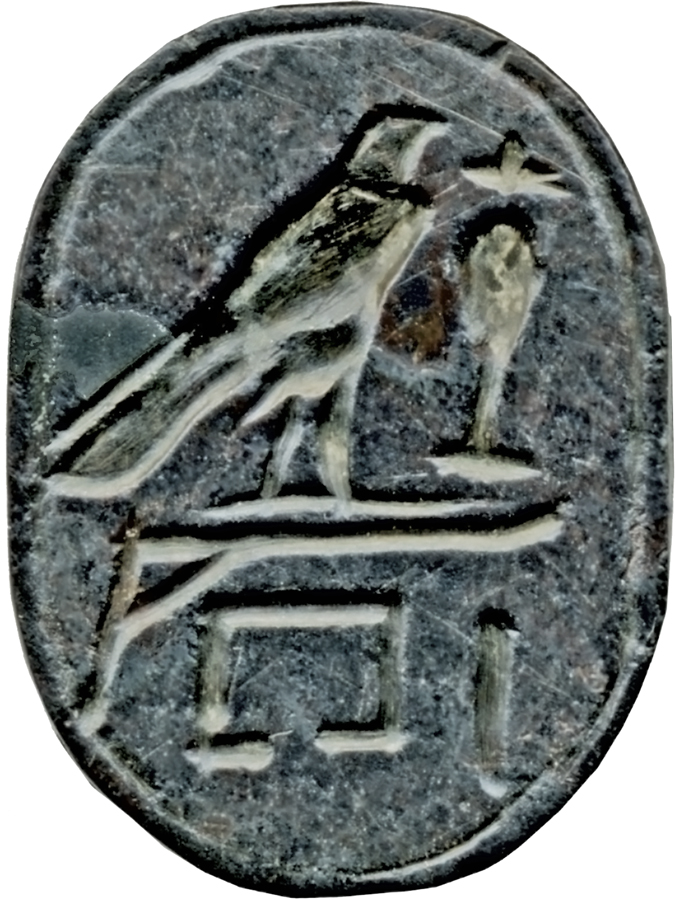
<p>This faience scarab has a flat underside with a horizontally arranged inscription with a request for Amun's support. The top of the scarab is inscribed with a very simply design of slightly rough workmanship. The scarab functioned as a proider individualized amulet with a blessing related to Amun. The amulet should provide its owner with the special support of the god. The piece would have been originally mounted or threaded. Although there are numberless examples of scarabs with the name of Amun or Amun-Re since the 18th Dynasty, there are not so many that combine the name of the god with the signs 'nb' and 'mrj.'</p><p>For the latest information about this object, <cite><a href='https://purl.thewalters.org/art/42.35' rel='external'>Scarab with Wish Formula</a></cite>, visit the Online Collection of the Walters Art Museum.</p>
Machine-generated from the object's image on Jul 2026. Not curatorial; treat deities, names, and signs below as the model's best reading, not authority.
An oval scarab seal made of dark green faience with a recessed, incised design containing Egyptian-style script-like lines across the center.
The object appears as a flat, oval scarab form with a dark green glaze overall, mottled with lighter turquoise and areas of orange-brown oxidation at the edges. The central field contains multiple incised bands/lines that resemble a wish-formula inscription layout, though individual hieroglyphs are not clearly legible at this resolution. Along the left and right sides are raised vertical elements consistent with the sides of a scarab tablet/embossed border. No clearly identifiable cartouche, specific deity name, or distinct phonetic sign shapes can be confirmed from the image. No separate Greek/Coptic/Arabic text is visible.
Spotted an error, a mis-mapped findspot, or have a suggestion? We read every note.