WALTERS-EG
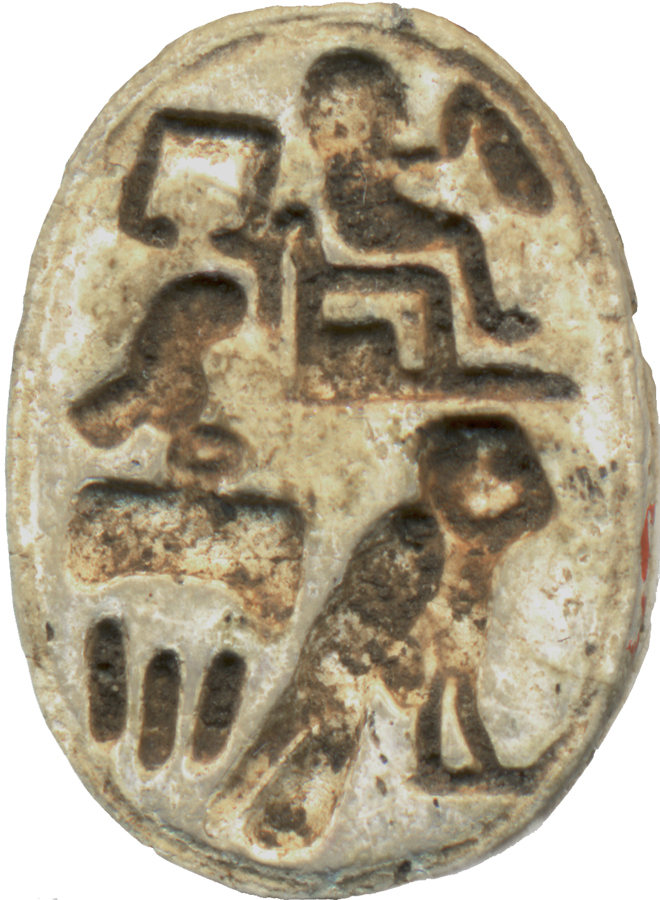
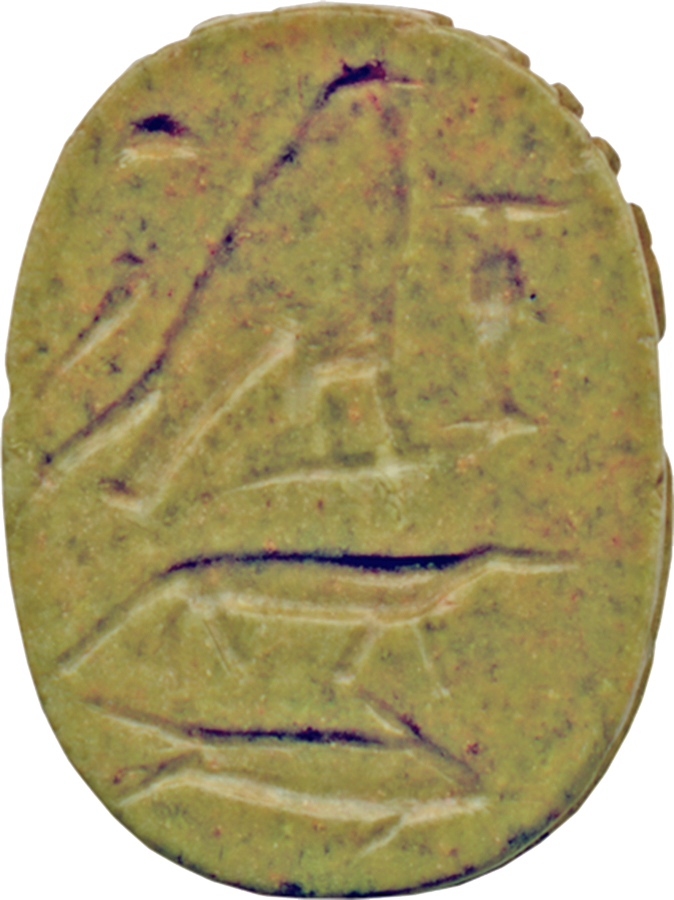
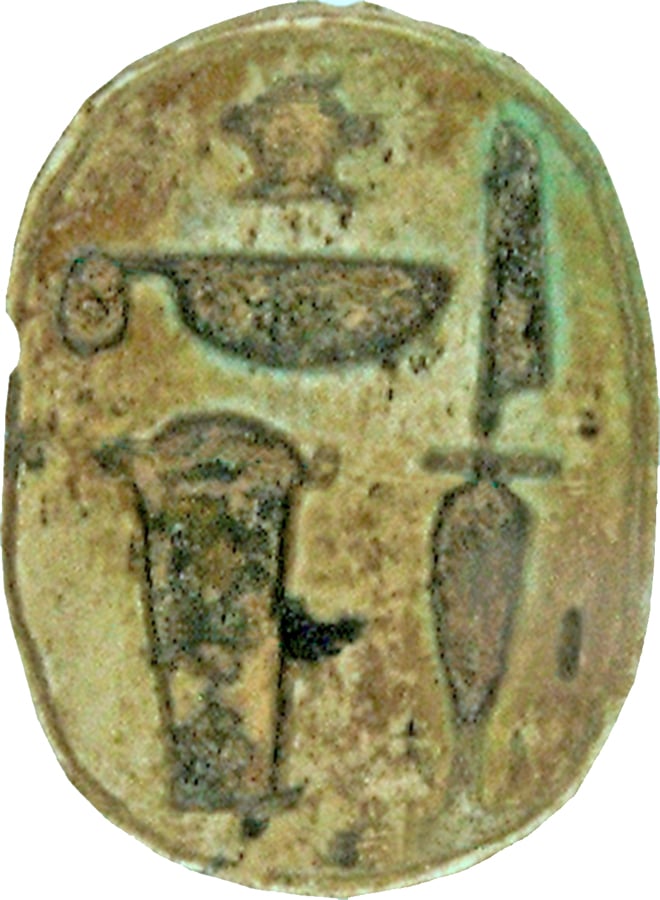
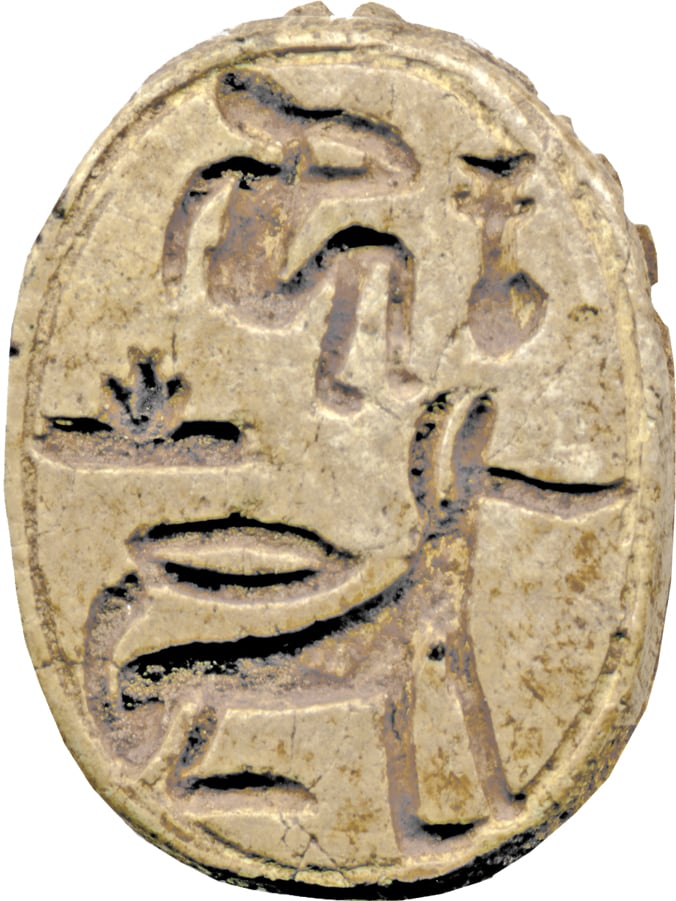
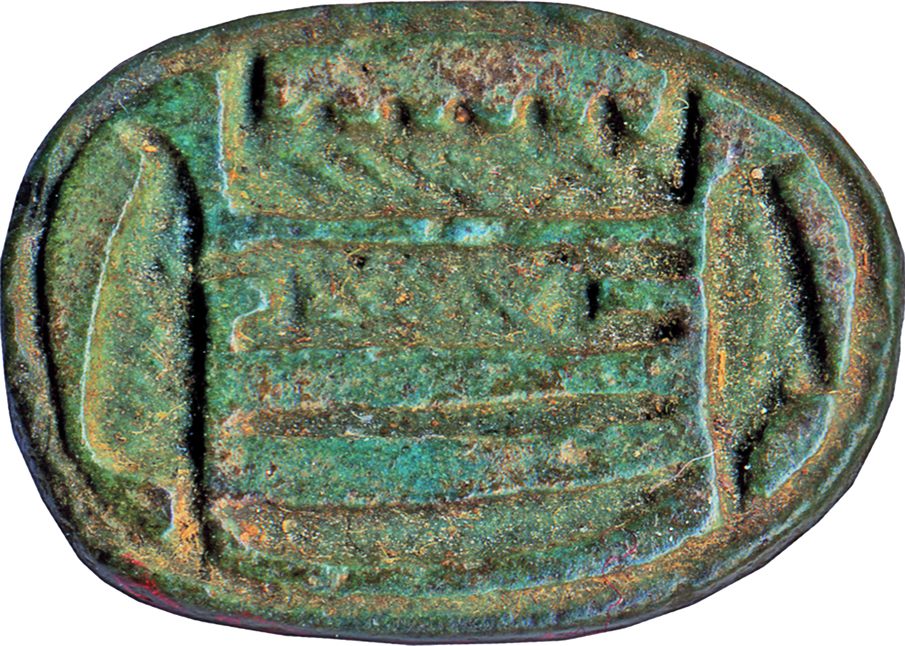
<p>This obsidian scarab is inscribed on the flat underside with vertically arranged column writing requesting the support of the royal palace. The top of the scarab is incised with a detailed design with thick lines, slightly irregular line flow and almost balanced proportions. The piece is simply made and the workmanship is slightly rough. The scarab functioned as a provider individualized amulet with a wish formula. The amulet should provide its owner with the protection of Horus. The piece was originally mounted or threaded. A similar wish formula can be found on Walters 42.8.</p><p>For the latest information about this object, <cite><a href='https://purl.thewalters.org/art/42.65' rel='external'>Scarab with Wish Formula</a></cite>, visit the Online Collection of the Walters Art Museum.</p>
Machine-generated from the object's image on Jul 2026. Not curatorial; treat deities, names, and signs below as the model's best reading, not authority.
Round scarab/seal-stone engraved with a central design and apparent Egyptian-style linear signs over a dark gray/black surface.
The image shows a circular, polished scarab-like amulet or seal impression with a beaded rim. The background appears dark gray to black with a matte polish. In the center is a complex engraved motif resembling a scarab/winged shape or stylized figure combined with several linear, hieroglyph-like strokes arranged horizontally and diagonally. There is no clearly readable cartouche or distinct royal titulary. No legible deities are identifiable from the visible silhouette of the central motif. The inscription appears to be present as abstracted linear marks, but specific signs cannot be confidently identified from this resolution. No Greek, Coptic, or Arabic text is visible.
Spotted an error, a mis-mapped findspot, or have a suggestion? We read every note.