WALTERS-EG
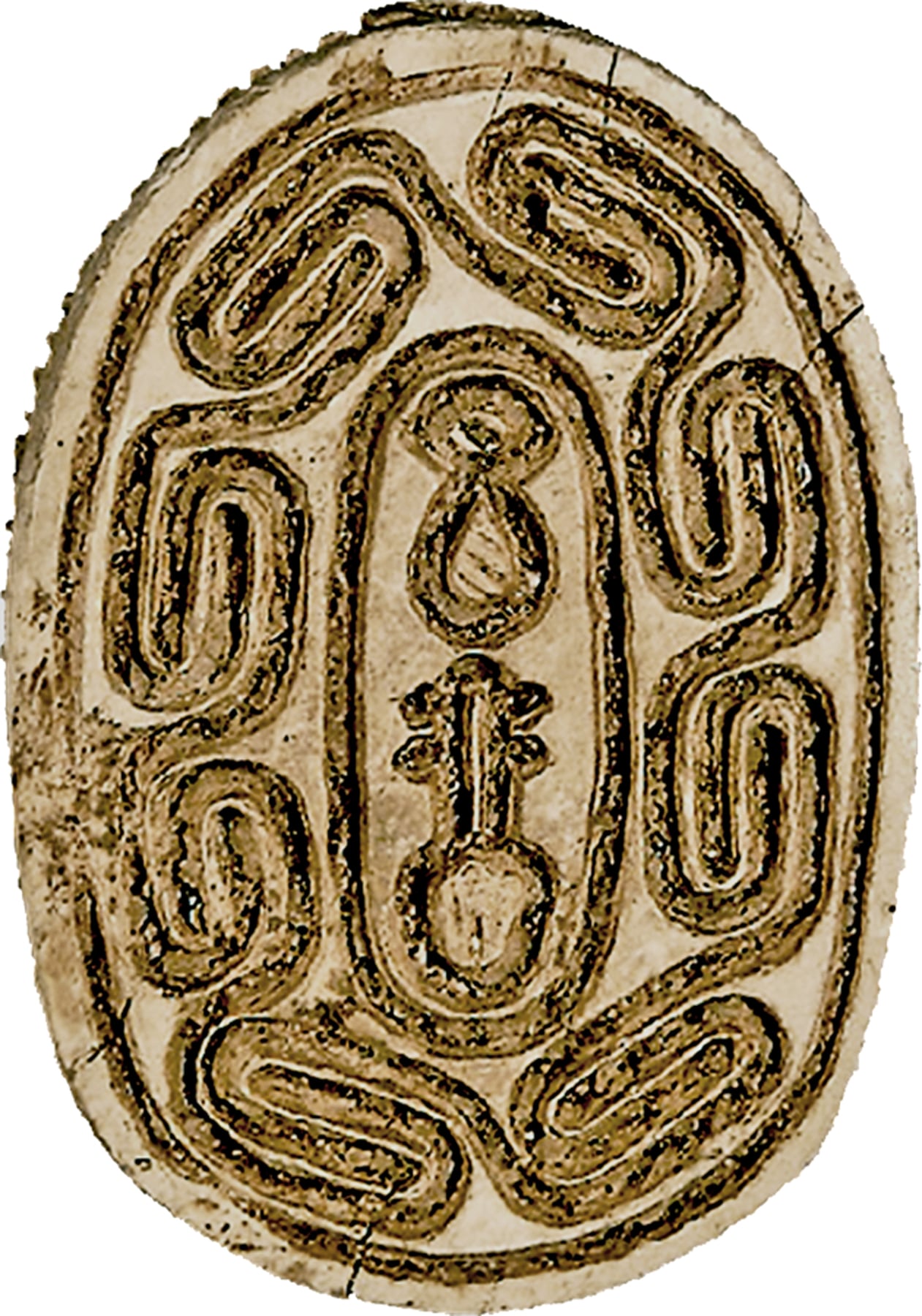
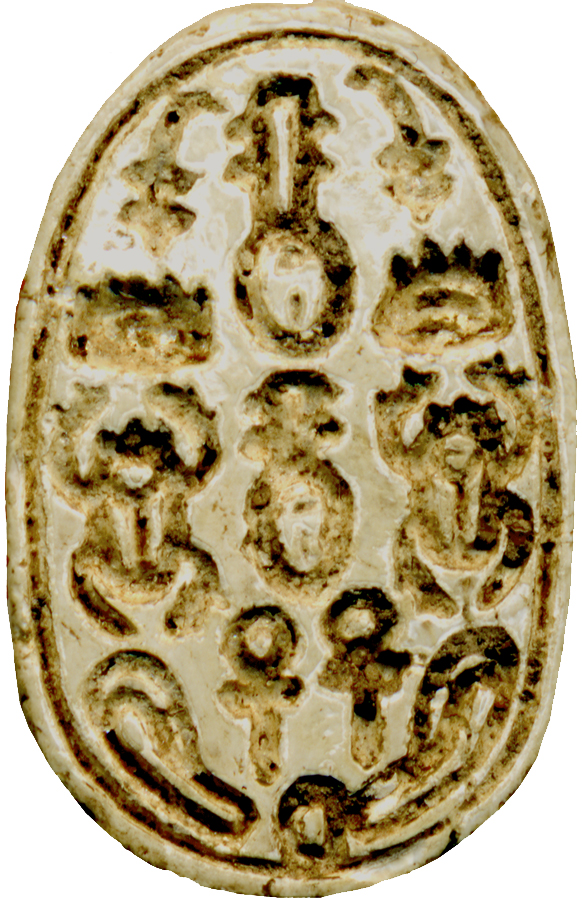
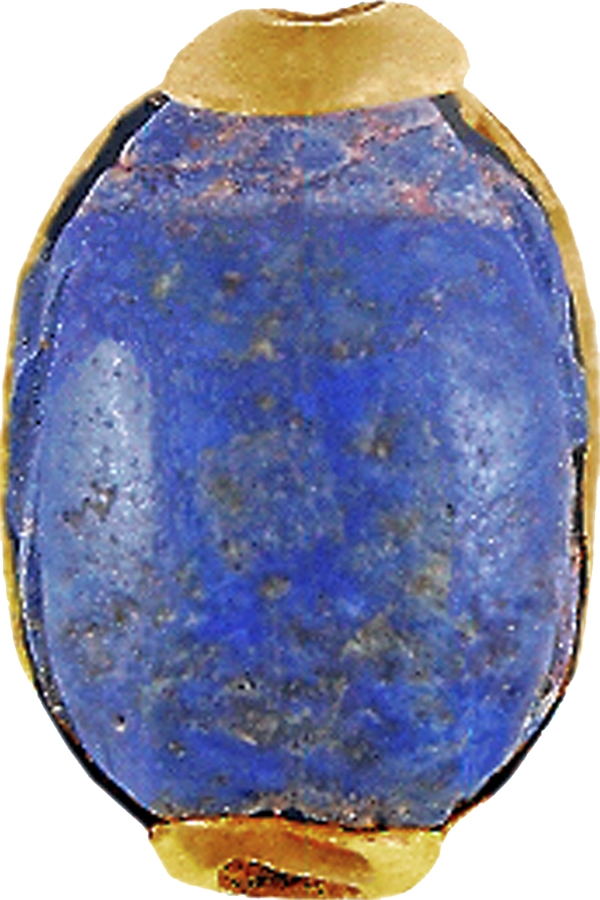
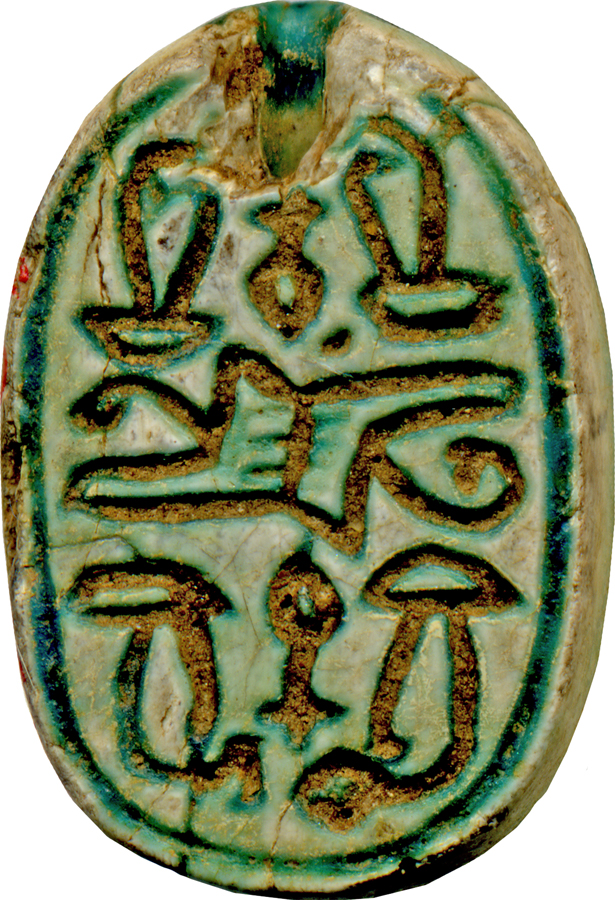
<p>This ring, a less expensive version of Walters 57.1957, is composed of a glazed steatite scarab set in a wide bronze band. It is attached to a hoop which tapers into a wire small enough to go through the perforation of the scarab. Decorative hieroglyphs are carved into the flat face of the back of the scarab. Above is the red crown flanked by "protection" symbols, below is a "djed" pillar of Osiris flanked by signs in the shape of a basket.</p><p>For the latest information about this object, <cite><a href='https://purl.thewalters.org/art/54.2463' rel='external'>Scarab Ring</a></cite>, visit the Online Collection of the Walters Art Museum.</p>
Machine-generated from the object's image on Jul 2026. Not curatorial; treat deities, names, and signs below as the model's best reading, not authority.
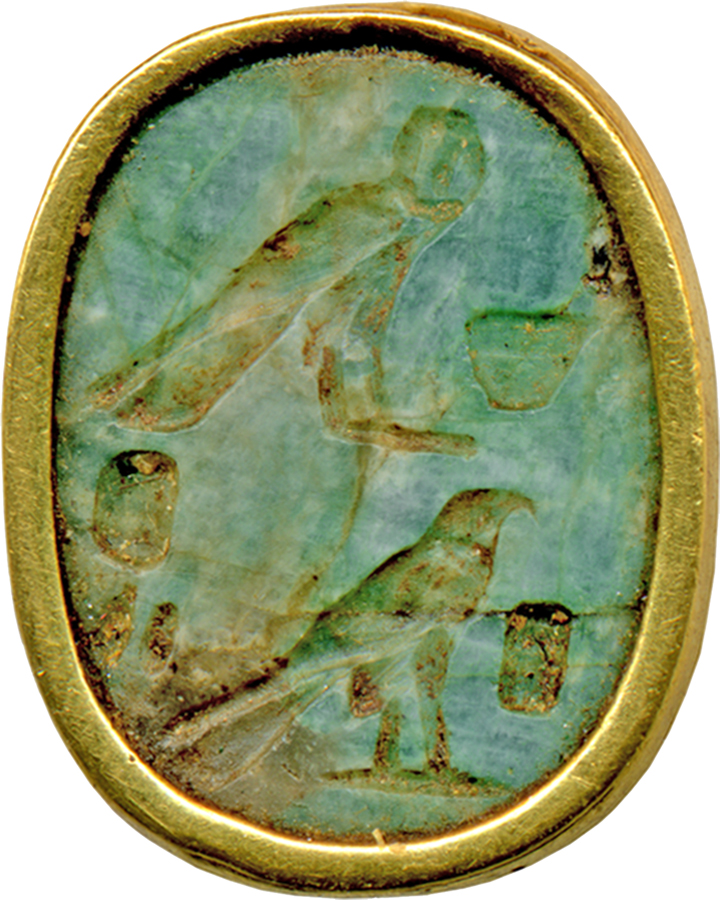
A scarab-shaped scarab ring fragment with a raised scarab image on a greenish glazed surface, showing wear and corrosion on the bezel/setting.
The object appears as a ring or bezel in the shape of (or cut from) a scarab ring, with a thick outer rim. The outer surface is predominantly green with blue-green and dark patination consistent with a glazed steatite base that has degraded. On the right-hand side, a carved/raised central motif shows a seated/squatting figure or symbolic form with surrounding decorative elements; below it are horizontal bands and stacked marks that resemble hieroglyphic or decorative incisions, though no fully legible individual signs can be confirmed from this image quality and angle. The central motif is polychrome in spots (rust-brown/orange and muted green) suggesting metal corrosion and/or glaze loss. No readable Greek/Coptic/Arabic text is visible. No clear royal cartouche is visible.
Spotted an error, a mis-mapped findspot, or have a suggestion? We read every note.