WALTERS-EG
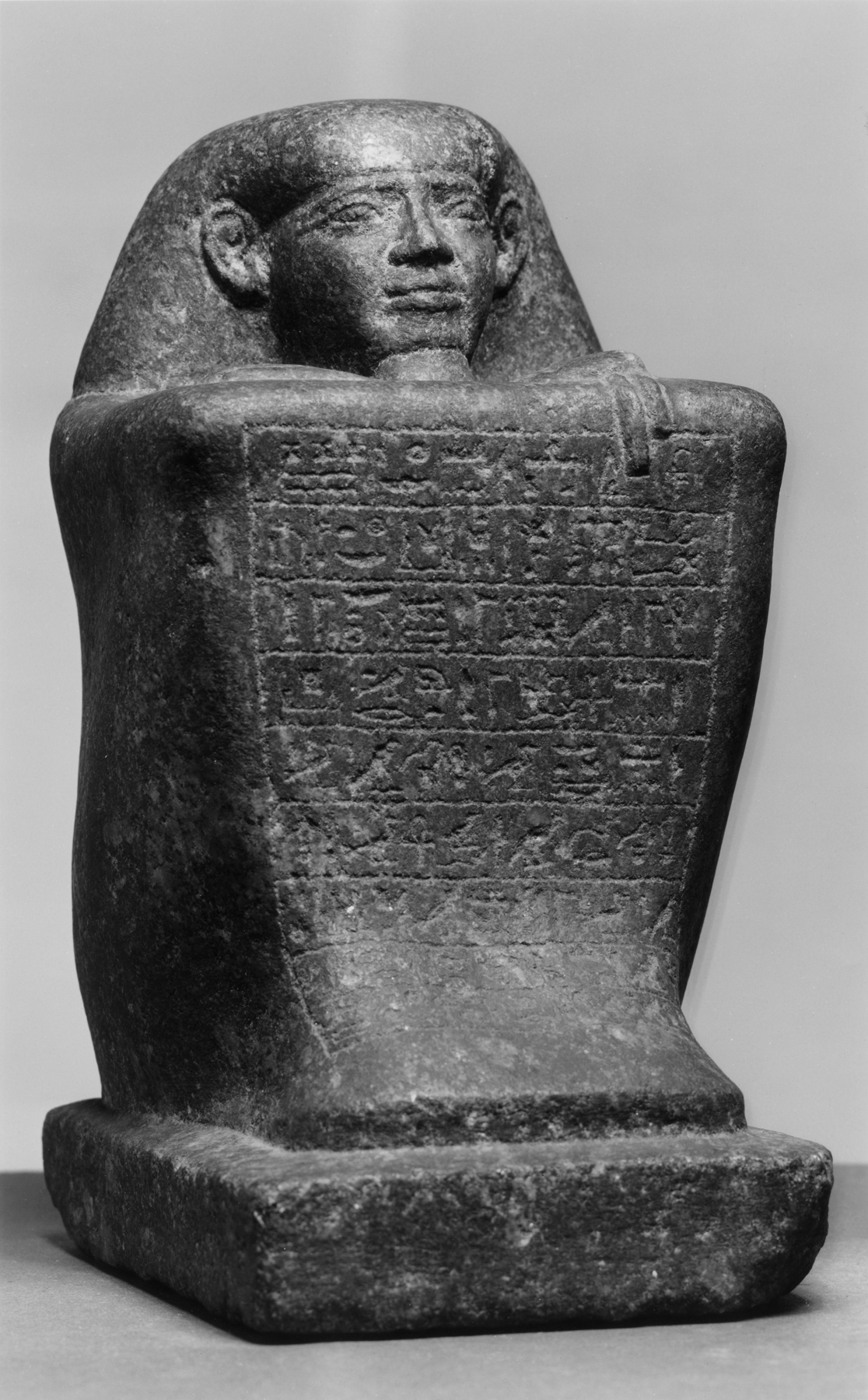
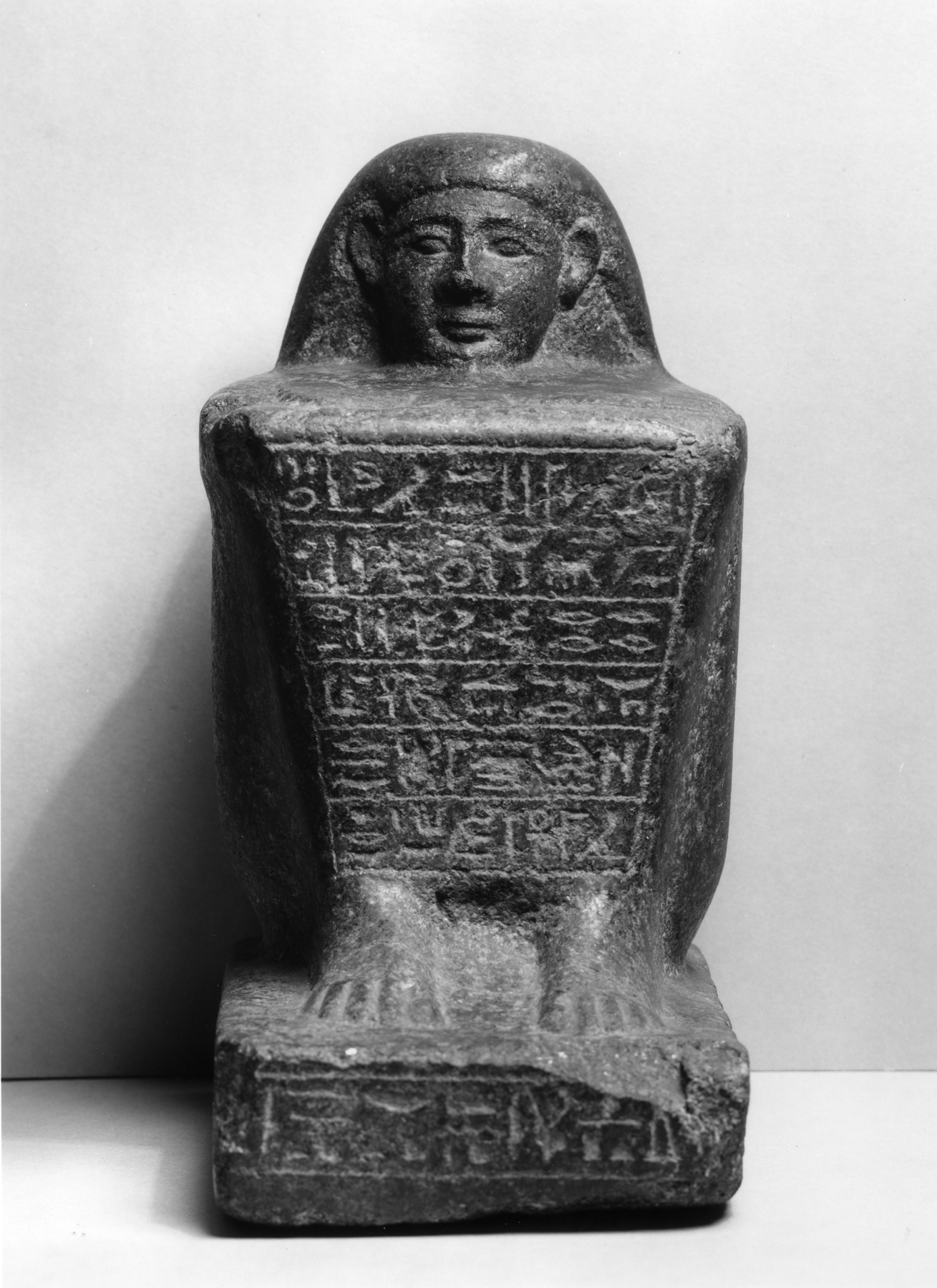
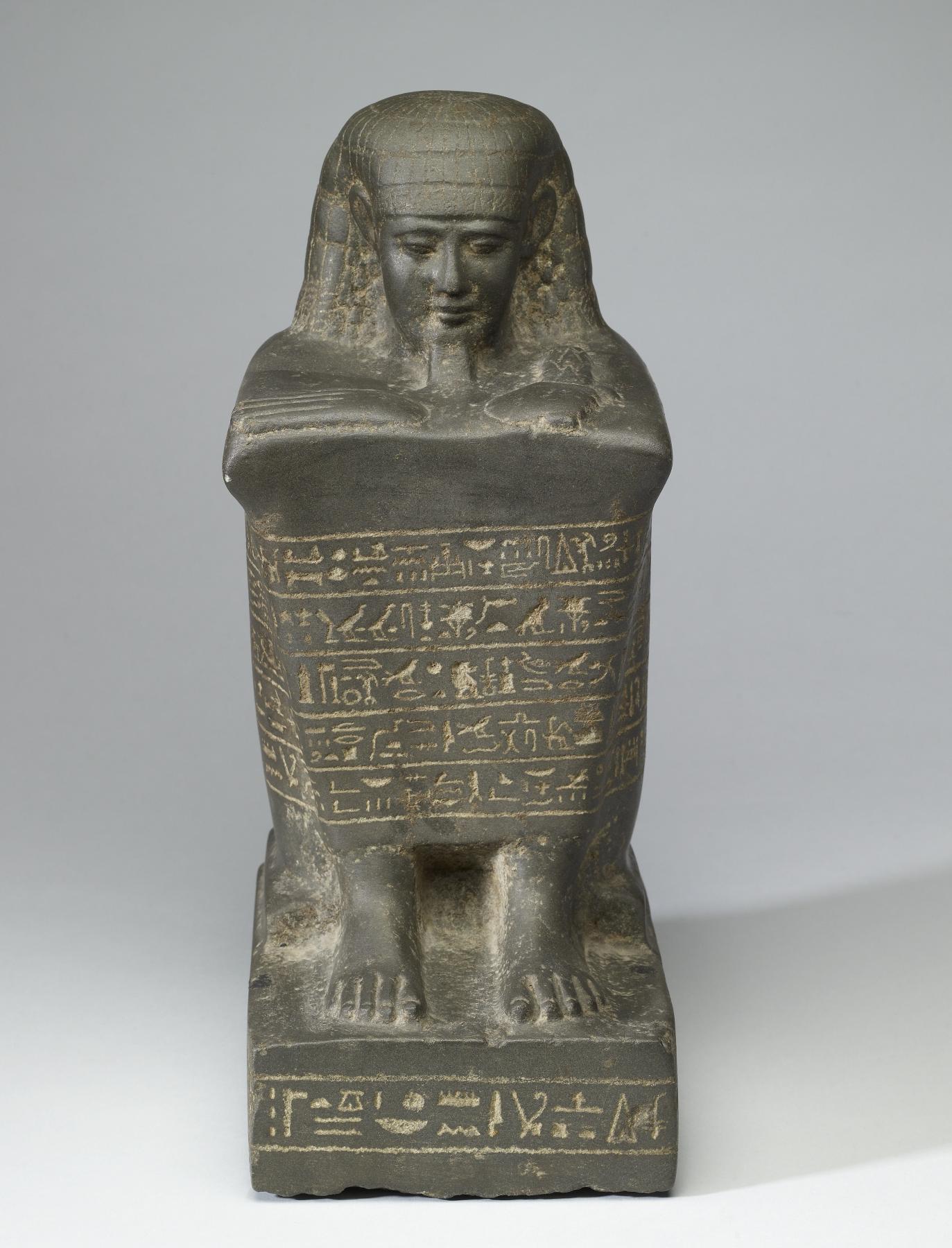
How do you define a portrait? While we might think of portraits as capturing an individual’s likeness, for the non-royal Egyptians whose statues appear in this case, it was the addition of a name in hieroglyphs that identified them; their facial features and fashion were determined by contemporary styles. The inscriptions on the front and back of the statue on the upper left distinguish it as a representation of a man named Shebenhor. He sits with his knees drawn up in front of him and his hands on his lap, a compact pose ideally suited for display in crowded temple courtyards, where it would have been less susceptible to breakage than standing or seated versions while also providing a flat surface for visitors to place offerings. Statues like this one acted as proxies for the people they depicted, allowing their souls to benefit from the prayers and rituals performed in the sacred space around them.
Machine-generated from the object's image on Jul 2026. Not curatorial; treat deities, names, and signs below as the model's best reading, not authority.
A small black stone Egyptian funerary-style statue/figure shown frontally, with folded arms and a wig/hood covering the head.
The artifact appears as a compact seated or squat figure carved in dark stone. The head is rounded with a stylized face; the figure wears a smooth headdress/hood or wig that frames the head and falls to the sides. The arms are crossed or folded tightly at the chest with hands clasped. A broad rectangular band on the torso/between the arms contains dense carved hieroglyphs in vertical columns. The legs/feet are indicated at the base with toes carved in relief. No Greek, Coptic, or Arabic text is visible. The stone surface is matte with minor specular highlights consistent with a dark hard stone. The catalogue’s basalt attribution aligns with the object’s dark black/charcoal appearance, and there is no clear visual contradiction. Specific identification of the person’s name “Shebenhor” from the visible text cannot be confirmed from the image resolution.
Spotted an error, a mis-mapped findspot, or have a suggestion? We read every note.