WALTERS-EG
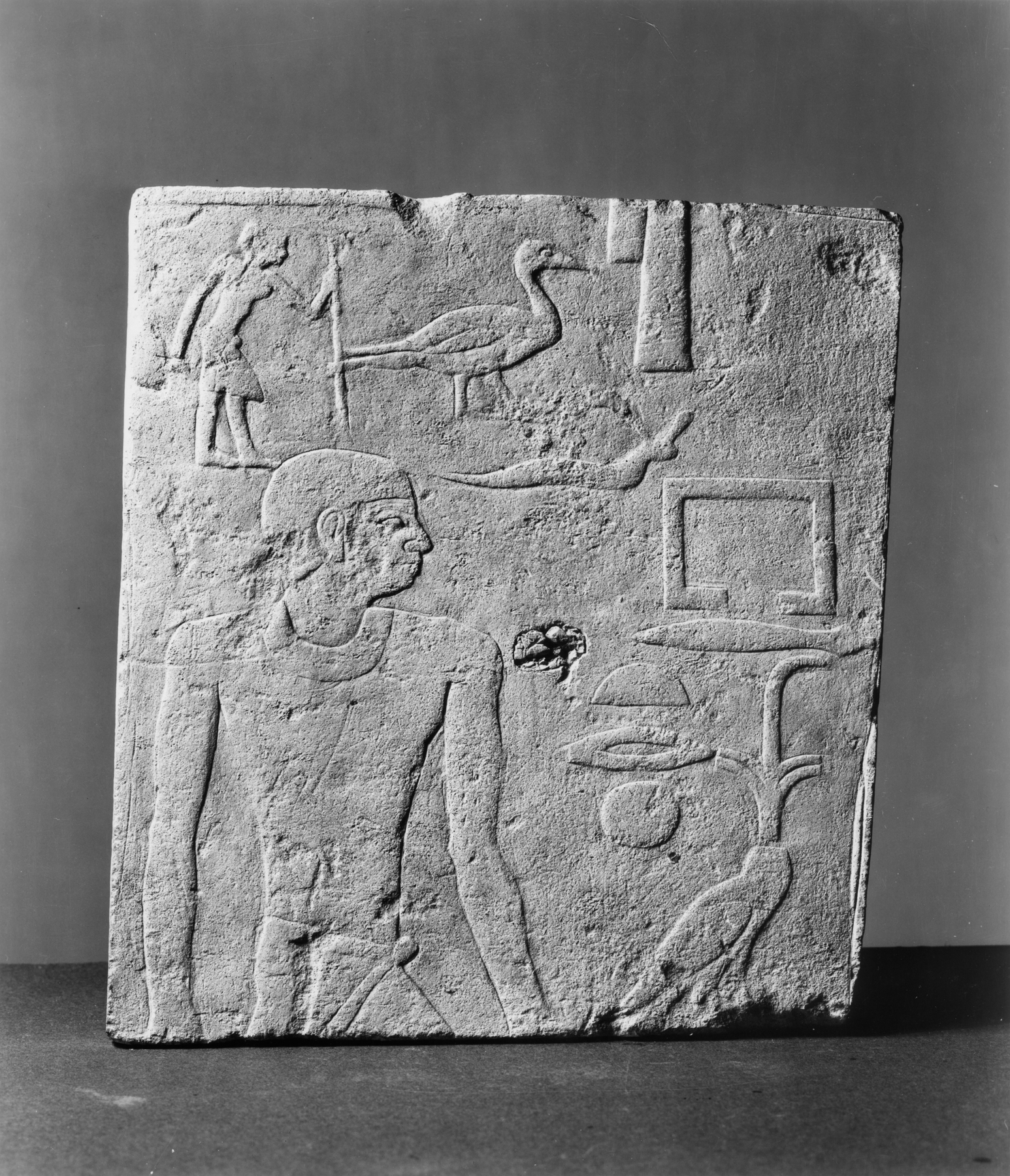
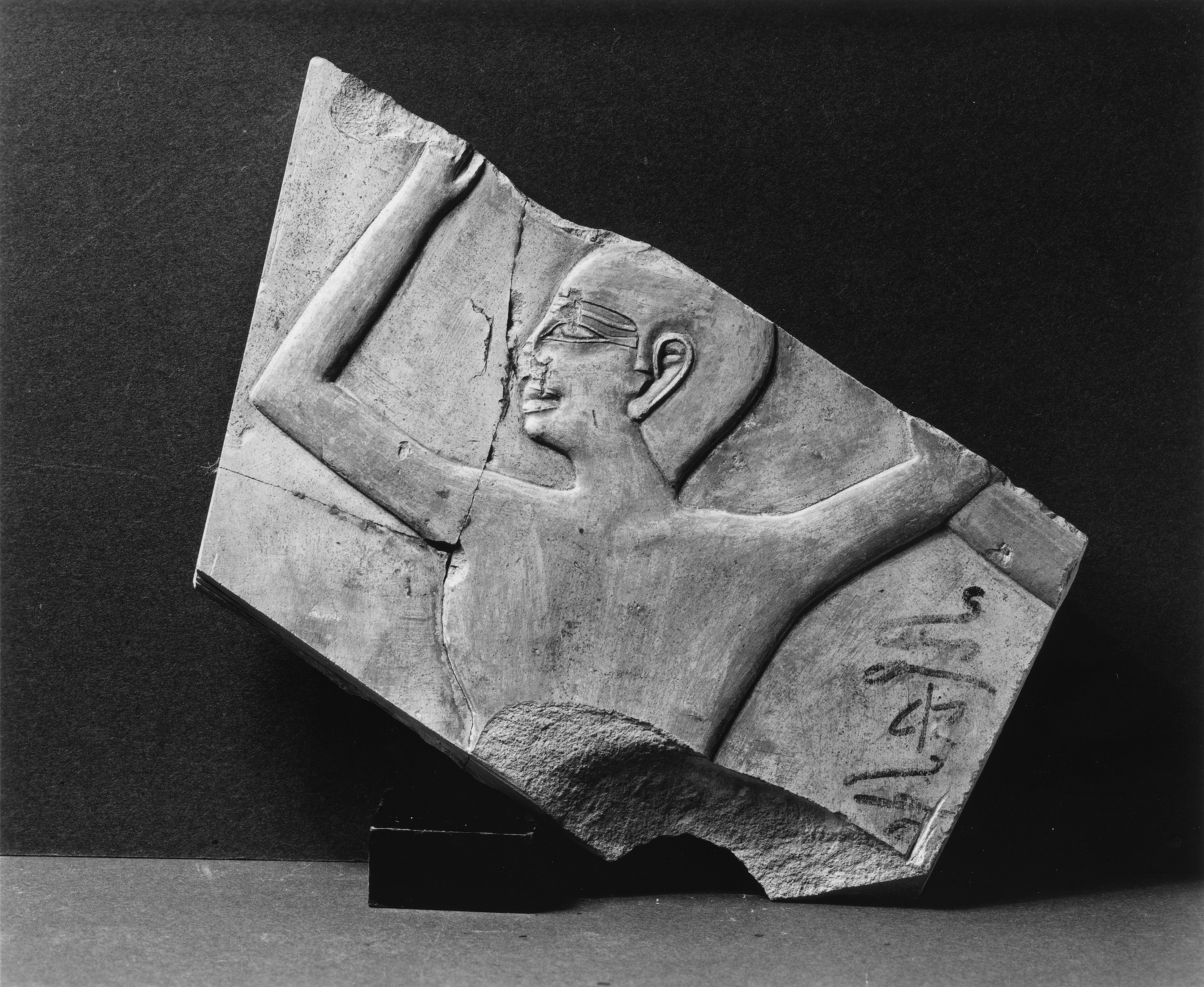
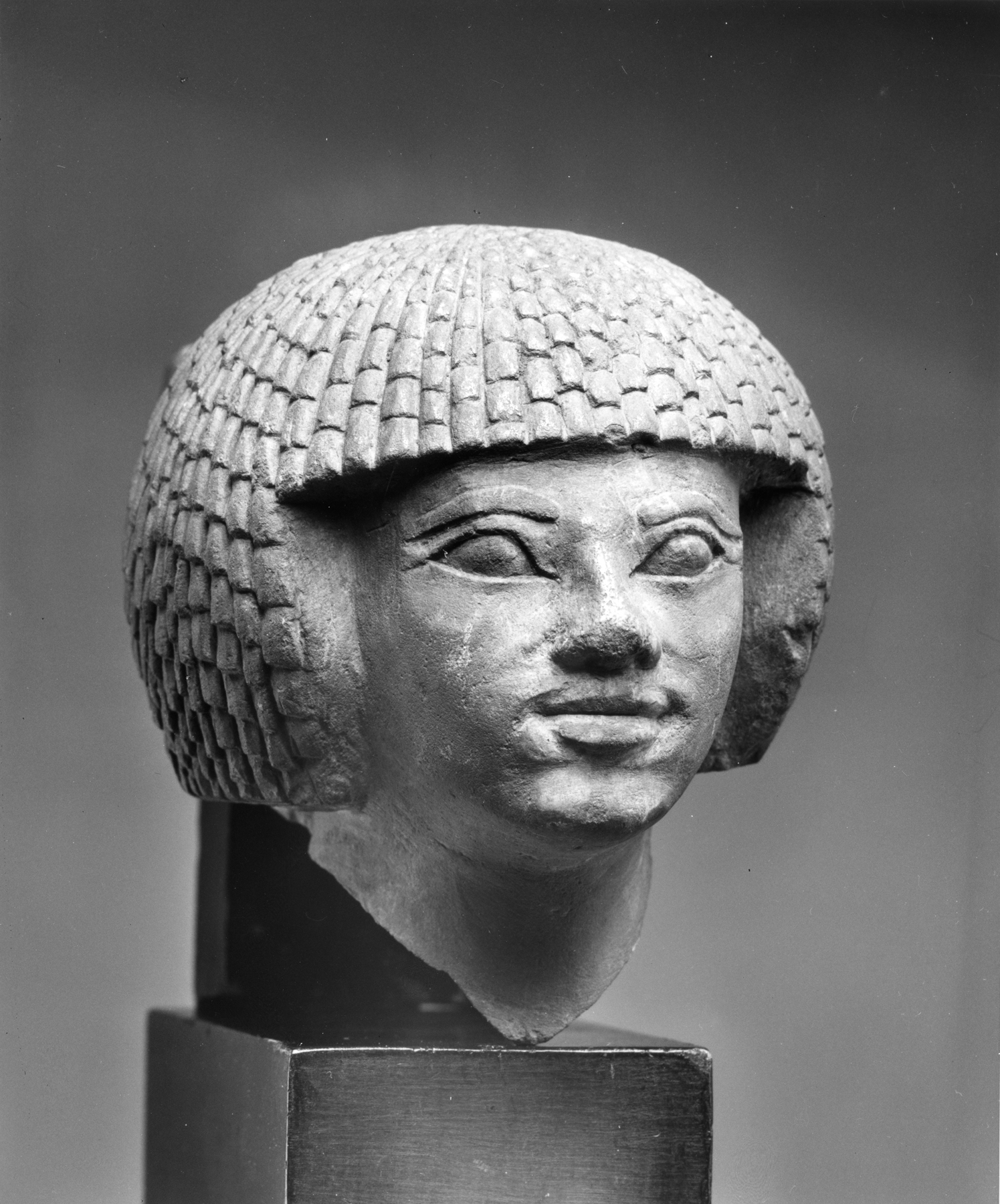
<p>This fragment was once part of a double statue and would have probably shown the man seated with his wife to his left. His costume is the same as that worn by the royal scribe Nahu, also shown here. The three stylized flesh folds on the official's upper abdomen were a conventionalized method of showing relatively advanced age and prosperity. The remaining hieroglyphic text (on the back) mentions Ptah and Sokar, gods associated with ancient Memphis, suggesting that this sculpture came from the official's tomb at Saqqara, which was the primary necropolis, or cemetery, of Memphis.</p><p>For the latest information about this object, <cite><a href='https://purl.thewalters.org/art/22.111' rel='external'>Male Bust From a Group Statue</a></cite>, visit the Online Collection of the Walters Art Museum.</p>
Machine-generated from the object's image on Jul 2026. Not curatorial; treat deities, names, and signs below as the model's best reading, not authority.
A carved stone male bust with a wig and broad collar, shown from the upper chest to head on a modern display base.
The artifact is a male bust sculpture depicting a seated/standing figure from shoulders up. The figure has a stylized, flared headdress/wig covering the sides of the head, with a patterned (scalloped/chequered) texture on the wig. The face is shown in low relief with almond-shaped eyes, a straight nose, and a closed mouth. A thick, striped or segmented broad collar is visible across the upper chest, while the arms and hands extend forward at the lower sides; the hands appear carved but the wrists/forearms are truncated by the bust framing. No clear hieroglyphs, cartouches, or other inscriptions are visible on the visible surfaces. The overall finish and color appear consistent with dark grey stone. Based on the museum catalogue ground truth, the object is carved granodiorite. No deities are explicitly identified in the image; the sculpted figure does not show unmistakable divine iconography.
Spotted an error, a mis-mapped findspot, or have a suggestion? We read every note.