WALTERS-EG
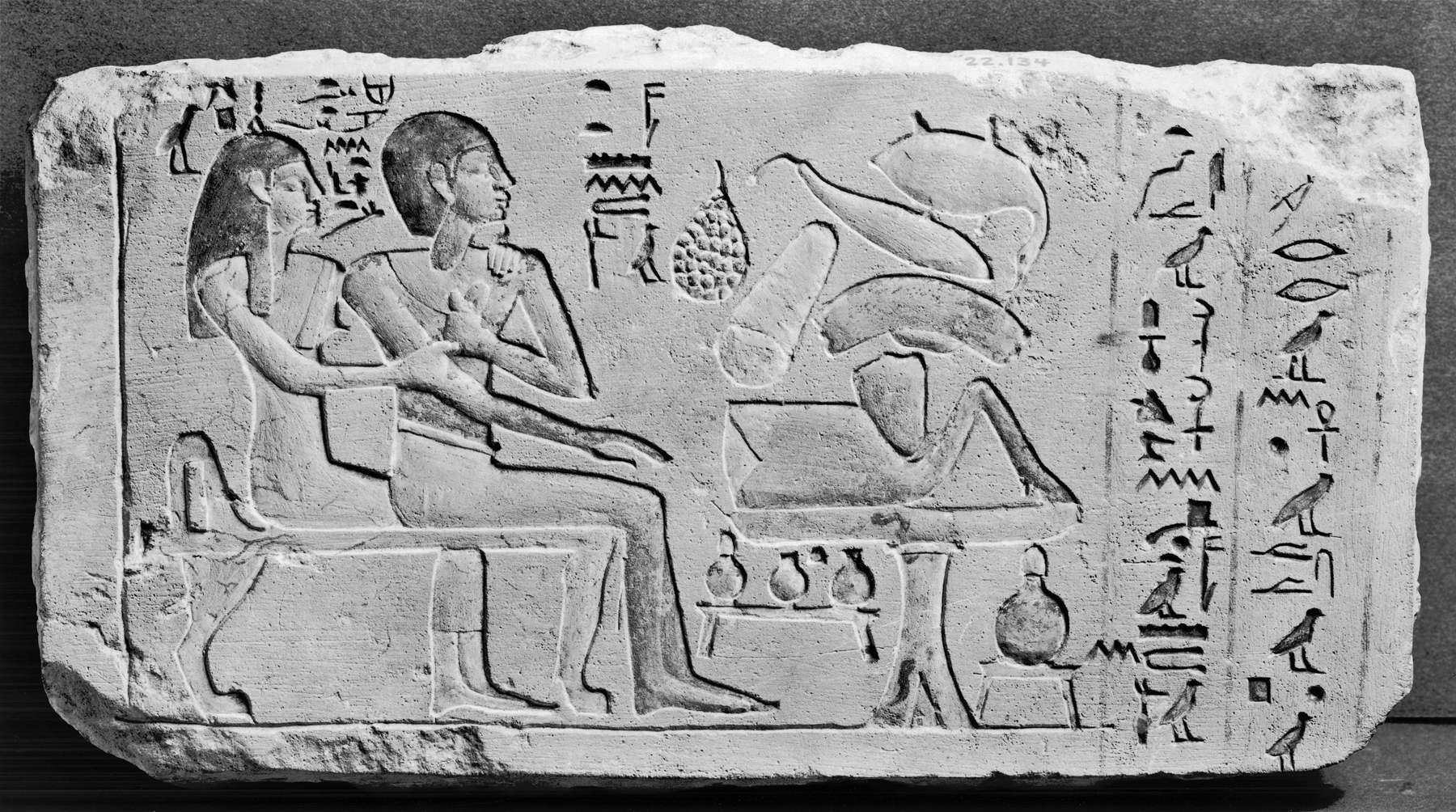
<p>This limestone stele fragment depicts and man and his wife facing right. Their arms are about each other's shoulders. Both have ointment cones on their heads. There is an inscription above and to the right, though the inscription is destroyed except for a few signs.</p><p>For the latest information about this object, <cite><a href='https://purl.thewalters.org/art/22.94' rel='external'>Stele Fragment of Man and Wife</a></cite>, visit the Online Collection of the Walters Art Museum.</p>
Machine-generated from the object's image on Jul 2026. Not curatorial; treat deities, names, and signs below as the model's best reading, not authority.
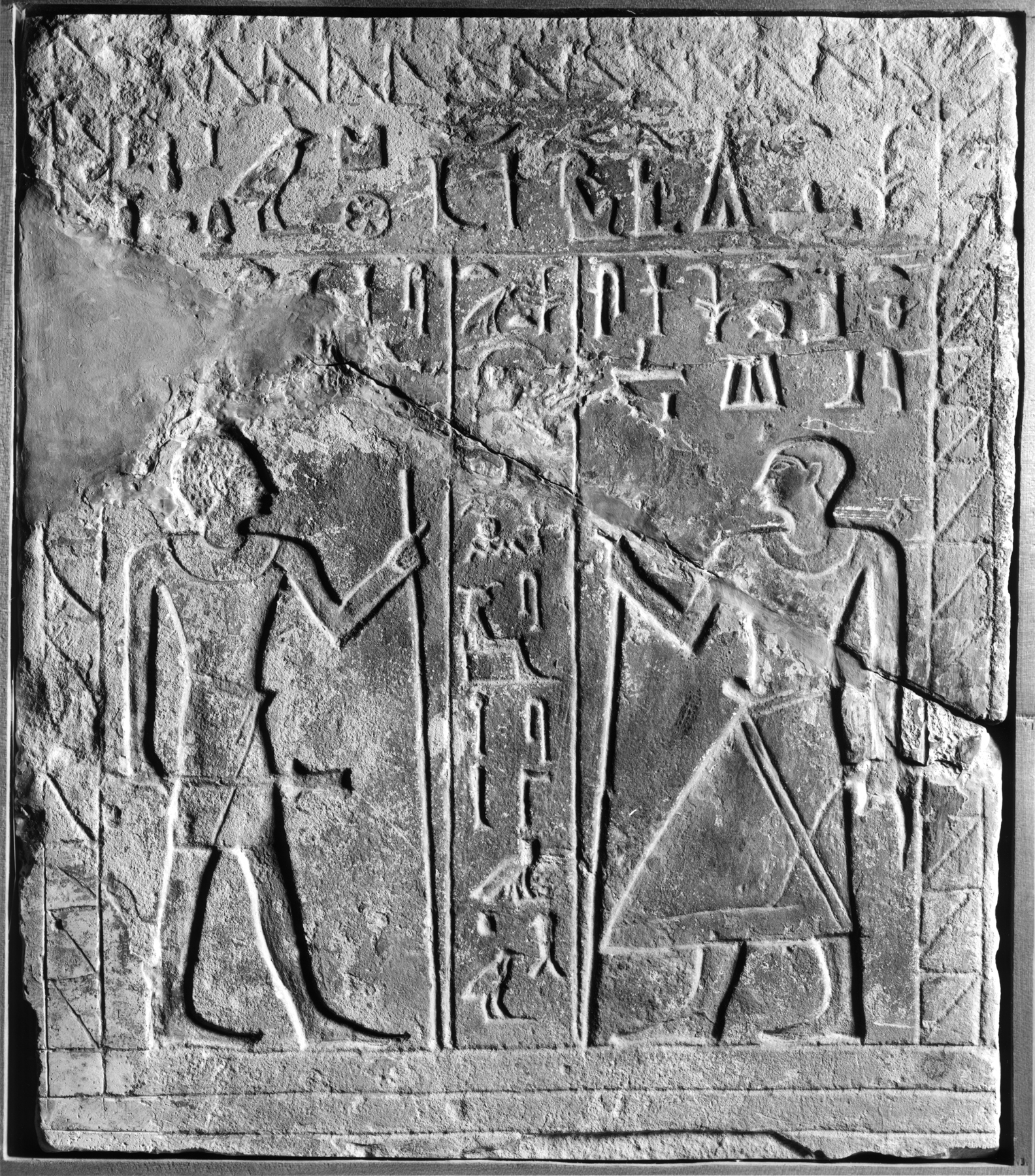
A broken limestone stele fragment shows two human figures—likely a man and a woman—rendered in relief with traces of painted decoration and surrounding carved signs.
The object is a roughly rectangular, horizontally oriented stele fragment with the upper-right and lower edges broken/abraded. In the central register, two standing figures face each other or slightly toward one another: on the left, a taller figure wears a head covering and a long, pleated garment (darkened with remaining paint or surface shadow) and has an arm extended; on the right, a smaller figure wears a short wig or head covering and a fitted garment with a collar/neck ornament. Both figures are carved in relief with visible paint traces (dark/black, lighter areas, and some red/pink or faded coloration on garments and background). Behind and around the figures are additional carved elements that resemble hieroglyphic signs or decorative framing, but the fragment is too incomplete and the image resolution/contrast is insufficient to read the signs confidently. No Greek, Coptic, or Arabic text is visible.
Spotted an error, a mis-mapped findspot, or have a suggestion? We read every note.