no image
WALTERS-EG
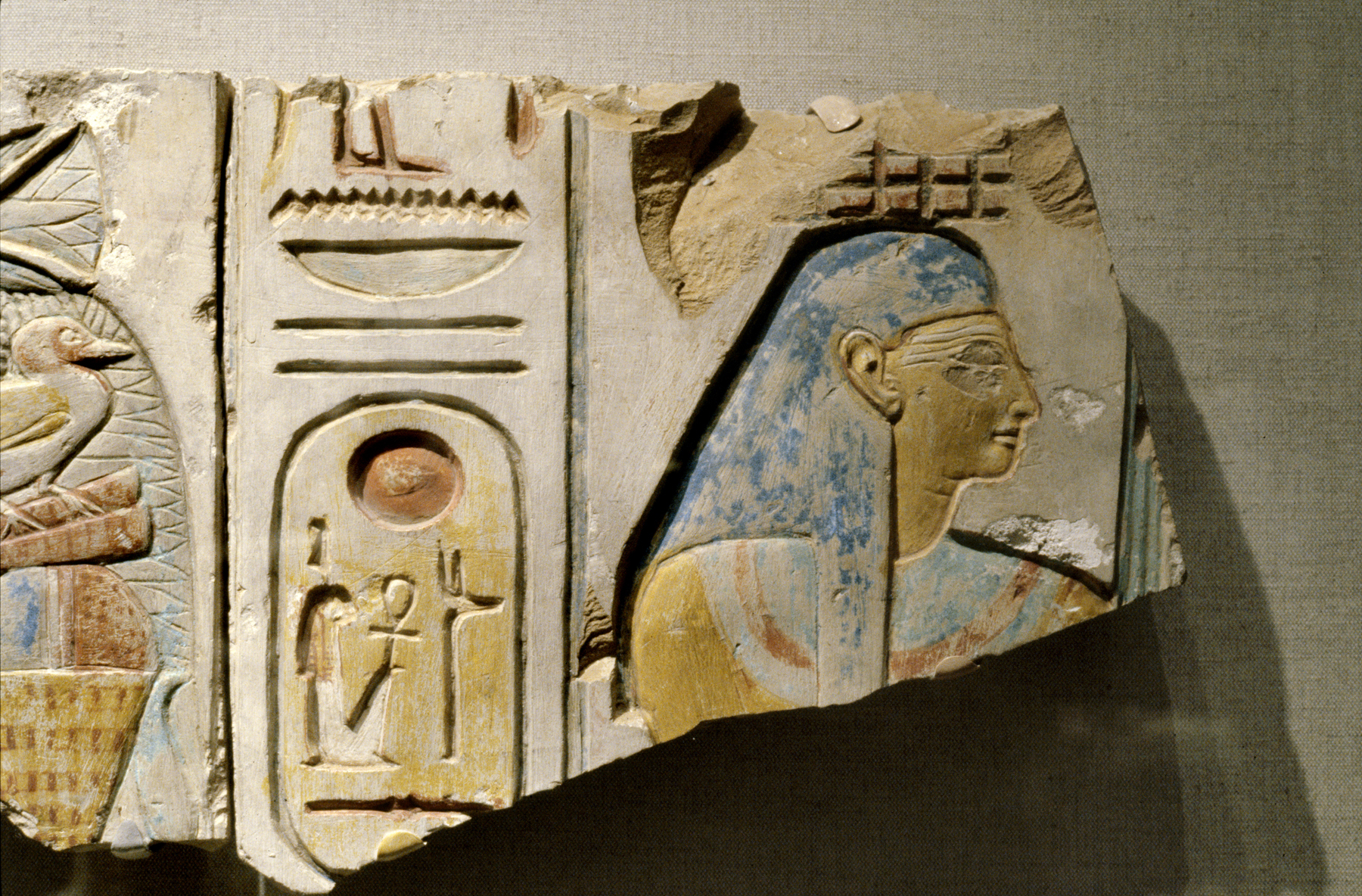
<p>The scene is carved in sunk relief and was part of the decoration of a tomb. It displays an attendant who holds with both hands the horns of an oryx-antelope.</p><p>For the latest information about this object, <cite><a href='https://purl.thewalters.org/art/22.127' rel='external'>Fragment of a Tomb Relief with an Attendant Leading an Oryx</a></cite>, visit the Online Collection of the Walters Art Museum.</p>
Machine-generated from the object's image on Jul 2026. Not curatorial; treat deities, names, and signs below as the model's best reading, not authority.
Limestone fragment carved in relief showing a standing attendant holding reins/implements and an animal motif, consistent with a tomb-scene theme of leading an oryx.
The image shows a rectangular field of incised/low-relief carving on a weathered stone surface. On the left is a tall, human-like figure in profile with an arm extended downward and lines indicating a strap/rein-like element. Center-right depicts a large animal body with a curved form and head area, paired with additional upright linear strokes that may represent a second leg/animal component or a supporting register element. The right side includes small standing elements and a vertical staff-like line, suggesting the fragment continues a larger tomb-relief composition. Numerous cut marks and worn edges make finer details (faces, hooves, and exact animal species) indistinct, but the overall layout fits the catalogue subject of an attendant leading an oryx. No clearly legible hieroglyphic groups, cartouches, or inscriptions are visible; any incised signs are too damaged/ambiguous to identify reliably.
Spotted an error, a mis-mapped findspot, or have a suggestion? We read every note.