WALTERS-EG
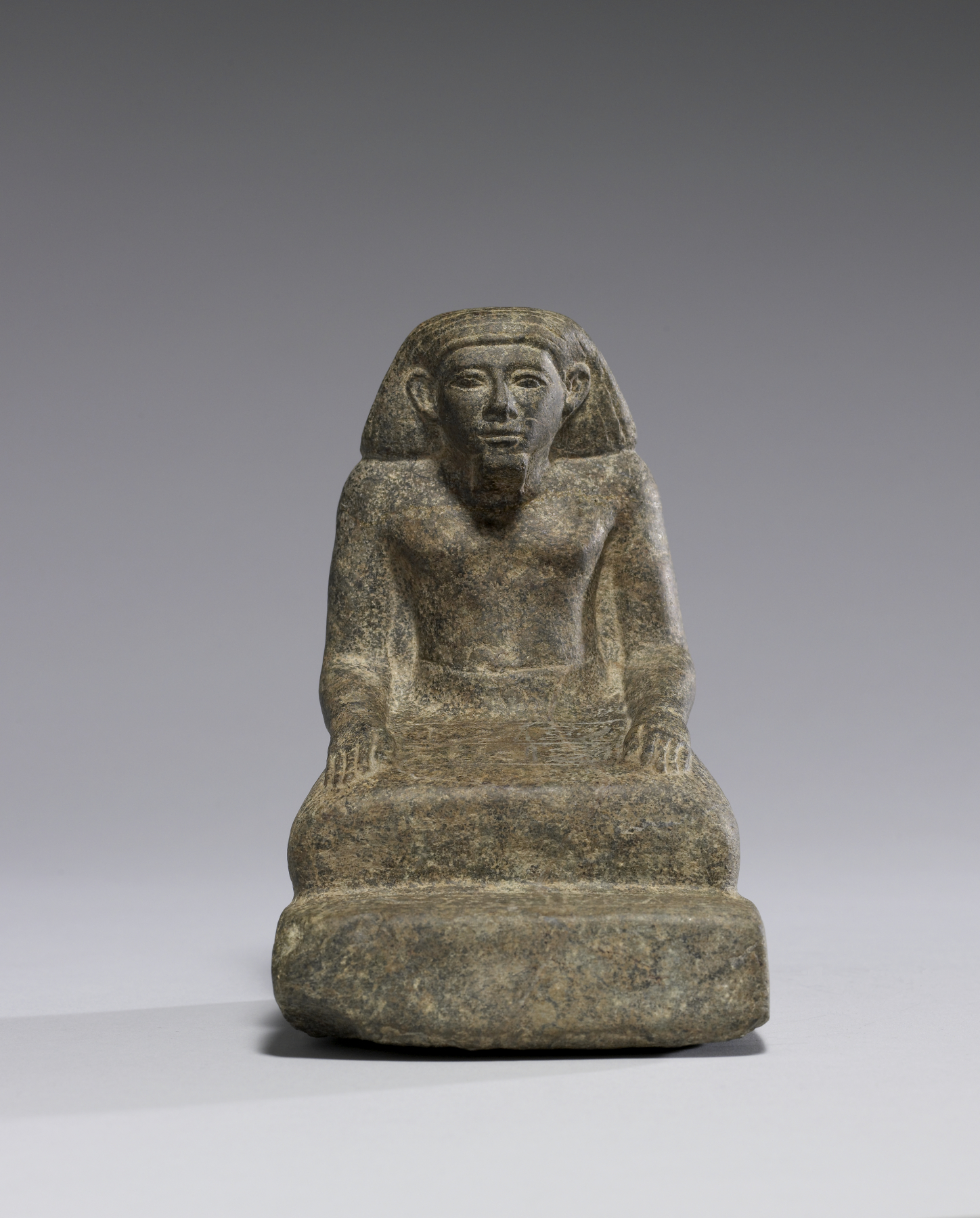
<p>Discovered in the ancient necropolis, or burial ground, in Asyut in 1913, the statue is inscribed on either side of the block-like seat with the offering texts for Itj-ibj, a minor official, represented with a shoulder-length head covering and wearing a shendyit, or pleated kilt. While early 12th Dynasty in style, this impressive seated statue shows Itj-ibj in a classic pose copied from Old Kingdom sculpture: hands balanced on his thighs, the left flat and the right clenched in a fist, holding a folded cloth. Traces of red paint with white spots remain on the fleshy areas of the sculpture, and it has been suggested that the exposed parts of the body were painted to make the limestone resemble red granite, a more costly stone.</p><p>For the latest information about this object, <cite><a href='https://purl.thewalters.org/art/22.142' rel='external'>Itj-ibj</a></cite>, visit the Online Collection of the Walters Art Museum.</p>
Machine-generated from the object's image on Jul 2026. Not curatorial; treat deities, names, and signs below as the model's best reading, not authority.
A painted seated Egyptian statue/figure with a human head wearing a nemes-like head covering, holding a rectangular back slab covered in hieroglyphs.
The image shows a full-length view of a small, seated human figure carved in stone. The figure has a rounded, bearded face and wears a draped head covering; the chest and torso are carefully modeled. Both arms are posed on the lap and knees, with one hand resting near the left forearm and the other extended toward the rectangular inscription block held at the front. The base and legs indicate a seated posture. A rectangular panel/back slab at the figure’s front is densely incised with hieroglyphs in multiple vertical columns; white/cream paint highlights the carved signs, and remaining paint accents are visible on the figure’s body and garment areas. No clear Greek/Coptic/Arabic script is visible. The catalogue title “Itj-ibj” is not independently legible as a cartouche or name in the visible hieroglyphs from this image alone.
Spotted an error, a mis-mapped findspot, or have a suggestion? We read every note.