WALTERS-EG
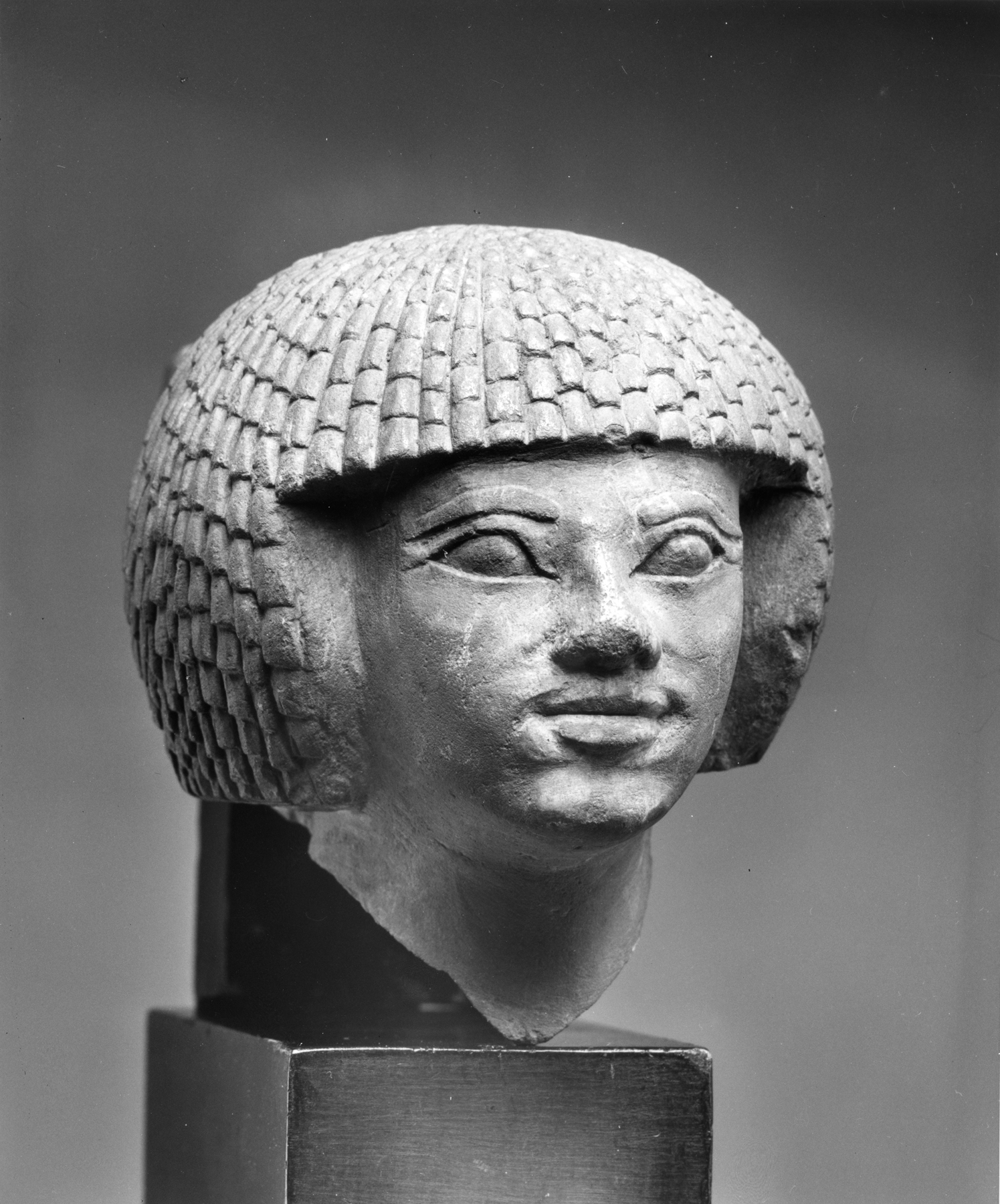
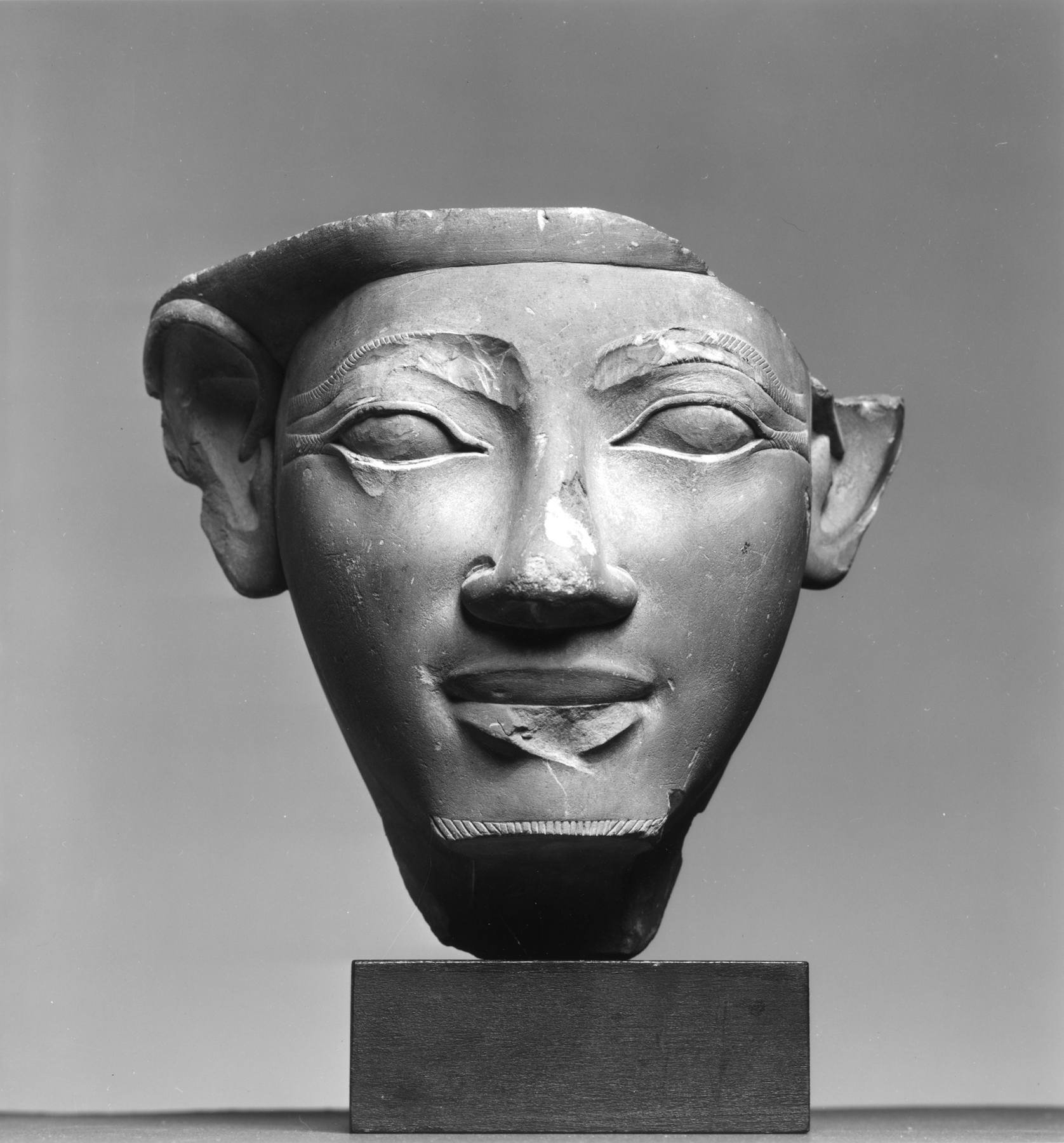
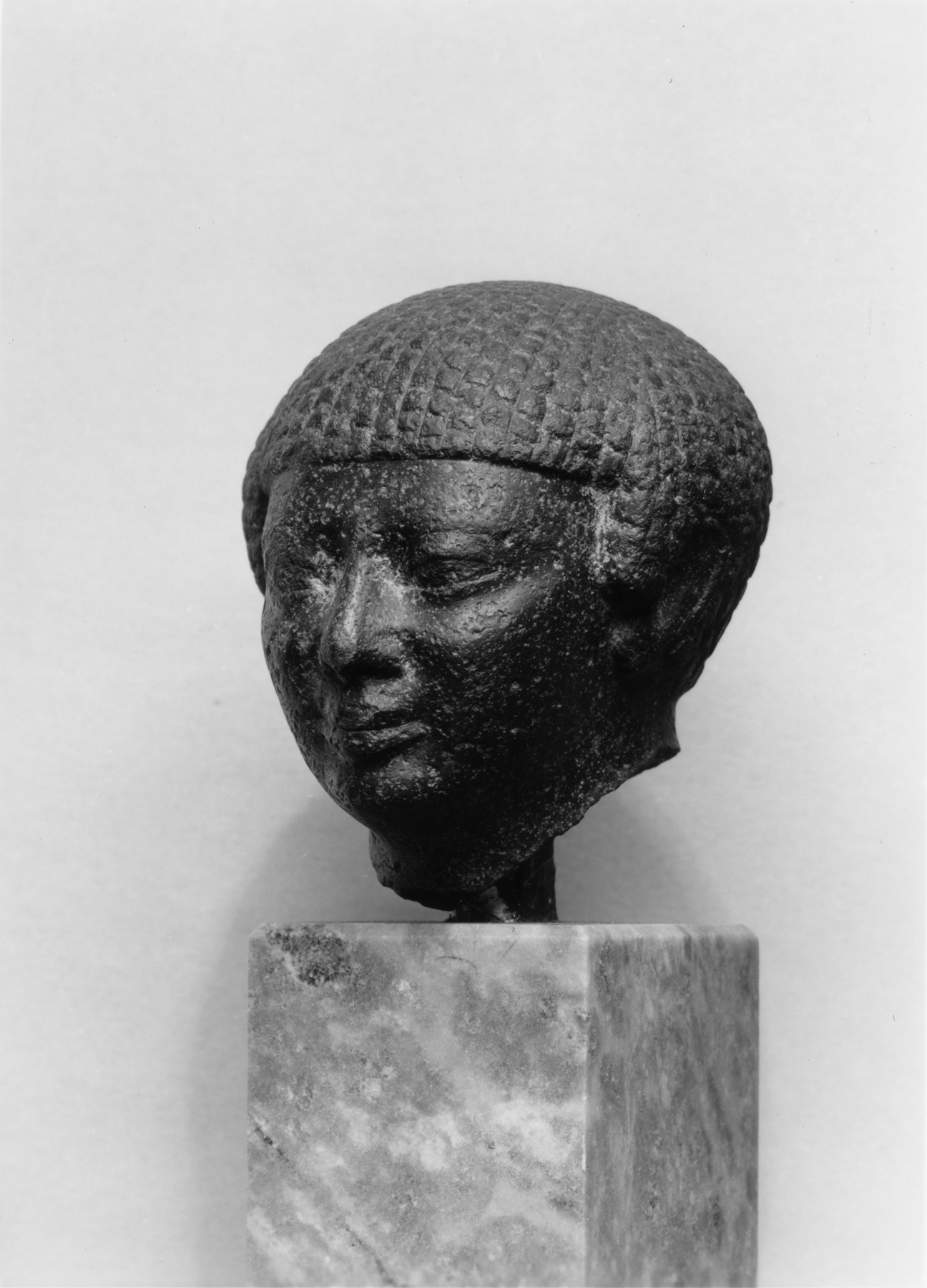
<p>This head is carved in the round. The priest's head is shaven with a flat top. His ears are broken off, and traces are polished away. His nose, mouth, and chin are restored.</p><p>For the latest information about this object, <cite><a href='https://purl.thewalters.org/art/22.358' rel='external'>Head of a Priest</a></cite>, visit the Online Collection of the Walters Art Museum.</p>
Machine-generated from the object's image on Jul 2026. Not curatorial; treat deities, names, and signs below as the model's best reading, not authority.
A carved stone head in profile, shown against a white background and mounted on a square plinth, with a placard that reads "HARD STONE. - HEAD - FOUND IN UPPER EGYPT."
The image depicts a sculpted male head with a rounded skull and short, closely worked hair/mass of stone at the top. The face is carved in low relief with a defined nose, closed lips, and a slight suggestion of eye shape; the neck transitions into a broken or simplified base. The head is mounted vertically on a dark rectangular pedestal block with a lighter label area. No clear hieroglyphs, cartouches, or inscriptions appear on the sculpture itself in the provided view. The placard includes English text: "HARD STONE. - HEAD - FOUND IN UPPER EGYPT." The catalog ground truth describes the object as a "Head of a Priest" made of gray granite; the visible material appears consistent with a dark gray stone (black/dark gray) but the exact granite is not independently verifiable from the image alone. No identifiable deities or royal names are visible.
Spotted an error, a mis-mapped findspot, or have a suggestion? We read every note.