ARTIC-EG
Machine-generated from the object's image on Jul 2026. Not curatorial; treat deities, names, and signs below as the model's best reading, not authority.
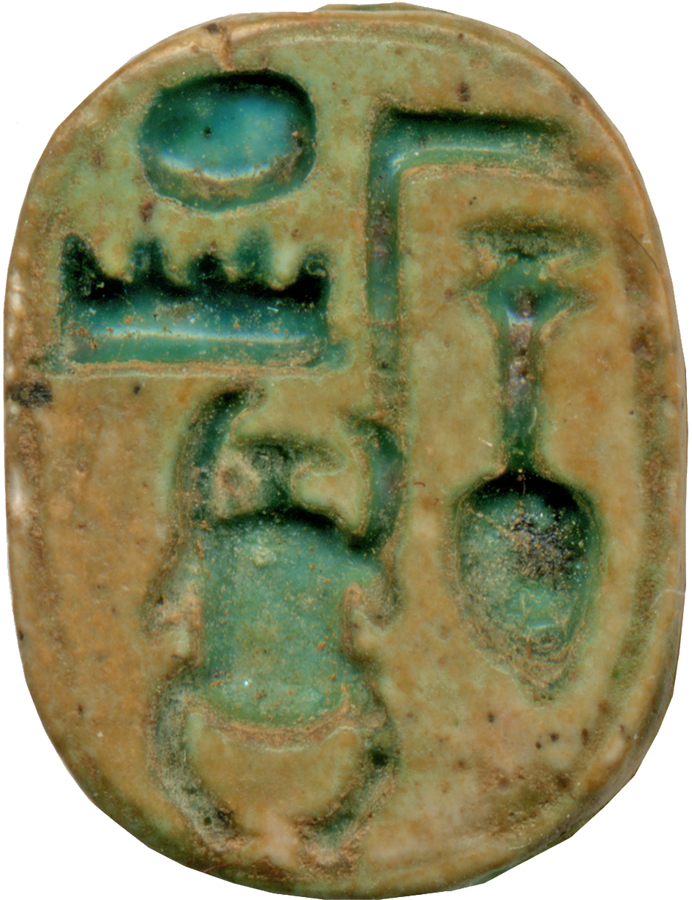
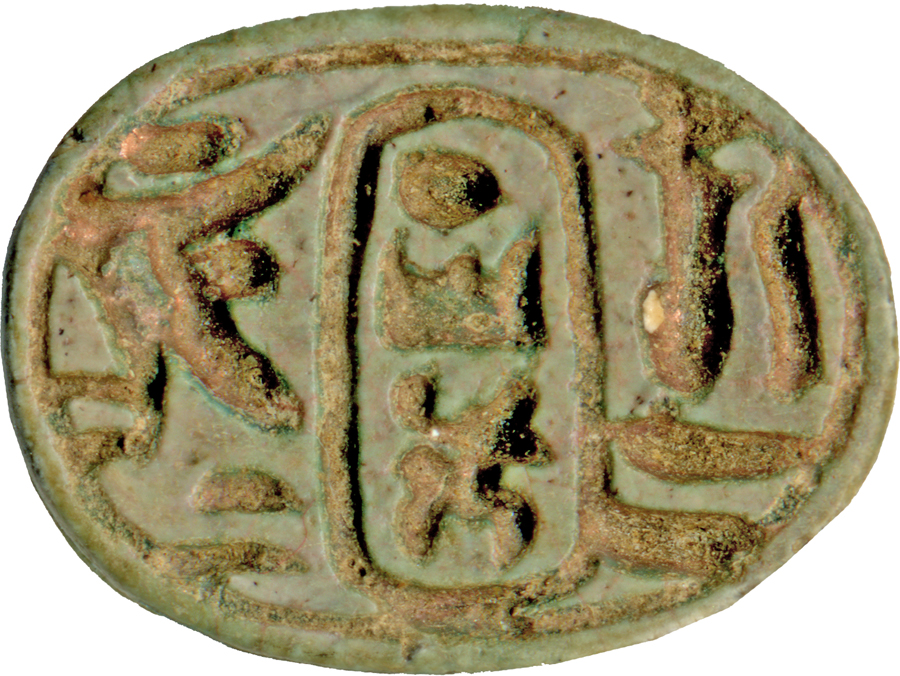
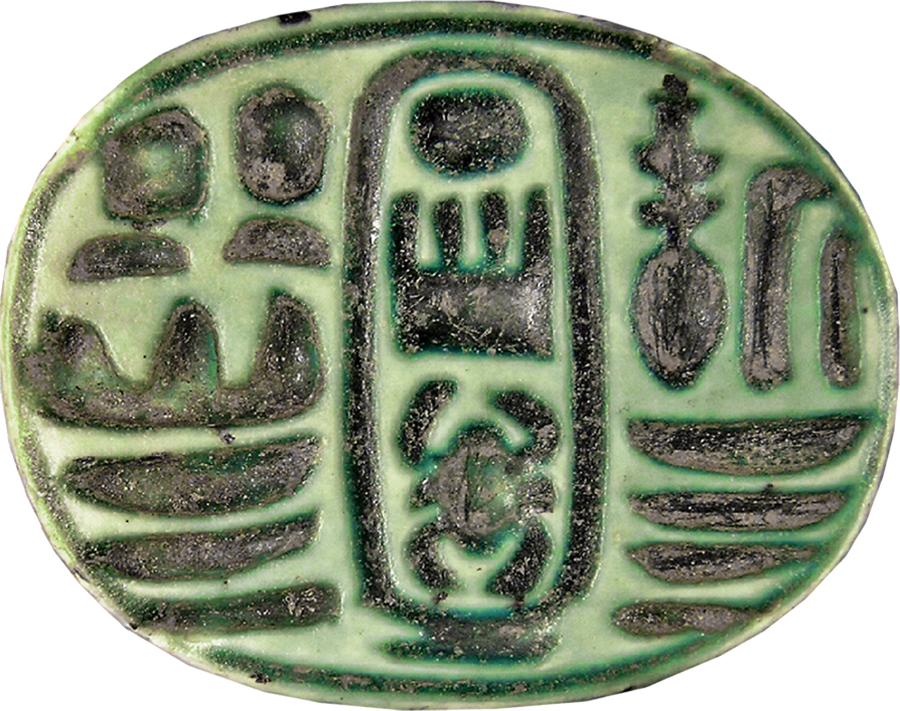
Two views of a small Egyptian scarab-shaped amulet carved in dark stone, shown front and back (or two sides).
The image presents an oval scarab (probably a bezel or inlaid amulet) photographed against a light background. The left view shows the back of the beetle with a central vertical ridge and incised linear elements; the right view shows the carved underside with raised relief figures occupying the field. The underside includes legible-looking columnar signs on the left and a large, central motif resembling a deity-like or royal emblem with surrounding small decorative elements; however, the full names and sign groups are not clear enough to reliably read specific text. No Greek/Coptic/Arabic text is visible. The catalogue claims this is a scarab inscribed for Menkheperra (Thutmose III), but the image resolution does not allow a confident identification of the exact royal name/cartouche on the right-side engraving; partial sign shapes suggest inscription but not enough for a secure match.
Spotted an error, a mis-mapped findspot, or have a suggestion? We read every note.