CMA-EG
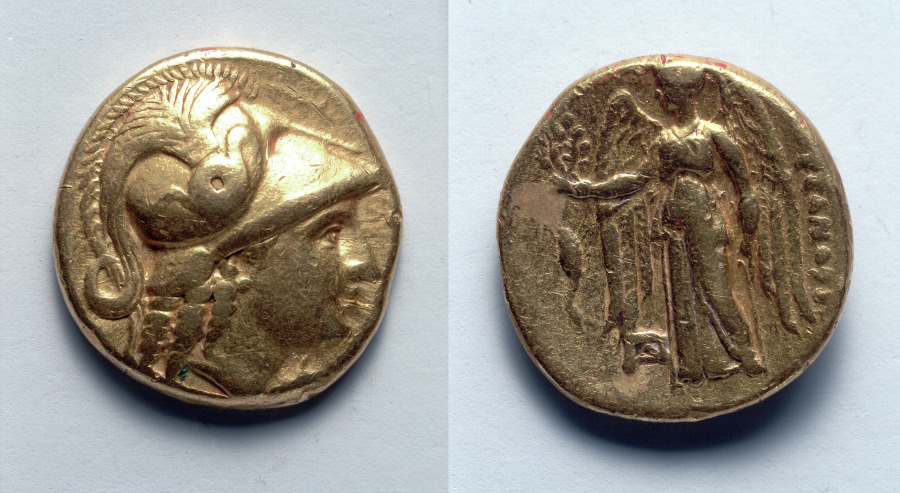
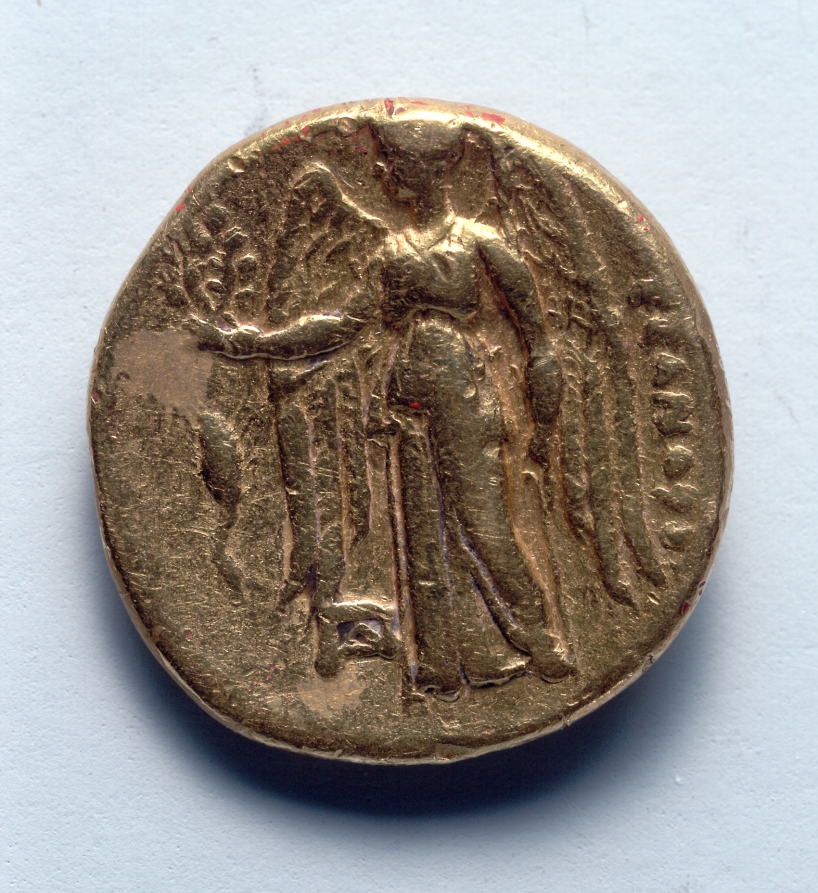
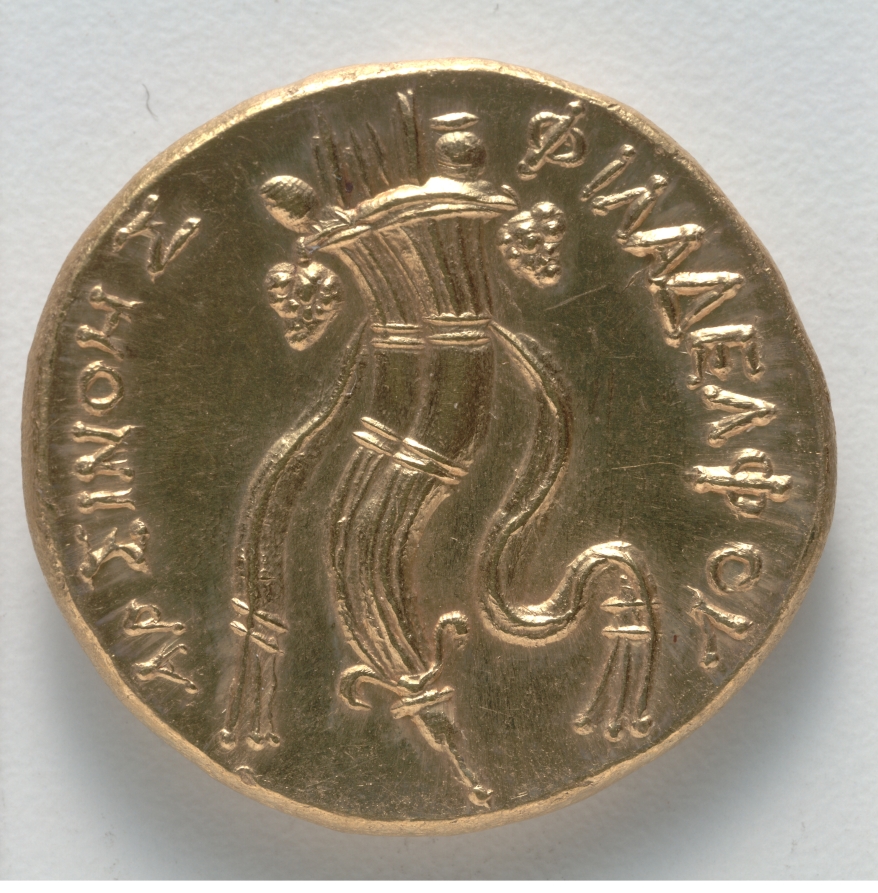
The purpose of the first portrait coins was to identify the ruler. The front side became a mirror of the sovereign’s self-image. The back was often used to communicate the ruler’s accomplishments or intentions. The profile portrait was used because it suited the very shallow depth and limited surface of the coin. The tiny images were carved by engravers into bronze dies, one for the front and another for the back. The coins were then struck, one by one, in a process similar to how modern coins are created today. In place of human ancestors, some rulers substituted real or mythic heroes or even the gods as their progenitors. On the front (obverse) of this coin Queen Arsinoe (reigned 273/272-270/268 BCE) is portrayed with a tiny horn curled around her ear. The horn was the symbol of the god Zeus-Ammon and implies that the queen was in fact, a goddess on earth. The back (reverse) of this coin depicts a double cornucopia bound with a fillet.
Machine-generated from the object's image on Jul 2026. Not curatorial; treat deities, names, and signs below as the model's best reading, not authority.
Two sides of a small gold coin are shown, featuring a laureate/diademed female profile on the obverse and a standing/armed figure (possibly a deity or royal portrait) with surrounding script on the reverse.
The image presents a pair of views of a gold octadrachm-type coin: on the left (obverse) a female head in profile faces right, wearing a tall headdress/diadem and a single-letter mark near the lower left of the portrait field. On the right (reverse) the scene shows a standing figure facing right with a raised hand and detailed attire, accompanied by surrounding engraved characters that resemble Greek-letter/inscription-style script rather than clear Egyptian hieroglyphs. No unmistakable hieroglyphic phonograms, cartouches, or clearly legible royal names are confidently identifiable from the resolution provided. The catalogue title specifies Arsinoe II; however, the image details are not clear enough to confidently confirm her identity, though the female portrait is consistent with a royal dyad portrait type. No Greek/Coptic/Arabic text is fully legible; the reverse inscription-like marks are present but require higher resolution for accurate transcription. The coin appears well-preserved with crisp metal relief.
Spotted an error, a mis-mapped findspot, or have a suggestion? We read every note.