WALTERS-EG
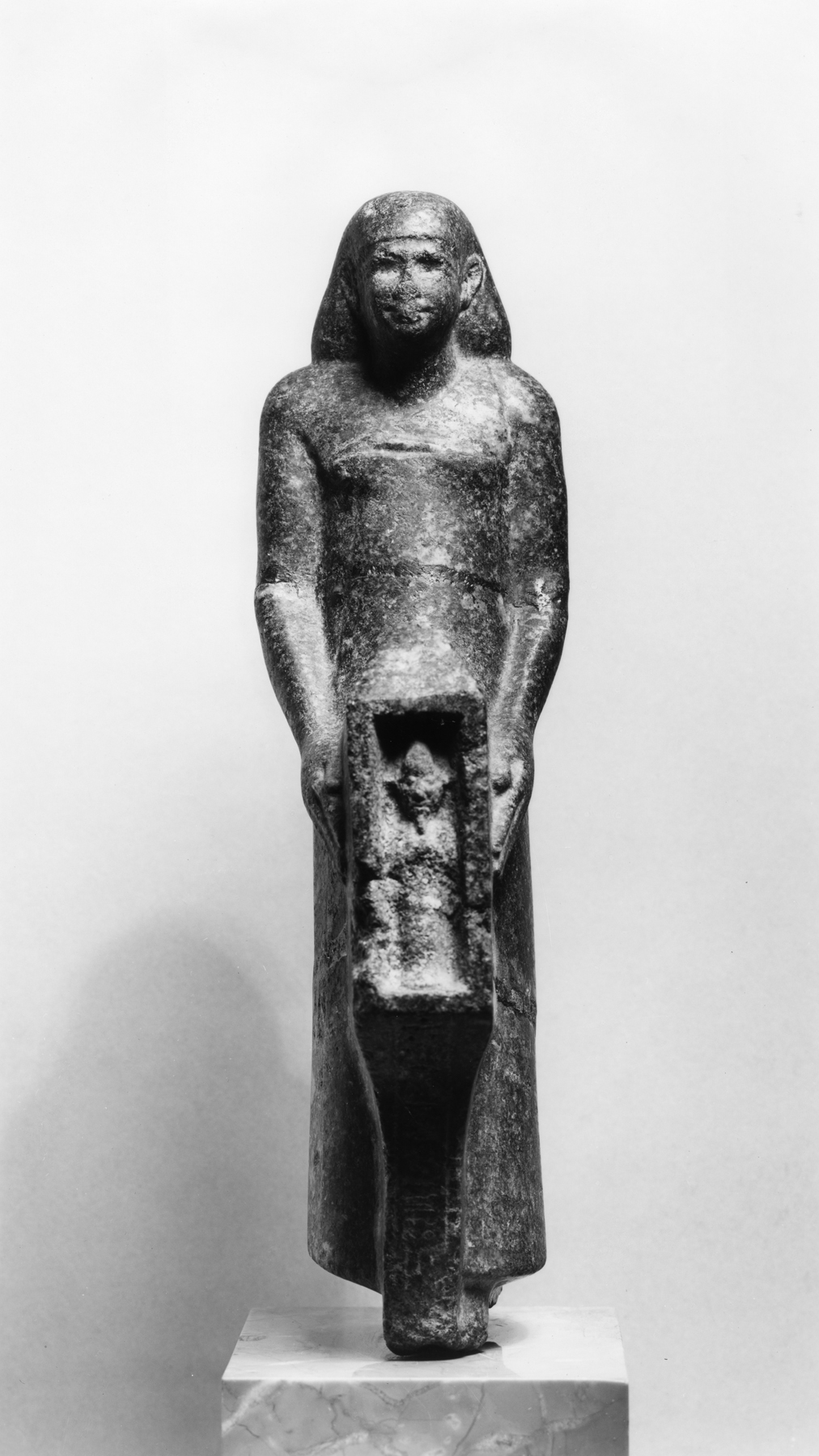
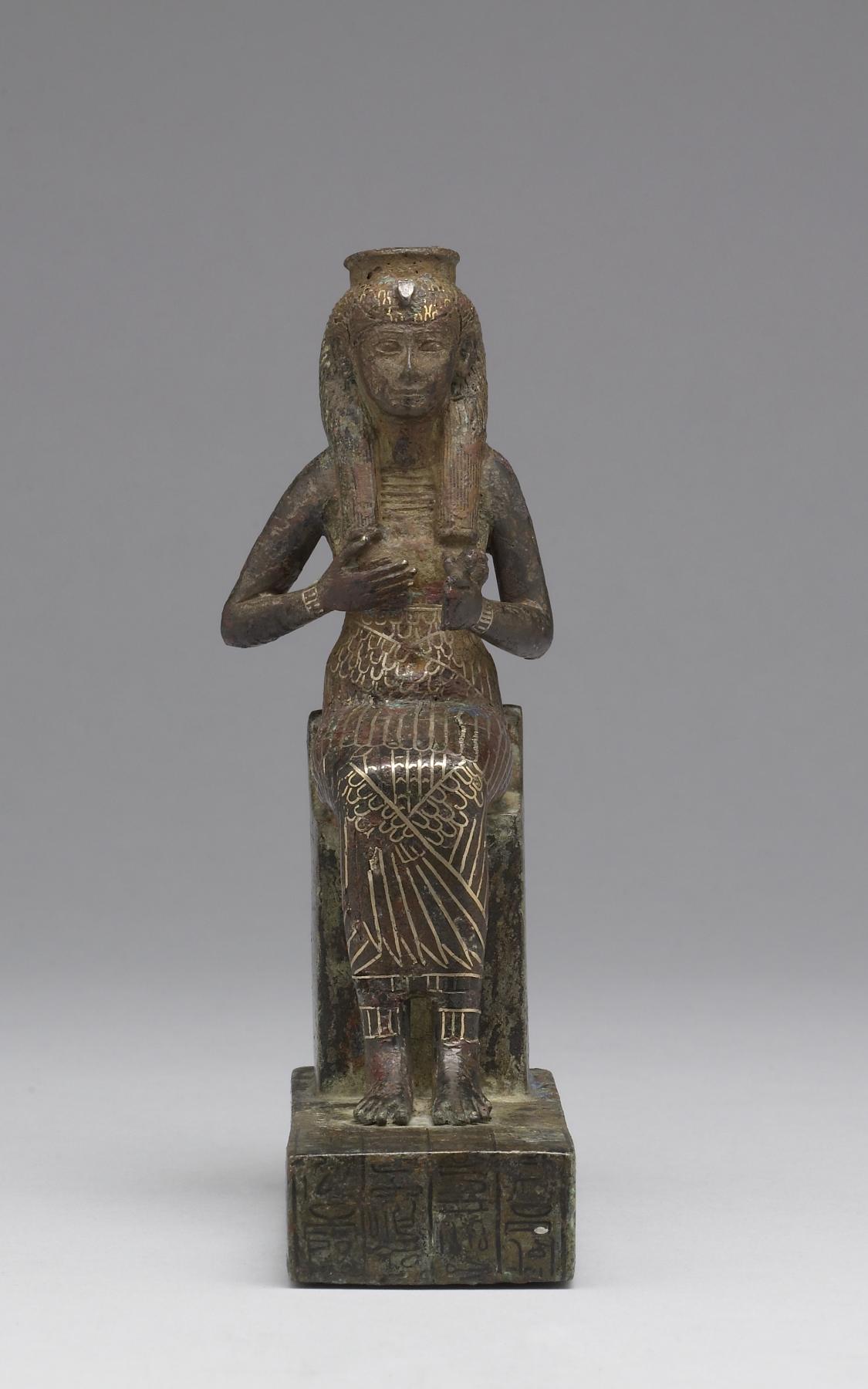
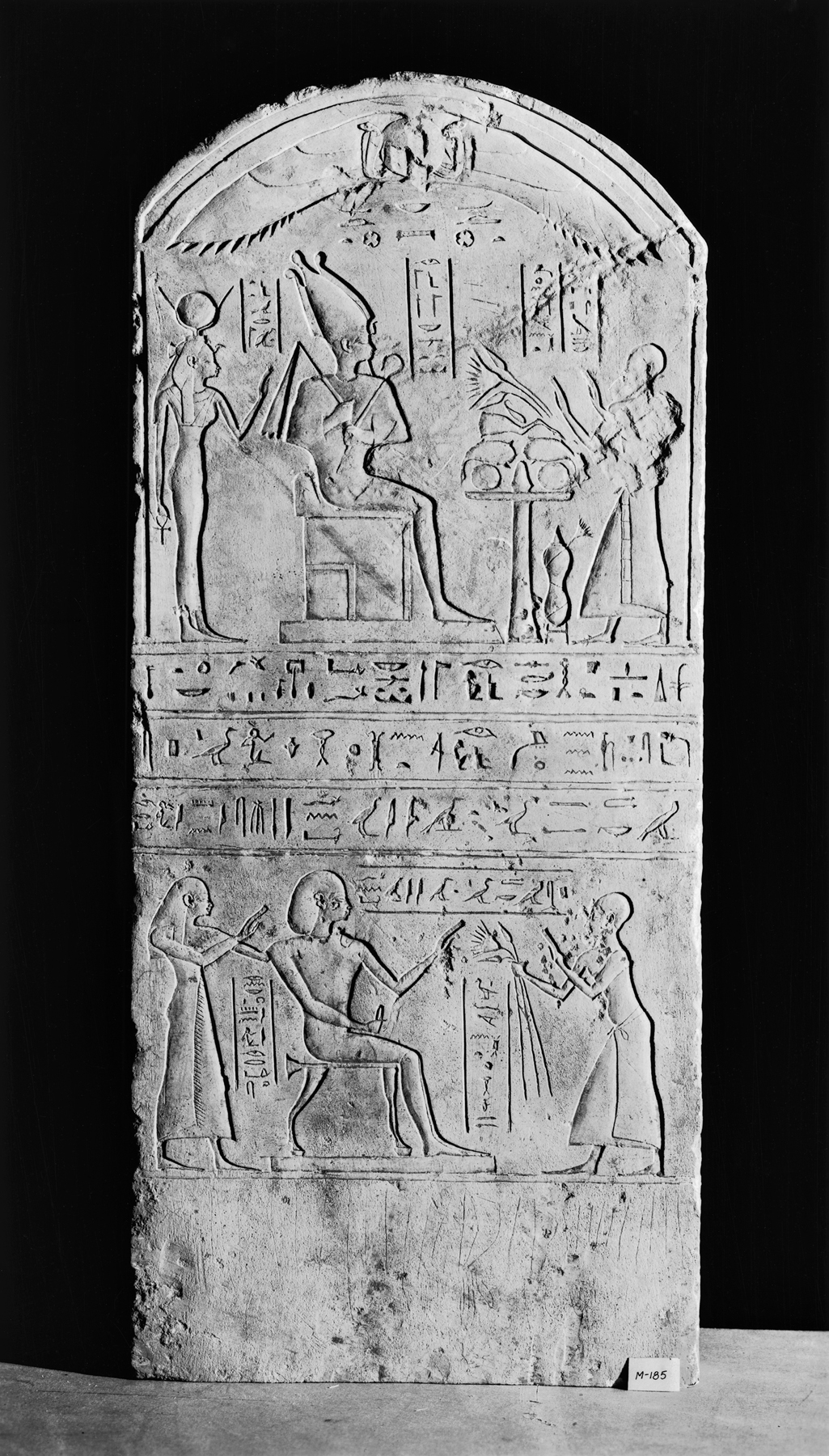
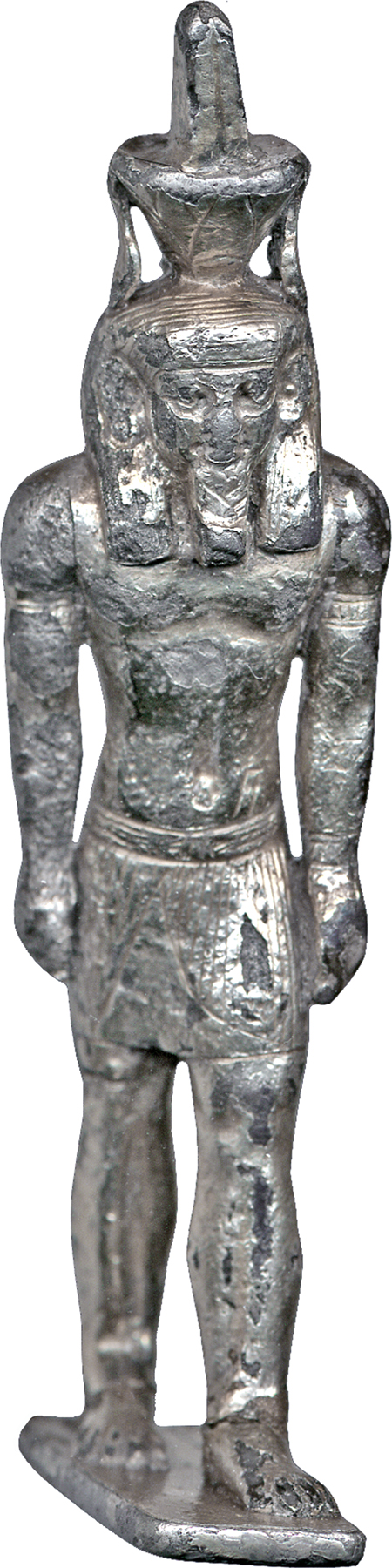
According to the Egyptian religion, gods could combine with each other to form composite deities. The complex crown of this bronze statuette has characteristics of the god Osiris, as well as the ibis-headed moon god Thoth. This statuette was dedicated to the god by a man named Pamu.
Machine-generated from the object's image on Jul 2026. Not curatorial; treat deities, names, and signs below as the model's best reading, not authority.
Bronze/copper-alloy statuette depicting a seated-andstanding figure associated with Osirian iconography, with a headdress/skin and a raised hand gesture.
The image shows a small dark-green patinated metal statuette standing on a modern display plinth. The figure appears in profile/three-quarter view: one figure (likely Osiris, per catalogue) is seated with legs forward, wearing a curled/headdress-like element and holding a staff-like attribute; a second, smaller figure or symbolic element appears to be positioned above/behind the seated form’s upper body, creating a stacked/attached composition. The surface is cast-metal with localized wear and corrosion producing a greenish patina. No clear hieroglyphs, cartouches, or alphabetic inscriptions are visible on the photographed surfaces. No Greek/Coptic/Arabic text is seen. The overall form is consistent with a metal Osiris-related statuette though fine iconographic details (exact labels/epithets) are not legible in this image.
Spotted an error, a mis-mapped findspot, or have a suggestion? We read every note.